Camping in the Bighorns

We try to camp in the Bighorns, in northeastern Wyoming, at least once a year!


The Trekkers have a tradition of camping in the Bighorns each Labor Day Weekend!  Puppers has been a trooper on our camping trips.  She enjoys riding in the truck (she doesn’t even mind the BUMPY, jarring journeys we’ve taken her down a few 4×4 roads…too much! 😉)  She can keep up with us on the hiking trails and she even handles the tents like a champ (though she needs a little assistance getting in and out of the rooftop tent).

You do have to wonder about people who drive 3+ hours to the wilderness, where they proceed to pee in a bucket and not shower for three days…and call that fun! 🤔😉😎
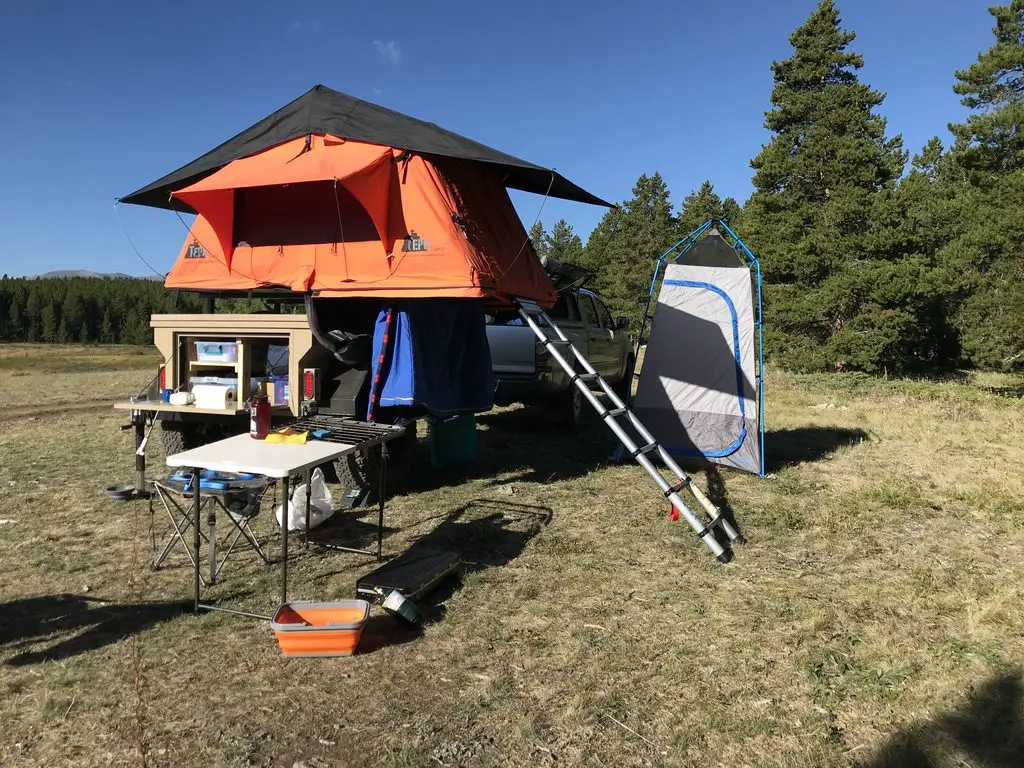
A rooftop tent is open on top of a trailer, a separate small tent and truck are behind. All in a woodland scene.
One of our camp setups

We finally caved and bought a privacy shelter for this trip, and we were SO glad we did.  It made life SO MUCH easier.  In the past we’ve used the vestibule that came with the rooftop tent, this worked ok, but even I couldn’t stand up straight in it (not to mention Mr. Trekker’s 6’4 frame).  This could be because we have the tent on the trailer rather than on top of the truck, the vestibule likely works better in that situation.  But the shelter worked great for changing, for a bathroom along with our Luggable Loo†, and for a shower using the solar shower.  It was so cool to look up at night and see the Milky Way shining over you while you were changing or “taking care of business”. 😇

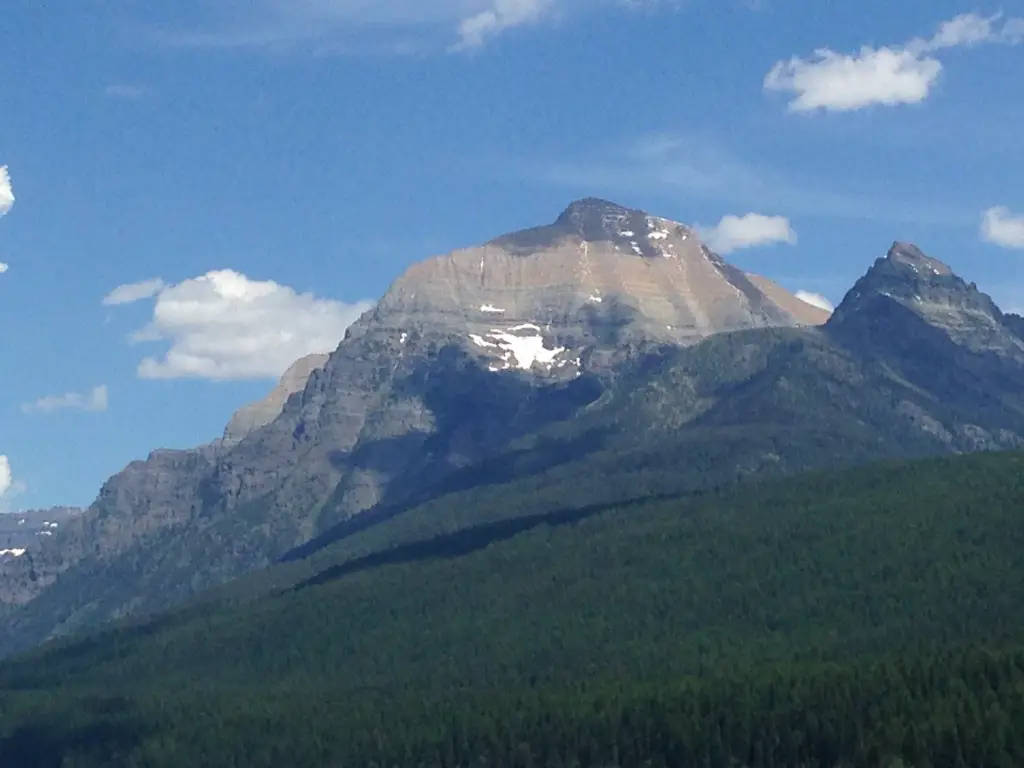
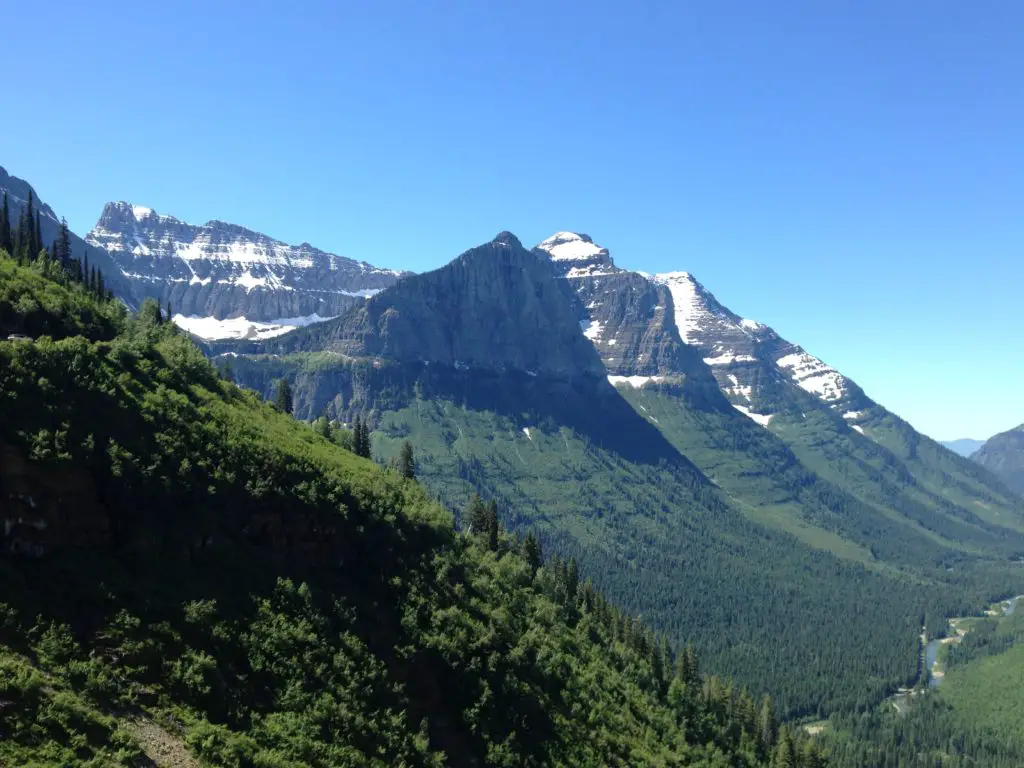
The Bighorn Mountains

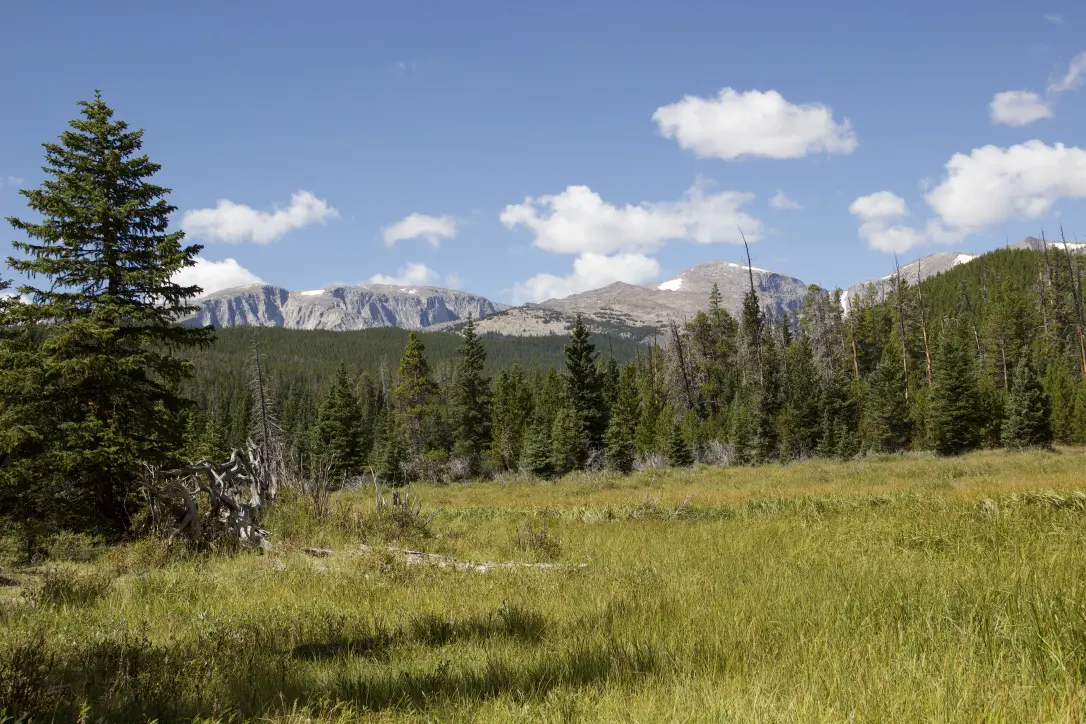
I know I’ve said this before, and I hate to sound like a broken record, 😇 but I LOVE the Bighorns.  I always forget we aren’t in the depths of the Colorado High Country when we visit there.  I love their stony summits, some still sporting spots of white leftovers from last winter’s snowpack, just above the treeline far below.

I always think of them as their own tiny island of mountains that rises out of the high prairie of northeastern Wyoming, but according to Wikipedia, they’re actually a spur of the Rockies separated from the main mountain chain by the Bighorn Basin.
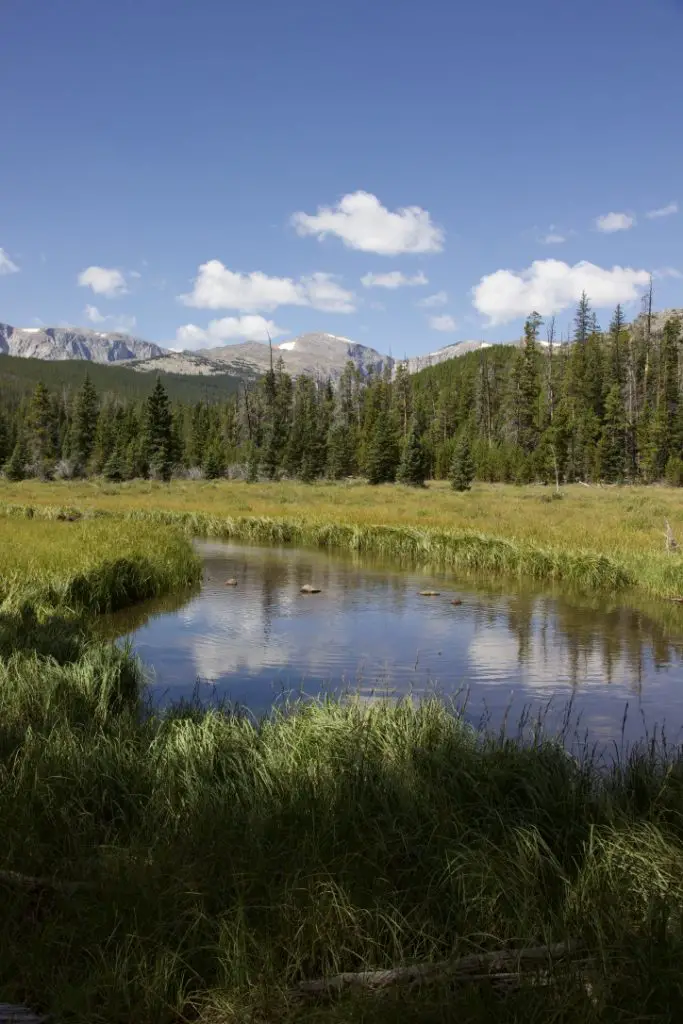
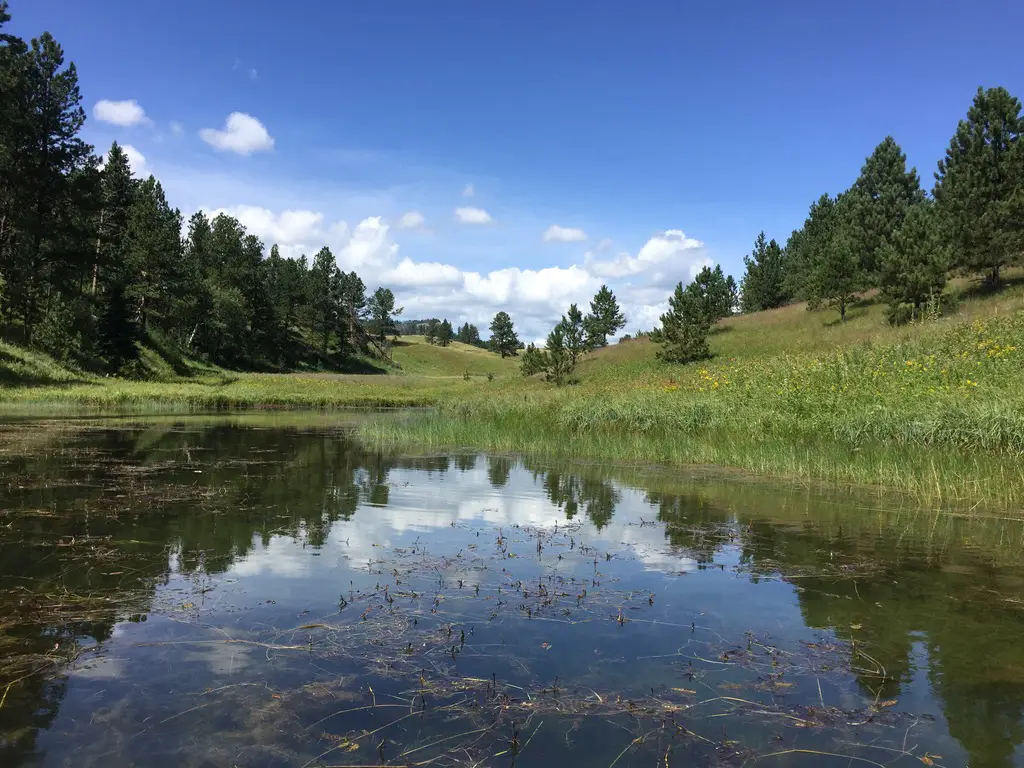
A creek runs through a wetland area with trees and stony mountains towering in the background.Though this area is just as beautiful as the Rockies, it is FAR less crowded, which makes it so much more pleasant to visit. 😋  There are no lines of people hiking in the Bighorns like we’ve experienced in various places around Colorado.  Also, oftentimes, the lower-elevation plains may be baking in 90-degree weather, while it’s in the 60s-70s, and breezy, in the mountains!

It doesn’t hurt that, depending on which area you are heading to, the Bighorns are a shorter, 3 – 4-hour drive from the Black Hills, rather than the 6 – 8+ hours required to reach the mountains in Colorado ( and that’s just the Front Range, in the east-central portion of the state).  You will still have to drive through rural Wyoming whether you’re going to Colorado or the Bighorns.  However, to reach the mountains in Wyoming, you drive on I-90 the whole way.  It’s a little easier if weather is bad, and you don’t have as much trouble with the Wyoming drivers who like to pass on two-lane roads leaving little room for oncoming cars…(ahem!🤬🤯) ( Of course, all that being said, no one should visit here, ever, it’s just a terrible place to be. 😮😇🙃)

The Bighorns aren’t to be trifled with though.  These mountains are rugged, with little accommodations by way of gas, food, and supplies.  Small towns, such as Buffalo, Ten Sleep, Greybull, and Sheridan dot the area.  But these are few and far between (not to mention pretty tiny, by the standards of “normal” people who aren’t used to the small settlements that are common in the West). 😉  This is a national forest area, not a national park, so even camping accommodations are rustic, rarely offering more than potable water and a pit toilet (and those are the fancy ones)! 😮  So, if you’re looking to visit this area, be prepared to be self-sufficient.  The views will make it worth the trial, though!

The night sky in the Bighorns

There isn’t a lot of light pollution in the Bighorns, so on clear nights, you are treated to an INCREDIBLE light show!  Once the sun sets, the stars and planets come out in abundance.  My whole life, I’ve never seen a night sky that is comparable to what you find in the crisp coolness of the high mountains.  The sky actually looks like it has the measles, as there is almost a rash of stars that covers it.  The cloudy ribbon of the Milky Way is often clearly visible as it stretches across the expanse of darkness.  You can almost sense it glowing from within.  It is truly an incredible sight.

Silent Night in the high mountains
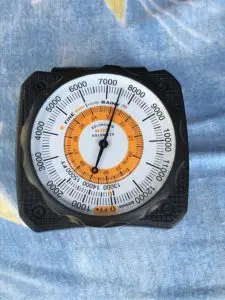
An instrument shows an altitude reading of 7500 feetOur campsite was at about 7500 feet on this visit (oftentimes we stay much higher, closer to 9000-10,000 feet).  We’ve noticed something odd at these high altitudes that we have also experienced in Colorado’s High Country.  There is a distinct lack of “night sounds”.  You don’t hear the chirping of crickets or croaking of frogs in that thinner air, even on warmer nights, and I don’t know why.  Nights tend to be pretty cool in those places, so it may be due to this, or just that there is a very short season where the night air would even be warm enough for the creatures to survive.  But whatever the reason, when we’re up so high I do miss the “chirping” sounds of a summer night.

Dispersed camping in the Bighorn National Forest
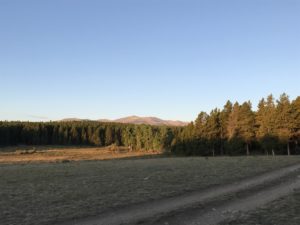
Morning on a meadow ringed by trees. The sun is just coming up and is shinning on the mountains in the background.Sometimes when we head out we Disperse Camp.  This is also known as “dry camping”, where you just set up your camp somewhere in the national forest, outside of an established campground.  We tried this for the first time in Colorado, at both State Forest State Park and near Crested Butte.  On both occasions, we did stay at an actual, numbered campsite, it was just away from any campground and we weren’t able to see our neighbors.

On this trip, there were no numbered sites, but they did request that you stay at an already established campsite (designated by fire rings).  I have never experienced such a busy weekend in the Bighorns!  We stayed near Circle Park (there are a lot of “parks” in this region, they are basically just large, meadowy areas amongst the forests).  It was a lovely site with views of the surrounding mountains, but we could see three other campsites from ours (one had a large group in it).  We could hear even more campers, just on the other side of the copse of trees we were camped near.  Next time, we’ll have to try going even farther out if we hope to have more privacy! 😉

Moose in the Bighorns!
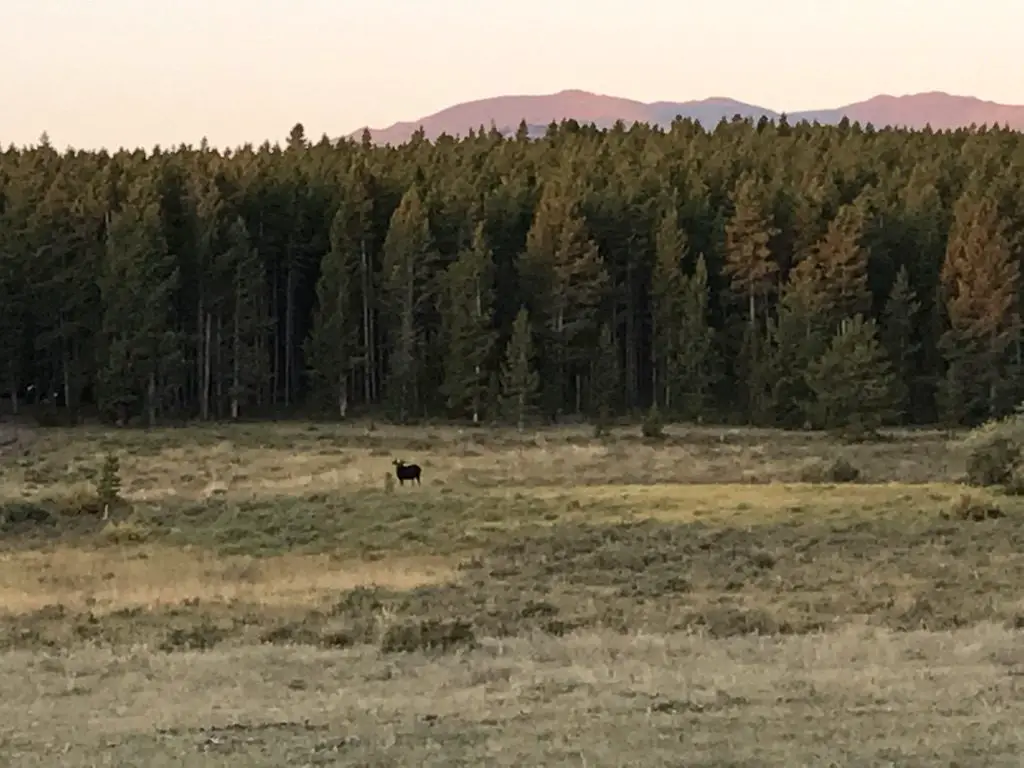
Morning in the meadow. A bull moose can be seen at a distance in the grass. The background is forest with the red, morning sun shining on the mountains in the far background.
Ladies and gentlemen, Martin the Moose!

I wasn’t sure if we’d see any moose on this trip since we were sticking mainly to the southern portion of the Bighorns and I wasn’t aware of any waterways running near our campsite (which moose favor).  We lucked out though.  It only happened one time, but at about 6:30 one morning, as the Pup and I were enjoying her “morning constitutional”, I spotted Martin the Bull Moose sauntering through the “park”, down the hill from our campsite!  SUCCESS!!!  Puppers wasn’t sure what to make of that LARGE, funny-looking thing!

Hiking Trails

Circle Park Trail:
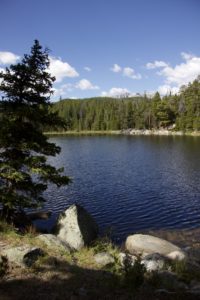
A small lake, surrounded by forest
Sherd Lake

We did this same trail on our first trip to the Bighorns, several years ago, in October.  It’s a nice hike, fairly wide and graded, and not terribly steep (though it is quite rocky in several places).  We walked to Sherd Lake, which is absolutely GORGEOUS!  There are views of several nearby mountains, such as Bighorn and Darton Peaks, from here.  This trail is around four miles total, so it’s perfect for a day hike (especially with a not-quite-full-stamina, juvenile, canine friend). 🐶

The trail continues on to several other lakes from there.  It also connects with an 8-mile loop that snakes around the nearby mountain peaks, if you’re looking for a lengthy hike (or a good backpacking trip). 

Maybelle Lake Trail (off Forest Road 430):
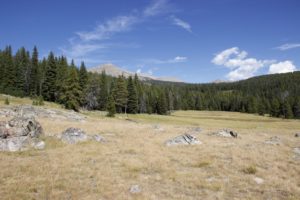
A grassy meadow with large rocks sprinkled about, bordered by forestThis hike was deceptively tough.  It’s only about three miles in total length, but it’s overgrown in many spots, very rocky and there are lots of downed trees.  We actually lost the trail several times and had to root around to locate it again.  Other parts of it are PERFECT though.  They feature a flat, graded path through a moist, pine forest, that is surrounded on both sides by a green carpet of ferns, moss, and soft undergrowth.  It almost felt like hiking in the cool rainforests of the Pacific Northwest.  It was such an idyllic sight!

The other difficulty is in reaching this trail.  You have to drive about 45 minutes (one way) on a rugged, 4×4 road to get to the trailhead.  We had done this route several years ago, so we knew what to expect, but this would NOT be appropriate for a normal car, or even just a high clearance vehicle.  If you don’t have a 4×4, with gear intended for off-road purposes, you should NOT attempt this road. (As an example, after trying this route a few years ago, we decided skid plates would be an important addition to the truck.)  After completing the road on this adventure, there is some paint hanging from the skid plates in a few spots (we sure were glad they were there!) 😋
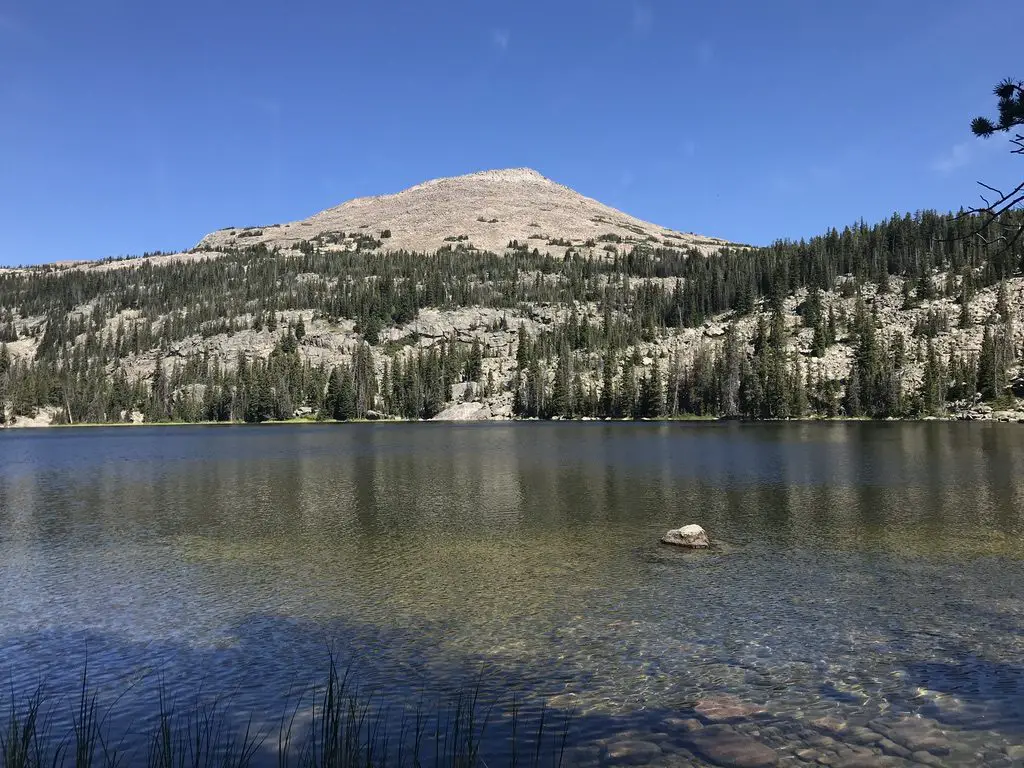
Small lake with rocky, tree-covered mountain peaks in the background
Maybelle Lake

Tensleep Canyon

I’ve mentioned this canyon before, but this is one of the most beautiful places in the Bighorns.  If you are anywhere near this national forest and you have the chance to drive the canyon, you absolutely MUST put it on your list.  It is NOT to be missed.  This is one of our favorite areas in this national forest, and we try to enjoy it whenever we’re nearby.

The canyon is surrounded by arid, rocky cliffs on both sides, and is located on the southwest side of the Bighorn mountains.  One great thing about it is that EVERYONE can experience it.  US 16 is the main road that runs through the middle of the canyon.  It’s an easy-to-drive, paved byway.

For the best views, I would travel down the canyon, from east to west, on Route 435.  This is actually a dirt road that runs parallel to US 16 on the canyon’s southern side.  It’s a very well-graded route though, so as long as you don’t mind your car getting a little dusty, any 2WD vehicle can handle it in good weather (beware, the road may be impassable during snowy or muddy conditions. The road is also closed to vehicles November – June).

It’s a two-way road, but it’s fairly narrow, so take your time and be cautious.  There is room to pass a vehicle coming the other way but both drivers need to be aware as the lane gets tight.

Related posts:  Lake Helen, Bighorn Mountains, Wyoming; 4 Don’t Miss Sites in the Bighorn Mountains of WyomingWest Tensleep Trail, Bighorn Mountains, WyomingBighorn Medicine Wheel in Wyoming

This route provides better views down the length of the canyon into the dry expanse of Bighorn Basin, that opens up between the western slopes of the Bighorns and the eastern slopes of the Absarokas (near Yellowstone National Park).  While the Bighorns provide cooler conditions, even on the hottest days of the summer, the Basin sits on a high prairie that lies in the rain shadow of the larger mountains, to the west, and bakes under the heat waves of the summer sun.

On your return trip up the canyon, take the paved, US 16 for incredible views of the dun-colored rock and sparse, short, green trees and bushes that comprise the canyon walls.  They stand out in contrast to the deep blue of the sky above.  These views are SO beautiful!

You aren’t very likely to see moose in this area, it’s too dry and hot for the vittles they enjoy dining on.  The northern side of the Bighorns, near routes like US 14 and 14A, are prime spots for spotting these ungulates.

For the best light, it’s best to drive up the canyon, west to east, in the afternoon when the sun is at your back!  Here is a link to a video I made of our drive up the canyon.

We were glad to enjoy another successful, Labor Day, camping trip to the Bighorns.  We really enjoy returning to this area year after year.  There are so many things to see here, it can’t all be done in one weekend!

Have you hiked to Sherd or Maybelle Lakes?  What did you think of the trails?  Tell me about your experiences in the comments!


Did you enjoy reading this post?  Pin it!
Small lake with rocky, tree-covered mountain peaks in the background. Pin reads, "Camping in the Bighorn Mountains of Wyoming!"


Like what you read here today?  Please feel free to leave a comment, like or share this post!  Add your email at the bottom of the page, or the sidebar to the right, to be notified when a new post is published.  By signing up for the email list, you will also receive a free copy of the Tranquil Trekker’s Top 10 Tips of Trekking Do’s and Don’ts!

You can also follow the blog on social media by clicking the links below!

Facebook

Twitter

Instagram

Pinterest


†As an Amazon Associate I earn from qualifying purchases
Canoeing at Deerfield Lake

In this post, I review one of our favorite canoeing sites, Deerfield Lake, in the Black Hills of South Dakota.

canoe on a lake's shoreDeerfield Lake is one of the Trekkers’ favorite spots for canoeing in the Black Hills (another is Jenney Gulch, on Pactola Lake.)  This site is the terminus for the lengthy Deerfield Trail, that I’ve mentioned in another post.  There are many things to enjoy about this part of the Black Hills.  It’s a little more remote, so it does take a little longer to reach, but it’s also higher in elevation so it tends to be cooler.  In the winter, this may not be as pleasant, but in the summer, when you are roasting in Rapid City, you can head to the Deerfield area for a less oppressively warm, far more enjoyable day.

Where in the Black Hills is Deerfield Reservoir?

This body of water is easy to reach, just take Deerfield Road west, from Hill City, for about 15 miles.  You drive right past it so you can’t miss it! 🙃

What fun things can you do at Deerfield Lake?

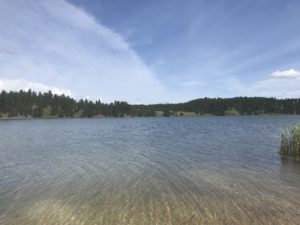
a lake view

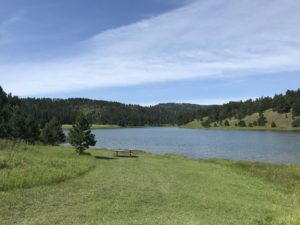
a lake with mountain backdropThere is a hiking trail, that circumvents the lake, which is also good for cross-country skiing and snowshoeing in the colder months.  There are several campgrounds available around the lake, as well.  You should be aware these are National Forest campgrounds, which we always love, but they usually have very sparse accommodations.  Potable water and vault toilets are about all you can expect at these campsites (though they are usually quiet and some spots have WONDERFUL views).  This is also one of our favorite areas for acquiring Christmas trees in the Black Hills if you know where to look…

What makes Deerfield Reservoir so great?

One of the best things about this lake is that it is fairly large in size (comparable to Sheridan Lake farther to the east) but it has a no-wake rule.  So, while people can bring motorized boats if they wish (and some do, to fish) they aren’t allowed to go very fast.  This regulation makes Deerfield Reservoir an opportune site for the slower, water sports such as canoeing, kayaking, and paddle-boarding.

We are especially thankful for the peacefulness of this place as there was a measure put forth to the State Legislature to drop the no-wake rule.  This would have allowed boats to travel at wake-speed which would likely have increased the frequency and amount of larger boats using the lake.  Fortunately, after a STRONG public outcry from locals, it was defeated.  We were SO glad!  This is truly one of the best places to canoe or kayak in the Black Hills (in my opinion).  There are other nice lakes around Custer State Park, but they aren’t nearly as large.  They don’t offer as nice of views of the surrounding mountains either. (With all that being said, this is a horrible place to visit and everyone should stay away! 😮😉)

More pictures of our canoe day are below, courtesy of Mr. Trekker!

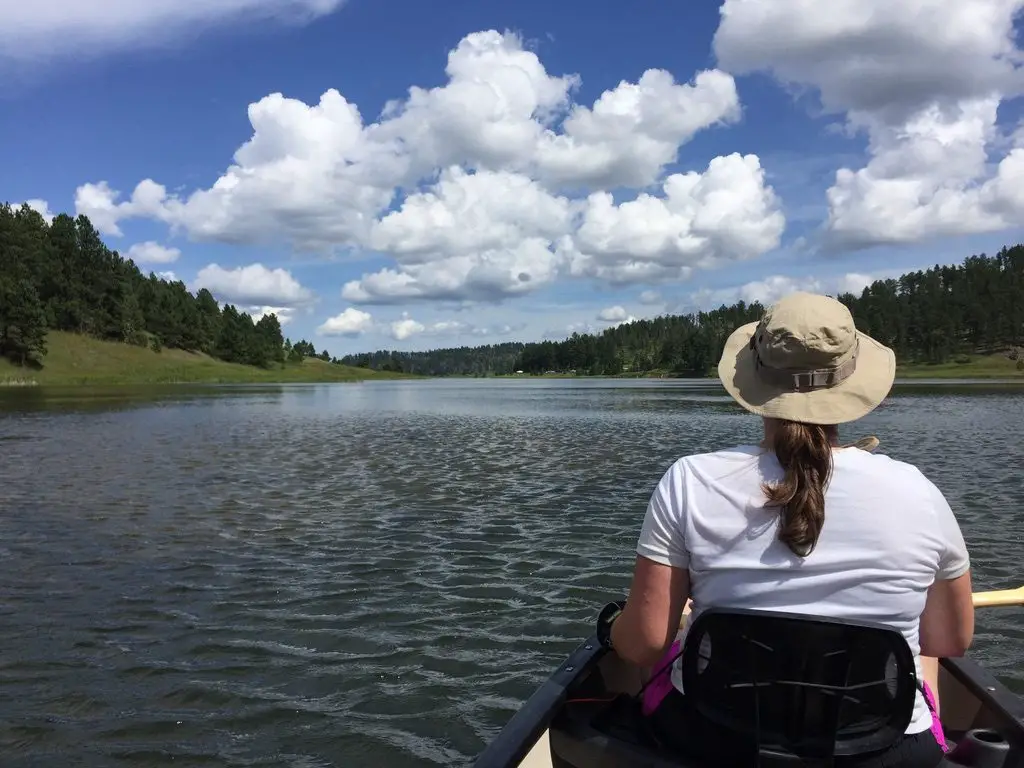
a woman canoeing on a lake


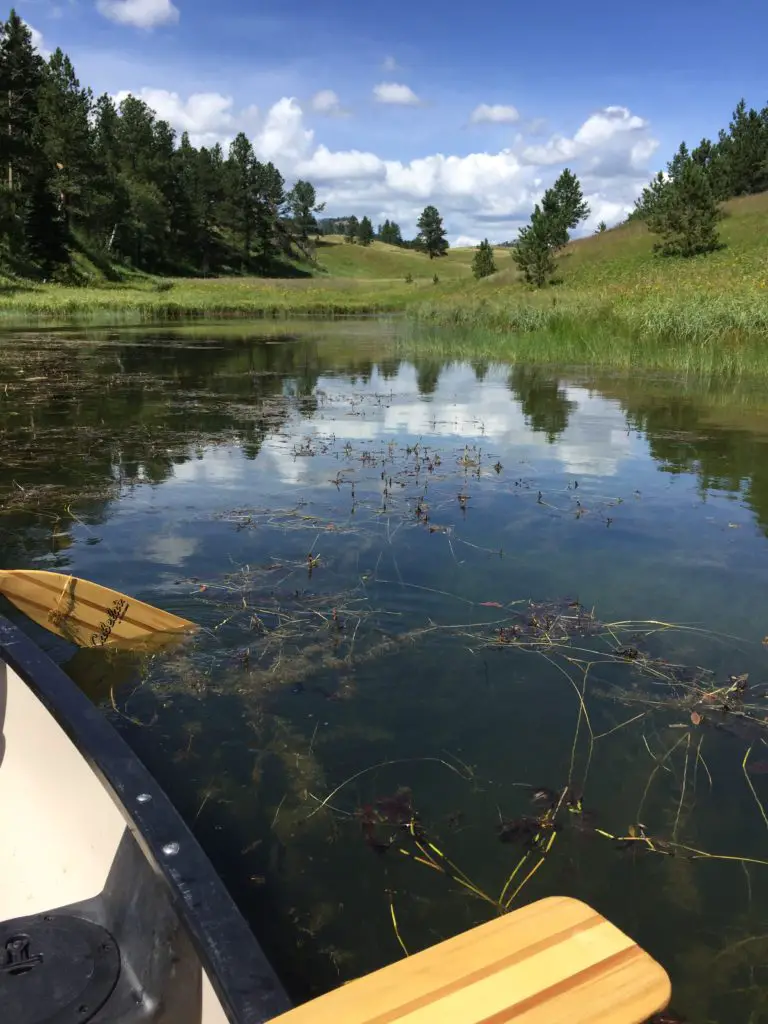
Two canoe paddles against a lake shoreline backdrop
Just two canoe paddles, in love! 😉

With all this talk of canoeing, I would be remiss not to mention the rack system that we use to safely transport our mighty vessel. 😉   We really like the Yakima KeelOver Rooftop Canoe Rack.  It installs INCREDIBLY easily–and quickly–on the luggage rack on top of your vehicle.  It also both protects the canoe from damage and holds it in place very well.  Basically, the way it is designed, there are four separate, cushioned feet that attach to the already-installed luggage rack.  If the canoe starts to slide to the left or the right, it is held in place by the feet on the opposite side.  The kit also comes with tie-down straps that are used side-to-side and front-to-back to strap the canoe to the vehicle.  It should be noted that this system is specifically intended for canoes only. 

The next time you’re looking to escape the heat of a summer day in Rapid City, check out Deerfield Lake.  It makes for a quiet retreat from the hustle and bustle of the busier, tourist towns, and offers scenic views as well.  Go out and enjoy it!

Have you canoed at Deerfield Lake? Tell me about your experience in the comments!

Did you enjoy this post?  Pin it!

Looking for one of the best canoeing sites in the Black Hills? Read on for my review of Deerfield Lake, in Western South Dakota.


Like what you read here today?  Please feel free to leave a comment or share this post!  You can also follow the blog on social media by clicking the links below!

Facebook

Twitter

Instagram

Pinterest


†As an Amazon Associate I earn from qualifying purchases
Can we be friendly towards those with different political opinions?

After reading the book “Travels with Charlie”, by John Steinbeck, I discuss how many aspects of US society, that Steinbeck noted in 1960, are still true today.


Author’s Note:  I want to be VERY clear that I am NOT endorsing ANY political view with this post.  The critiques I outline below apply to ALL of us.  I truly believe we can (and should) ALL do better. (Also, this comes from the perspective of an American speaking on how I see political views playing out in the US.  I can’t speak to how things work in other countries.)–Also, also, I originally wrote this post during the Trump/Hilary election in 2016 but I think it’s still relevant today!

A few years ago, I read Travels with Charlie, by John Steinbeck.  This is a great story to read if you’re on a road trip since that’s what the book is about. 😉  It is set in the fall of 1960, as Steinbeck and his faithful poodle, Charlie, set out to explore the country. (Steinbeck wanted to rediscover it before he died.)  I was struck by how many things he noted that seem to still be relevant today, almost 60 years–and a HUGE technology boom–later…sometimes the old adage is true, the more things change, the more they stay the same.

Life isn’t simple anymore:

Steinbeck bemoaned the fact that people are always rushing around in the big cities and on interstate highways.  He felt like they didn’t have time for chatting or pleasantries, that there was no real contact between them anymore.  He felt like everyone just kept to themselves and in their own little world…

Imagine what he’d think of today’s world, where everyone is too preoccupied with their noses in their phones, or their earbuds entertaining them, to pay any attention to the world around them. 😮

Steinbeck thought everything was too mechanized, that there was too much technology in his modern world.  He believed this made life too easy which gave people too much free time that they then filled with worry…

Things like mobile phones, the internet, and computer-driven machines hadn’t even entered popular culture yet.  What would his opinion be of today’s Brave New World?  He thinks things are bad in 1960, wait till he gets a load of the “always-on” society of the new Millenium! 😋  Does his theory help to explain why so many people suffer from anxiety in our modern world?  Do we have such–relatively– easy lives, and consequently so much free time on our hands, that we have lengthy periods to “think” ourselves into an unnecessary panic?

Steinbeck felt regional cultures around the country were becoming too homogenized.  That local dialects and customs weren’t as noticeable as he remembered from his childhood, he felt like they were all becoming too mixed and similar.  He believed this was due to people moving all over the country and living in different places from where they grew up…

You have to wonder, if this was true way back then, how much worse is it now when people regularly move all around the world?  On the other hand, does some good come from this?  When we travel and move to places that push us out of our comfort zone, we are exposed to new ideas and cultures.  I think that makes us more tolerant of and more educated about other viewpoints.  Wouldn’t this experience then help to enrich our lives?

People are afraid to be honest with each other…

Steinbeck felt like there weren’t enough people, at that time, who would stand up for what they believed in.  He mentioned how people didn’t want to talk about politics with their friends, families, or close confidants anymore.  He lamented the division that he saw in the country…

It is interesting to think that, on the eve of one of the most turbulent decades in modern US history, he could feel like people wouldn’t stand up for what they believed in.  The ’60s ended up being full of protests and people doing exactly what Steinbeck wanted to see more of, marching for what they felt to be just. 

What would he say about the political situation in our country today?  Plenty of people march and advocate for their rights, but others are afraid to speak up for fear of public shaming.  I personally know people who won’t be open and honest with their closest friend or family member regarding who they plan to vote for in the next election because they’re afraid of negatively impacting that relationship.  To me, this is a sad commentary on the state of our nation, that we can’t have differing opinions yet still respect each other. 

A House Divided Cannot Stand

Steinbeck talked about fighting with his Republican sisters (he was a self-professed Democrat) when he visited them, in his hometown, in California.  They would call him a Communist for his liberal views and he would compare them to oppressive tyrants like Genghis Khan because of their conservative opinions…

Sound familiar?  Things DEFINITELY haven’t changed on this front!  I think it’s sad how you see so much of this today.  In the US, Republican talking heads call Progressives “mentally ill” or “crazy”.  In contrast, Progressive talking heads refer to anyone who doesn’t agree with them as “bigoted” or the ever-popular  “Nazi”.  I know it isn’t just here in the States either.  I’m not super familiar with the politics of other countries, but I’ve read enough to know there are similar debates in those places, as well.

Why do we treat each other this way?  I don’t understand what we can possibly hope to achieve with it.  Is the majority of “the other side” really that bad?  I don’t think so.  Especially when those people consist of our friends, neighbors, and family members, who we otherwise love and respect. 

I think our differences come less from one side being “right” or “wrong” and more from the fact that we misunderstand each others’ perspectives.  I also believe that people on both sides of any given issue are often ignorant (intentionally or otherwise) of the plight that others face.  I read once that “you should never criticize someone else’s views unless you can explain them.  Because, if you can’t explain them, you don’t actually understand them”.  I think this is incredibly apt.  I believe we need to stay humble and realize we may not always be as “right” as we think we are. 

In the book, Steinbeck mentions a reporter who was beaten and his camera smashed for covering certain demonstrations that were occurring.  He states that the few, screaming people who were acting badly will be on tv and will end up representing that entire area or group.  Unfortunately,  no one will know about the many, good people from that same region or social category who just want to go about their daily lives.  He describes the media in his day as, “…all the polls and opinion posts, with newspapers more opinion than news so that we no longer know one from the other”…

WOW!  He could literally be writing about almost any newspaper or cable TV, news outlet in the country today!  It amazes me, with all the time that has passed and the many changes our society has gone through, how similar Steinbeck’s world was to our own. 

It’s interesting, but it’s sad in a way too.  You get the impression that not much has changed.  In some ways, it may have gotten worse with the rise of social media and the reach of the Internet.  You also get the impression we haven’t learned much in the last six decades.  Will things change much in the next six?  I’m not sure I hold out much hope…   

Can people of different political views be friendly toward each other?

Why do we fight so much and treat each other so badly?  I just don’t understand it.  Why does it always have to be “us” vs. “them”?  Why, if someone disagrees with us, do we automatically have to see them in a bad light?  Why can’t we each just have different views and opinions?

I have friends and family members that were raised in VERY similar situations as myself and with VERY similar values, yet we’re on completely opposite sides of the political spectrum.  We may agree there is a problem, but have opposing viewpoints on how to solve that problem.  Yet, for both of us, the desire to see the problem solved comes from a place of love and caring for–and wanting to help–our fellow man. 

Why can’t we use that as a cornerstone to build on, rather than calling each other names and finding ways to divide ourselves, when our values and beliefs are often similar?  We all have to live on this big, blue ball together.  Can’t we figure out a way to work with each other?

To Conclude

Steinbeck died in 1968, however, the politically charged climate that he saw wasn’t much different than the one we face these days.  I wonder what he would say about our modern world, and if he’d ask, “can’t we all just get along?”

So I challenge you, dear readers, to try to understand where someone from an opposing political viewpoint is coming from.  I’m not asking you to change your stance on any issue but if your question is, “how could anyone believe that?” I encourage you to look more closely at their viewpoint.  Honestly ask someone that holds that view to explain why they feel the way they do and then try to listen and understand with an open mind, an open heart, and without judgment.

I think if we take the approach that most people are good inside, even if they hold very different beliefs than we do, and we give them this benefit of the doubt, it would go a long way to making this world a better place for all of us. 

How do you keep the peace between friends and family with opposing political viewpoints?  Tell me about it in the comments!


Did you enjoy reading this post?  Pin it!

4 people sit on a beach with a calm sea and tree-covered mountain in the background. Pin reads, "Can we be friendly towards those with different political opinions?"


Like what you read here today?  Please feel free to leave a comment, like or share this post!  Add your email at the bottom of the page, or the sidebar to the right, to be notified when a new post is published.  By signing up for the email list, you will also receive a free copy of the Tranquil Trekker’s Top 10 Tips of Trekking Do’s and Don’ts!

You can also follow the blog on social media by clicking the links below!

Facebook

Twitter

Instagram

Pinterest

Adopting a New, Furry Friend!

In this post, I relate our adventure when we adopted a new puppy!


After our long-time dog crossed the rainbow bridge, we adopted a new, furry family member from our local Humane Society.  It had only been a few months since the death of our other dog, so I wasn’t quite sure if I was ready for a new pup just yet. 

However, we didn’t want to wait too late into the fall as it would’ve been harder to exercise a young pup during those darker, colder days (we knew we wanted a younger dog).  We also didn’t want to have to wait all the way until the next spring to grow our family again. 

I’m glad we adopted our new friend when we did though, as she had SO MUCH energy.  It was nice that she was able to run around the backyard for a few months before the snow started flying and we were cooped up inside more.

At first, I felt really guilty about “replacing” our old friend.  But seeing the differences in the personalities between the two really helped to ease the pain.  Each one is definitely unique!  I found that we didn’t “replace” one friend with another, we just made room in our hearts for another who needs us.  I can love them both, in different ways. 

Our previous dog had a large amount of energy and an incredibly dynamic and dominant personality.  Let’s face it, she was a bit of a handful.  The new pup has energy too, is more just usual “puppy” spirit.  In general, she is more compliant and easier to train.  This is lucky for us, as things seem a bit easier.  It’s unlucky for her though, as we know better training techniques after being used to a “difficult child”. 😉  

Puppy Particulars:

It was a bit of a change, going from a 14-year-old hound dog who was happy to sleep on the couch all day, to a 7-month-old puppy, bounding with energy.  We had also been spoiled by our previous friend, she had come to our home fully potty-trained.  Puppers didn’t make it that easy on us.  Fortunately, she learned quickly that the weird humans she lives with made “happy noises” when she went outside to take care of certain urges. 😋

We don’t know a lot about her history, other than she came from one of the nearby American Indian reservations and her previous owners were kind enough to surrender her to the shelter when they felt they wouldn’t be able to care for her anymore.

She’s a mix of many “flavors” of pup.  The vet told us “Shepherd mix”, though apparently, she has “Beagle eyes” (figures, that was the ONE breed I wasn’t crazy about–only because of the bark.  Fortunately, now that she’s discovered her voice, I can happily report that it doesn’t appear that she inherited that particular gene. 😅) We also heard she could have Carolina Dog and various Currs in her.

Eventually, we did a DNA test which confirmed…she’s a mutt! 😂  Supposedly she officially has combinations of shepherd, Golden Retriever, St. Bernard! and some drops of cattle dog, among others.

She’s a timid little thing.  She’s very sweet, she’s just a little afraid of strangers, and loud noises, and it took her a good while to warm up to Daddy (unless he was sitting on the couch downstairs in which case he made a perfect pillow. 🙄)  We get the impression she never lived in a house before, and very likely came from a quiet, secluded area.  This is because we noticed she was originally startled at any loud noise, including cars driving past or children yelling from nearby yards.

It didn’t help that we brought the poor thing home during one of the loudest weeks of the year in the Black Hills, the Sturgis Motorcycle Rally. 😝  I can imagine it would have been pretty overwhelming, to move from such a quiet place to the second most-populated region in the state.  She did adjust quite well, though.

Puppers enjoys pats from the neighbor kids, though she seems to prefer having a fence between her and them as protection…for her. 😉  She absolutely LOVES other dogs.

The deer, rabbits, squirrels, and birds that frequented our yard were in for a surprise.  Previously, they only ever had an elderly, arthritic dog to deal with.  She’d put up a good show of chasing them, but everyone knew her heart wasn’t really in it anymore.  Now they’ve got a young one with speed, agility, and energy (not to mention a healthy prey instinct) so they’re learning they need to actually move out of her way. 😂

This pooch is also OBSESSED with socks.  If I put some outside on the drying rack, she carries them around the yard! 😝  She REALLY loves them if they’re still wet and sweaty. 🤢  She’s also FAST and LOVES to run!  She makes good use of our fenced-in backyard!

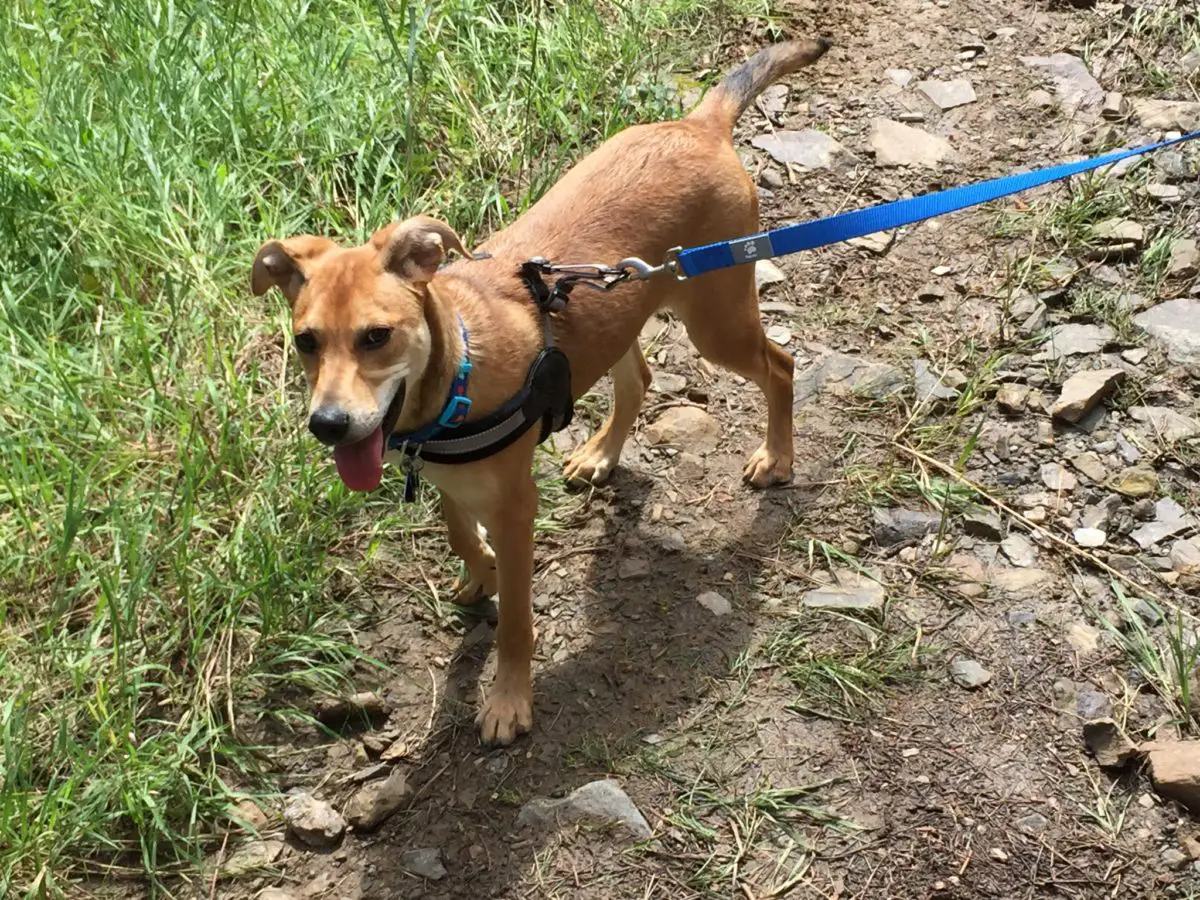
Rear view of a dog on a leash, on a dirt path in the woods, overlooking a lakeOur pup doesn’t seem to have quite the same stamina as our old, hound dog, though she enjoys the many hikes we’ve taken her on in the nearby Hills.  She has also learned to enjoy cars, including the camping trips, visits to the drive-in and storm chases we’ve taken in them.
Her one nemesis has been doorways.  It took her almost a year to stop fearing them (though she LOVES her crate/”she-shed”).

We did have to teach her to walk on a leash.  At first, she wasn’t sure about this tether that connected her to these strange people, but with a good harness, some practice, and a lot of patience, she learned that walks can be fun ways to enjoy new smells, people, and especially other doggies around the neighborhood.

Training the Terror: 😂

I have to say, this made me appreciate what the struggle must be in raising human children. I was barely capable of handling a puppy with the energy and mischievousness of a toddler! 😝  She wore me out those first few months!  We’re lucky that she slept through the night.  It took several months, but she finally stopped waking up around 5:30 am to play.

She was also a digger 😝 in those early days, and she enjoys finding things around the house and yard to chew on that may or may not be potentially harmful to her.  Yikes!  😮  I think I’m growing those eyes in the back of my head. 🙃

A dog with its tongue hanging out lays on a car seatI read a puppy training book called The Power of Positive Dog Training by Pat Miller.  I really liked it!  The author subscribes to the “positive” training method which employs the use of rewards (or lack thereof) rather than true punishments. 
To give you an idea of her theory on the matter, she believes in using rolled-up newspapers in only one situation.  If the puppy goes potty in the house (or otherwise tears up something it shouldn’t) you are allowed to use the rolled-up newspaper to smack yourself on the head and repeat “I need to supervise the dog better”. 😂 

I really like this method.  It’s essentially based on the idea that a dog is a dog, they’re going to do what dogs do.  It is our job, as the species with superior intellect, to show them how to fit into our world.  Dogs are never intentionally “bad” or spiteful.  All they can do is behave like a dog.  They only have bad owners or bad training. 

There are no “bad” behaviors, there are only mistakes, miscommunications, misunderstandings, or painful memories of past experiences.  Understanding that each animal comes with its own insecurities and histories (some of which may have been pretty negative) helps you to be more patient and understanding when they don’t always behave the way you want them to.  

Rescuing a furry friend:

This is the second rescue dog the Trekkers have adopted.  Rescuing a pet is an incredible thing but it comes with commitment and understanding.

Usually, a rescue dog brings with it some emotional baggage.  Generally, the only way to avoid this is if you get them as young puppies, who were surrendered or found under the best of circumstances.  Even then, they sometimes suffer issues from being separated from their mothers too early.

Unfortunately, many of these dogs are older and have been abused, abandoned, or neglected.  Some have lived on the street all their lives, fending for themselves and never knowing kind, human hands.  That doesn’t mean they aren’t worth your time and effort though.  Once they learn to trust you, rescue dogs can be some of the most loyal and loving companions.  And sometimes, it can be really nice to get a dog who’s past the chewing, puppy phase! 😝

Our old dog had been with her person for almost two years and was then surrendered to the Humane Society down in North Carolina.  We didn’t see any evidence that she’d been abused or neglected, but she had separation anxiety from being left at the shelter (this is common for adult dogs who are surrendered).

She also had a strong fear of children, unless she got to know them well and slowly (there were a few friends’ kids who she got to know as babies that she absolutely LOVED!)  We don’t know why she had this fear, but she had obviously had a negative experience with kids before she came to live with us.

Animals aren’t that different from people.  They each have their own personalities and their own pasts.  We need to be sensitive to that.  I don’t say any of this to dissuade anyone from rescuing a pet, they can honestly be blessings to your family, you just have to be prepared for what you may be in for.

You will probably have to clean up someone else’s mess and teach the animals there is a better way of living.  But they will ADORE you for the rest of their lives.  It doesn’t matter how badly they’ve been treated in the past, all that matters is that you are their opportunity for a brighter future.

There are several rescues around our local area, many of which focus on animals from the local American Indian reservations.  Unfortunately, there’s a large problem with strays and pet overpopulation in those areas.  Many of the rescues are non-profits, run by volunteer Tribal members who do an incredible job.  The adoption fees go to help rescue more animals, as well as to help provide low to no-cost vet care for people who live on the reservations, who want to keep their animals but struggle with vet costs.

We ended up working with the local Humane Society rather than one of the rescues, as that shelter was closer to our location and their adoption procedures are less complex (such as no home visits.)  I understand why the rescues make the application procedures strenuous, they want to make sure the animals find committed, forever homes.  But with the distance we’d have to travel to access these organizations, we opted for our local site instead.  Oftentimes, dogs from the reservation rescues end up at our local shelter when the other rescues are full.  The local Petsmart and Petco offer their adoption events through these agencies, as well.

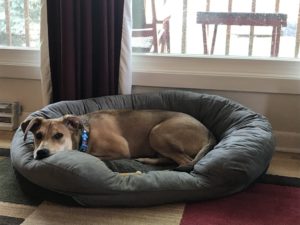
A dog lays on a dog bed in front of a window

If you live locally to the Black Hills, and you’re looking for a furry friend to add to your family (a cat, a dog, and sometimes other critters such as hamsters, guinea pigs, and even roosters or snakes!) I strongly encourage you to check out one of these local rescues (or Petsmart/Petco on their adoption days):

Humane Society of the Black Hills

Battle Mountain Humane Society

Oglala Pet Project

Turtle Mountain Animal Rescue

I’m not into clichés much, but in this case, I’ll make an exception.  Unless you’re looking for a specific breed of dog for working or show purposes and you need a breeder, PLEASE, #adoptdontshop!  You may be saving a life, and they’ll happily rescue you right back!

Have you ever adopted a pet?  What was your experience like?  Tell me about it in the comments!


Did you enjoy reading this post?  Pin it!

A dog with its tongue hanging out lays on a car seat. Pin reads, "Adopting a New, Furry Friend!"


Like what you read here today?  Please feel free to leave a comment, like or share this post!  Add your email at the bottom of the page, or the sidebar to the right, to be notified when a new post is published.  By signing up for the email list, you will also receive a free copy of the Tranquil Trekker’s Top 10 Tips of Trekking Do’s and Don’ts!

You can also follow the blog on social media by clicking the links below!

Facebook

Twitter

Instagram

Pinterest


†As an Amazon Associate, I earn from qualifying purchases

Acadia National Park: Sunsets, Lighthouses, Hiking and More!

In this post, I review the second half of our New England road trip, our visit to Acadia National Park!


Acadia National Park in Maine is a great place to visit!

**Author’s note: Just a word of warning, as this is a National Park, no dogs are allowed on any trails (exceptions for Service Animals). They are only permitted in the campgrounds and parking lots.**

Mount Desert Island, Bar Harbor and “the Quiet Side” of Acadia National Park

Acadia is a beautiful park that takes up the majority of Mount Desert Island, on Maine’s coast.  Thanks to the waterways that are found near it, this island is a bit oddly shaped.

If you’re a visual person, like me, this map may make the directions I use throughout the rest of the post more clear. 😇 

The main island is composed of two halves. The eastern half contains Bar Harbor and the majority of the touristy sites–this side is far busier.  It definitely offers the most options in way of shops, lodging and food choices, though.  Also, many of the tours leave from here, but the amount of traffic and people can get a little crazy.

The western half of the island lives up to its nickname as “the Quiet Side of Acadia” as it is far less commercialized and therefore, FAR quieter than the other areas on the island.  This is where we rented our “tiny house” Air B&B for the week, and we enjoyed staying here (we live in one of the least populated states in the country, we’re more into wildlife than people 😛).  If you’re seeking a more relaxing stay, I recommend staying here, or the even more remote Schoodic Peninsula.

A pass is required to access basically any of the park sites.  These are available easily online, but only at a few places on-site (the park gates and the Visitor’s Center).  So if you don’t get a pass online, one of your first priorities after arriving here should be to acquire one. 

Also, parking can be quite a challenge.  The outdoor store, L.L. Bean, has been generous enough to pay for the site’s public shuttles, that run throughout the park and much of the island, making them free for visitors.  Bikes can be transported on these, as well.

Acadia was a bit of a different experience for us.  The national parks out west, that we’ve become accustomed to, are frequently located in the middle of nowhere.  They are also usually surrounded by other public lands (such as BLM land, National Forests, etc.)  Also, most national park boundaries surround one big chunk of land.  I had anticipated that Acadia would fit these characteristics, as well.

Acadia National Park surprised me though.  It is comprised of individual segments of land that are surrounded by residential, privately-owned properties.  Much of the park land was donated to the National Park Service by the famous, Rockefeller family, many years ago.

While most of it is found on Mount Desert Island, some also sits on the nearby Schoodic Peninsula (on the mainland) as well as on several islands that are situated a short distance off the coast.  The park’s more residential location means it offers easier access to civilization (lodging, restaurants, and shops) but it also poses a bit of a challenge for parking and viewing some of the natural areas as you have to skirt the privately-owned land.

The Best Things to Do at Acadia National Park:

This park has been on the Trekkers’ “to-do” list for a while now.  See below for some of the highlights we most enjoyed from our visit…

The Best Sunrise and Sunset spots at Acadia:

Due to the park’s location on the east coast of the US, it is set up much better for viewing sunrises rather than sunsets.  This is mainly due to the open ocean being primarily toward the east, while to the west there are forested hills and mountains.

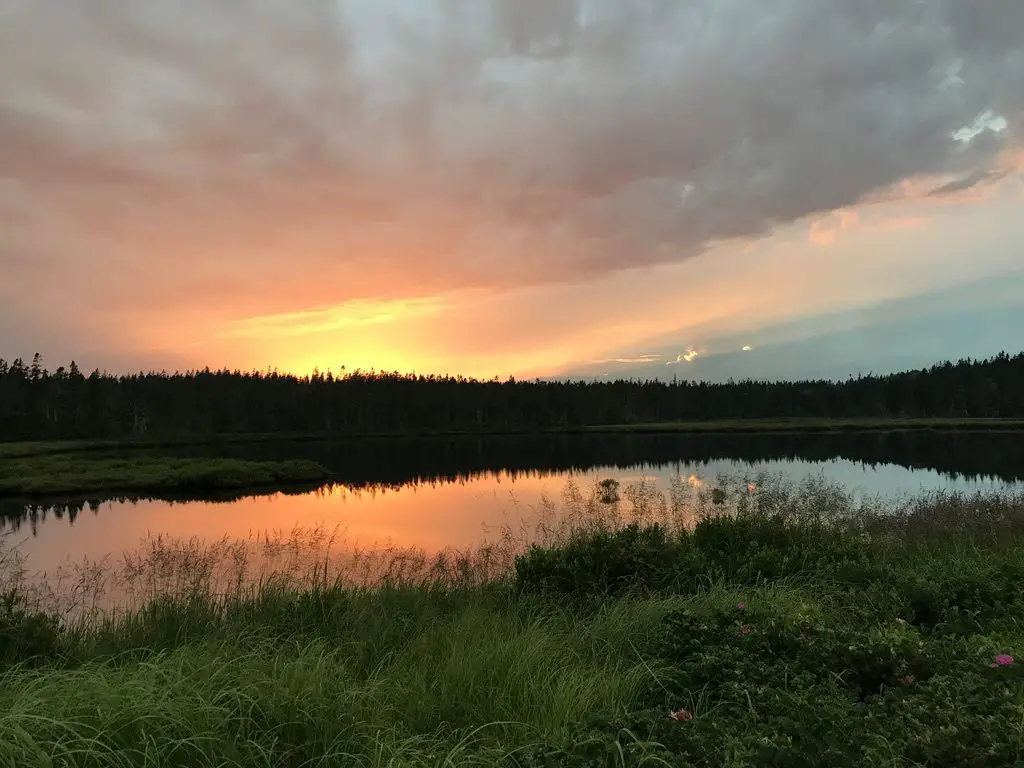
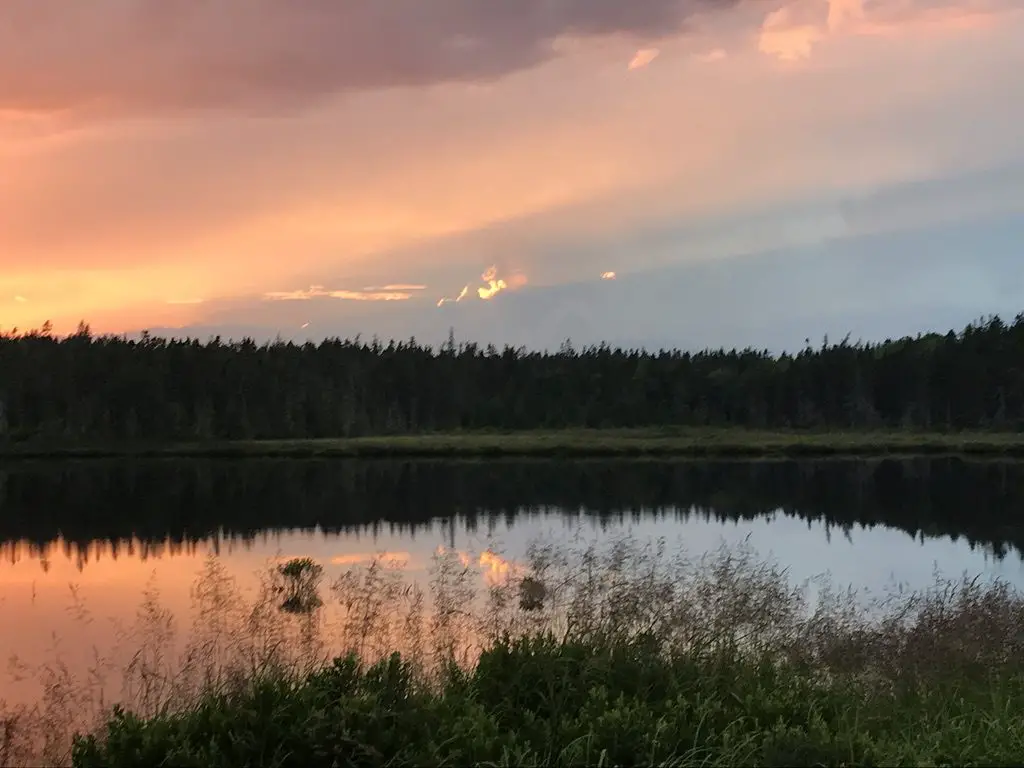
The flat, mirror-like water in a pond reflects the trees that surround it and the pink colors of the setting sun lighting up the gray clouds overhead.

However, if you prefer sunsets, or you want to view both (OR you are lazy, like the Trekkers, and you don’t want to get up at 4 am–or earlier–to go watch the sunrise 😉) I’ll give you some opportune places to catch a nice sunset.

Seal Cove We didn’t find this site till one of our last nights on the island, but it’s a fine place to watch the sunset (and its easy to reach too).  This location is on the southwest corner, of the western half, of Mount Desert Island.  This area is a quiet, peaceful place to watch the sunset, and during low tide, it provides a rocky beach to clamber around on.

The parking area for the salt marsh, near Seawall:  We saw a GORGEOUS sunset here, over the salt marsh, to the west.  The setting sun outlined thunderheads far in the distance.  This site makes for a fine place to watch the moonrise over the ocean to the east (or the sunrise, if you’re an early bird).  Based on the activities of other visitors that we saw there, this is also a prime spot for clamming during low-tide.  No matter the reason you’re stopping here to visit, be sure to bring the mosquito spray!  This site is found on the southeast corner of the western, “Quiet Side” of the island.

The flat, mirror-like water in a pond reflects the trees that surround it and the pink colors of the setting sun lighting up the gray clouds overhead.
Sunset over the salt marsh near Seawall. Check out those storm clouds backlit by the sun!
The yellow, setting sun shines through the clouds and is reflected on the ocean water. Dark, tree-covered hills are in the foreground
The full moon over the Atlantic Ocean as seen from Seawall

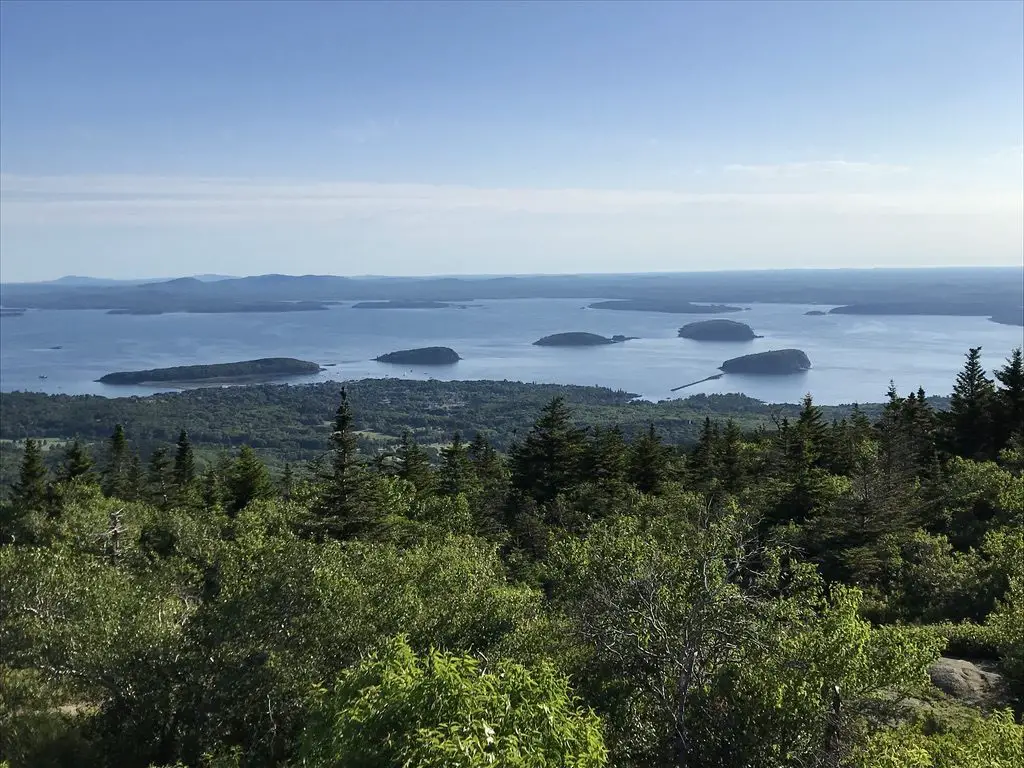
Cadillac Mountain:  This is the highest point on the island and in the park.  On clear days, it allows for FANTASTIC views of the nearby mountains, and, of course, the Atlantic Ocean and the islands that dot its bays.  Sunrise is the busiest time to visit this locale, though the Blue Hill Overlook, found shortly before you reach the summit, would make for a fine place to view the sunset as it faces west.  This site can be reached off the Park Loop Road on the eastern half of the island.

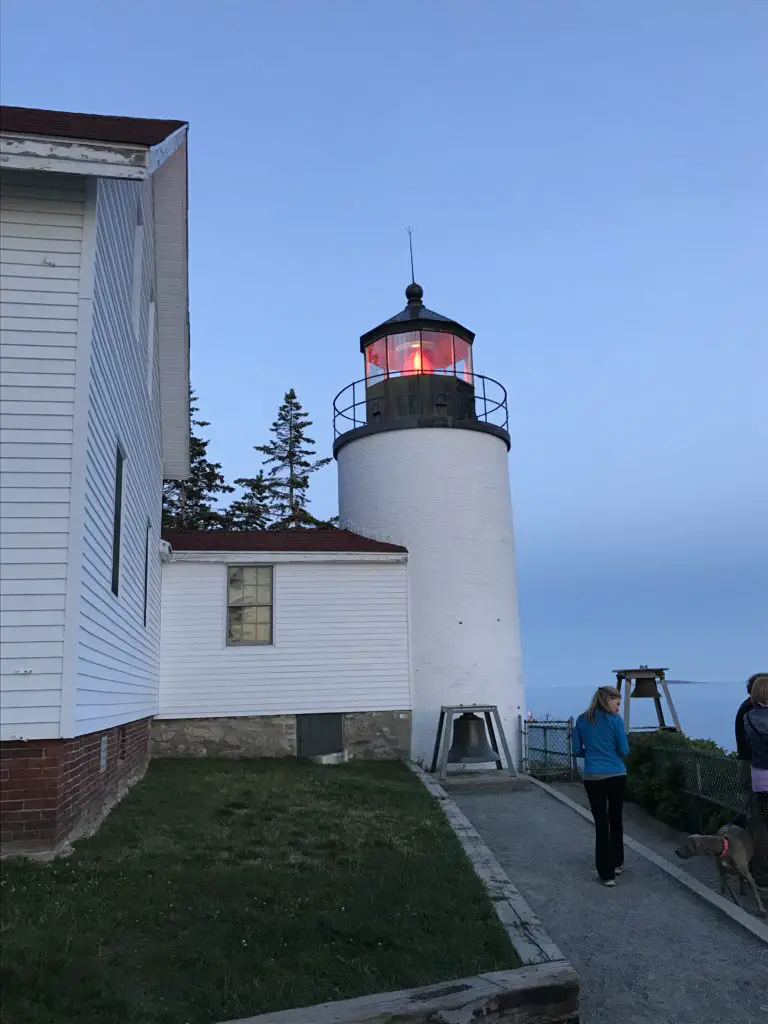
Bass Harbor Lighthouse:  It’s difficult to really see the sunset from here as it faces roughly south and there are hills that block your view to the west.  However, the way the setting sun makes the sky glow, and the way that frames the lighthouse against the rocky shoreline is quite lovely.  This site is found on the southern tip of the “Quiet Side” of the island, south of Southwest Harbor.

In the darkening light, a white building and lighthouse with a reddish-orange light on top. A bell sits in front of the lighthouse tower
Bass Harbor Light, at sunset

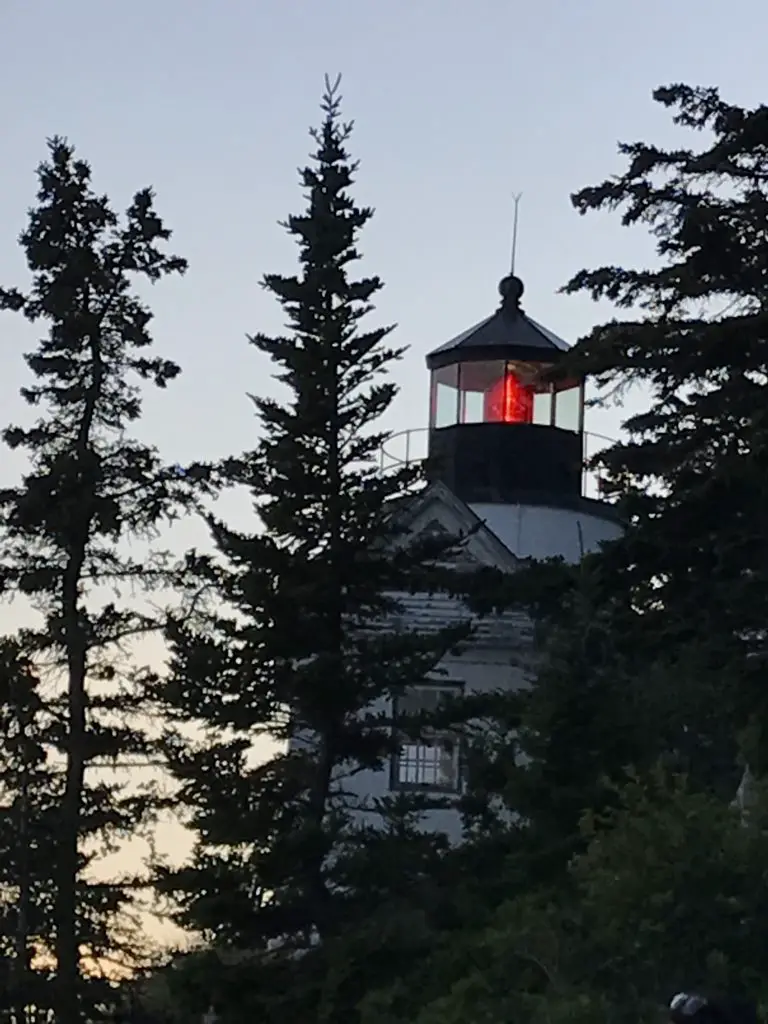
In the darkening light, a white lighthouse tower with a reddish-orange light on top is spotted through the pine trees

Acadia’s Lighthouses

With it’s unique location directly on the coast of Maine, Acadia offers many cool lighthouses to visit!

A white building and lighthouse. A bell sits in front of the lighthouse tower

Bass Harbor Lighthouse:  This is the only lighthouse in Acadia that can be easily reached and viewed by car.  It’s also a regularly photographed spot (for good reason.)  It’s manned by the Coast Guard now, so you can’t actually go up it, but you can walk to its base.  There is a short, hiking trail that leads to the rocks on the light’s opposite side, that is nice as well–this is also the viewpoint for sunrise/sunset!  

Bear Island Lighthouse:  This is one of the only other lighthouses near Acadia that can be viewed from shore/by car, and it takes work.  We ended up with a bit of a quest to find it, but we managed, eventually! 

Based on the light’s location on the map, we knew it should be visible from the shore.  So, for several evenings, we drove around trying to catch a glimpse of it.  Alas, all those pesky trees that grow on the East Coast (and some of the privately-owned, residential land) made it difficult. 😉  We DID finally find it though (without trespassing I might add 😉). 

**If you’d like to set out on your own quest to search for it yourself, be my guest.  If, however, you’d like directions on how to find it, scroll to the bottom of this post and I’ll leave them there.** 

If you visit Acadia National Park and enjoy lighthouses as we do, I highly recommend taking a lighthouse boat tour.  Almost all of the structures reside on nearby islands, and some are open for touring, at certain times of the year.  I didn’t realize just how many islands are included within the park’s boundaries (and scattered around the nearby waterways).  This means many of the lights can really only be viewed from the water.

Hiking Trails around Acadia:

There are numerous hikes available at Acadia, ranging from short to lengthy and easy to difficult.  Below are the ones we enjoyed:

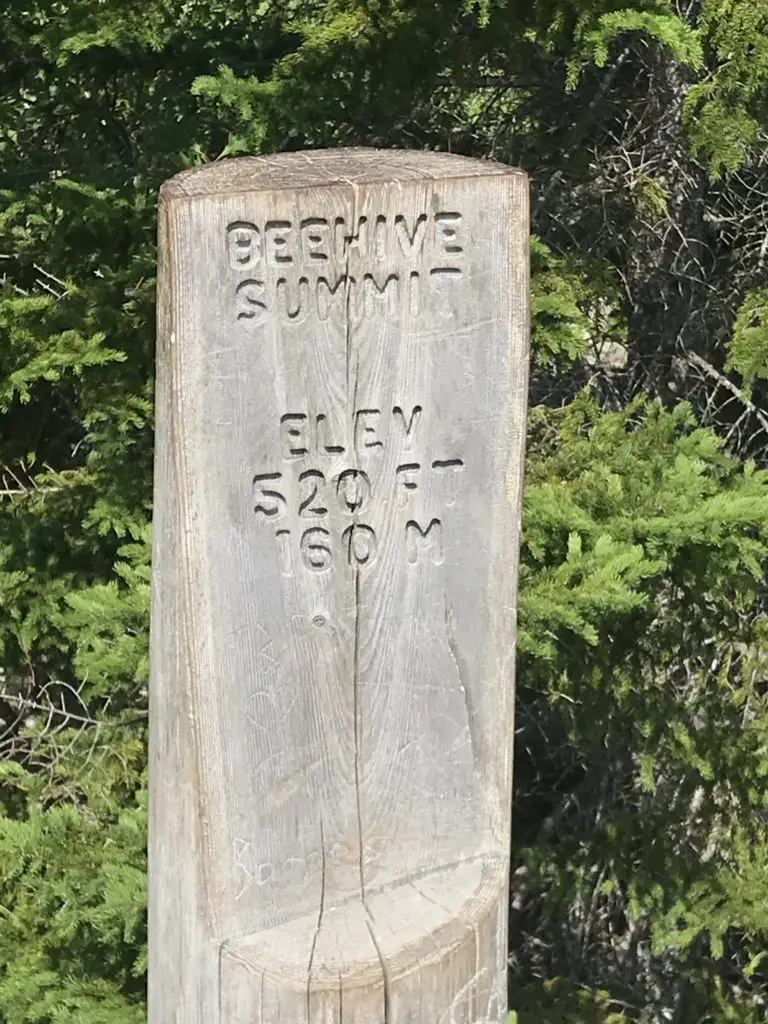
The Beehive/Bowl/Gorham Mountain Trails:  The Beehive Trail is an AWESOME hike!  This was on my “must-do” list while visiting Acadia.  This trail is the little brother to the infamous “Precipice Trail”.  Now THAT ONE looks scary.  It was actually closed when we were there (and is for much of each summer) due to it being a nesting area for peregrine falcons. 

We knew this going in, and I was fine with it.  I don’t know that my fear of heights would allow me to complete this scramble up the side of a mountain. 

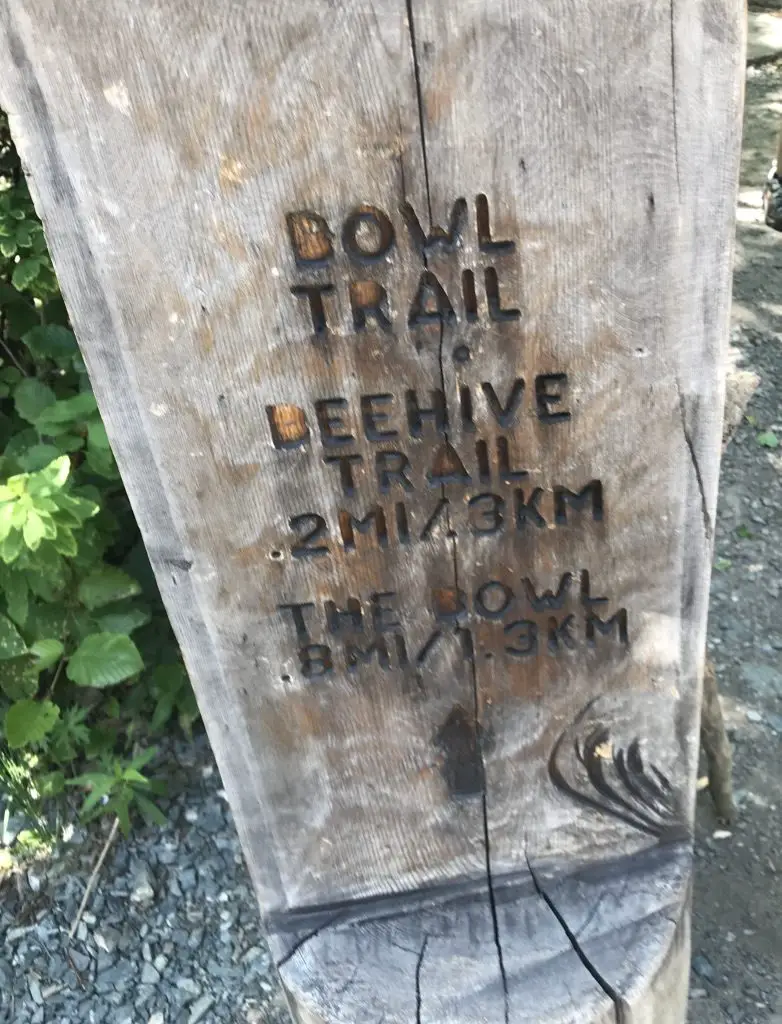
Wooden signpost marks the start of two hiking trails. The sign reads, "Bowl Trail--Beehive Trail 2mi/3km; The Bowl .9 mi/1.3km"

All of these trailheads can be accessed via the Park Loop Road on the eastern side of Mount Desert Island, south of Bar Harbor.

Wooden signpost reads, "Beehive Summit Elev 520 ft/160m

We also combined the Bowl and Gorham Mountain Trails into this hike, as they all connect.  We had intended to make a loop of it by including the Cadillac Cliffs Path, and then take the Ocean Path back to the parking area, but I was starting to have my usual struggles with the heat, so we cut it a bit short.

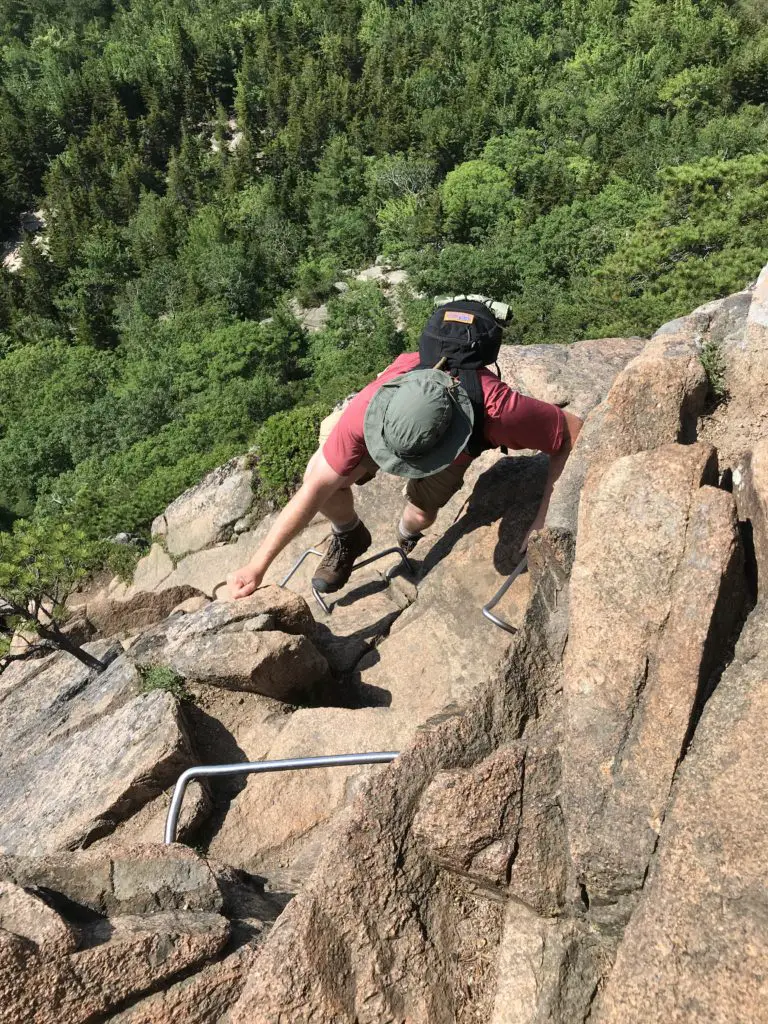
All of these trails were of moderate length.  The Bowl and Gorham Mountain Trails were moderately strenuous.  The Beehive Trail was quite strenuous (though mercifully short) as you basically scramble up the side of the mountain, free-climbing over boulders and using iron rungs that have been strategically placed throughout the route.

The picture below looks pretty terrifying, but it actually wasn’t that bad.  Trust me, I don’t like heights, but there was only one brief moment when I became uncomfortable (and it can be crossed in just a few steps).  The views from the top are INCREDIBLE though, and make the trek worth it!  If you’re hot, you can loop around and take a dip in the refreshing Bowl in the valley below!

A park climbs up a rock wall on metal rungs in the foreground. In the background, green, tree-covered hills spread far below
Mr. Trekker’s brush with death on “The Beehive” (it’s actually not NEARLY as bad as it looks, but this pic is GREAT, right?! 😉)
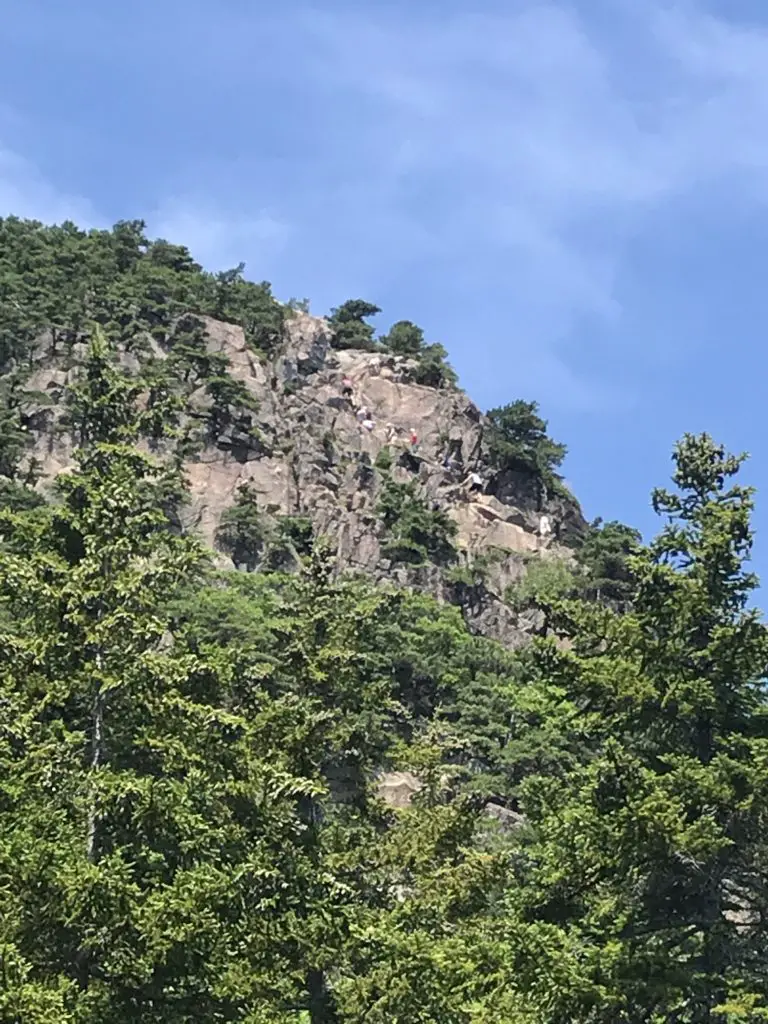
Green trees in the foreground with a rock wall, scattered with trees in the background, all under a blue sky. A line of tiny, multi-colored hikers is climbing the rock wall
A line of hikers ascending The Beehive
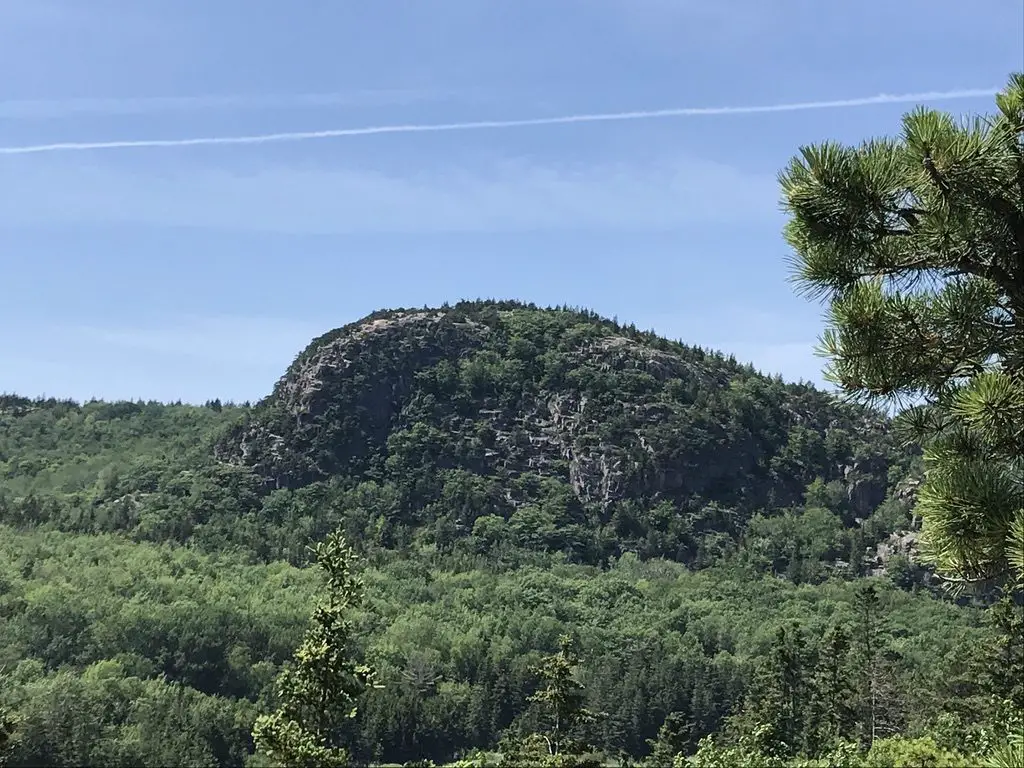
Green trees in the foreground, a green, tree-covered mountain rises in the middle, all under a blue sky
The Beehive as seen from Gorham Mountain
A small lake surround by trees and green, tree covered mountains, all under a blue sky
The Bowl

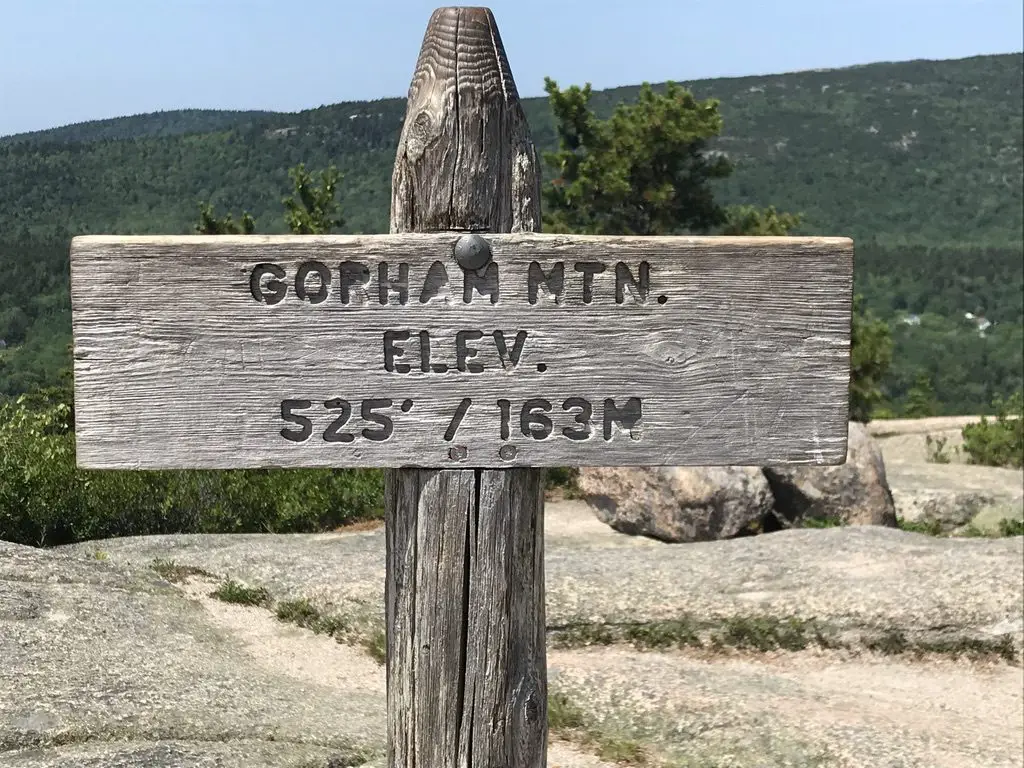
Wooden sign post on a rocky, mountain summit. Green, tree-covered mountains rise in the background. Sign post reads, "Gorham Mtn. Elev. 525'/163 m

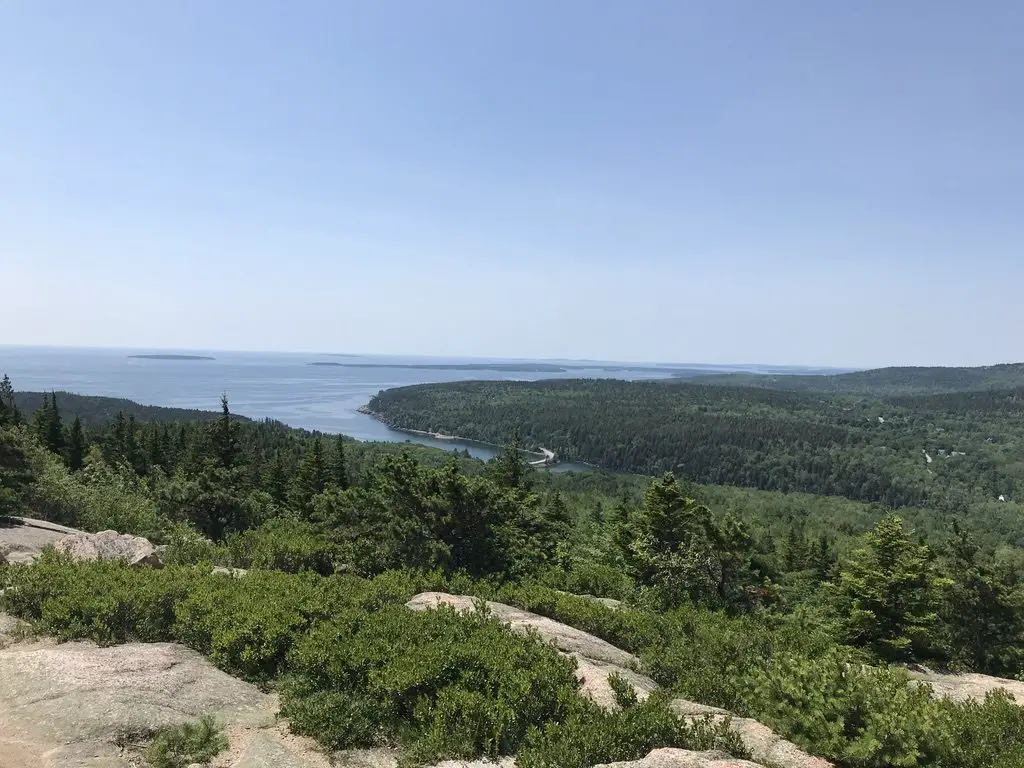
A rocky, mountain summit in the foreground. Green, tree-covered hills stretch to the blue ocean in the background, all under a clear, blue sky
The view from the Gorham Mountain summit

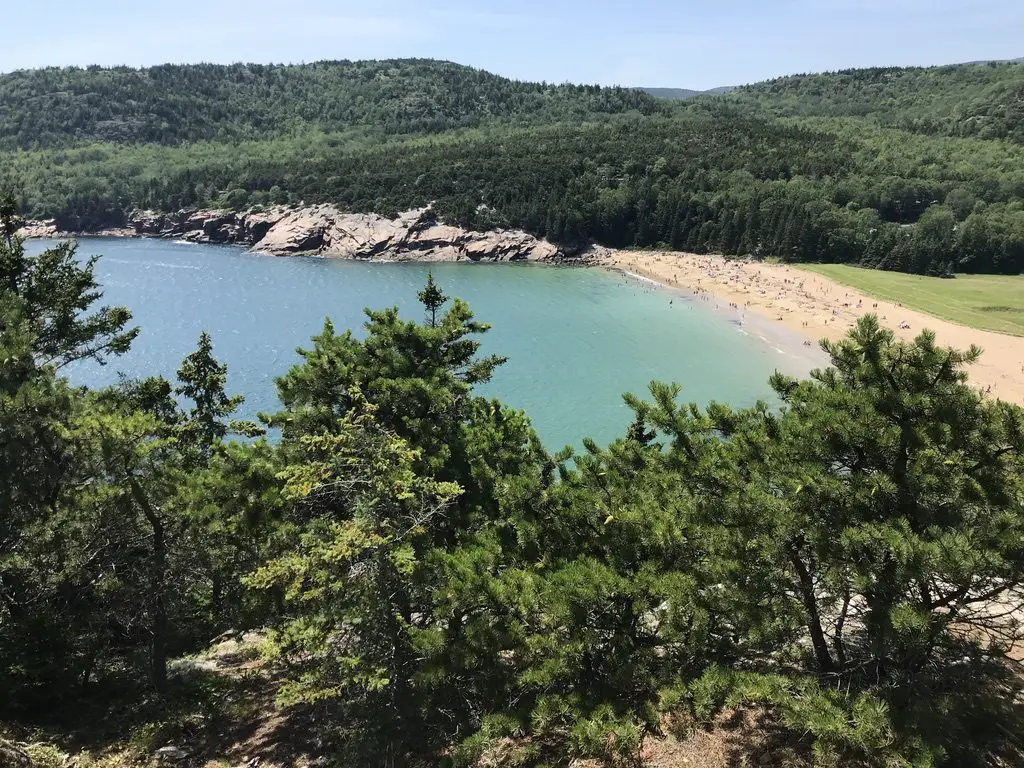
Great Head Trail:  Because we chose to cut the above route short, we were able to enjoy a good portion of this trail that is found in the forest, just to the west of Sand Beach.  Sand Beach can be reached from the same parking area as the Beehive/Bowl trailheads.  This was really convenient as we were able to park the car once and hike for most of the day (just make sure to get there early!)  

Green trees in the foreground overlook a blue-water bay that leads to a narrow, sandy beach. Green, tree-covered mountains rise in the background
Sand Beach

Wonderland Trail and Ship Harbor Trail:

The Wonderland and Ship Harbor Trails are accessed via Route 102A, on the western side of the island, south of Southwest Harbor.

These hikes were short, easy and VERY enjoyable.  Due to their location on “the Quiet Side” of the island, they were much less busy than other areas of the park. 

Mr. Trekker thought the photography opportunities they offered were comparable to ones we found in many of the more well-traveled sections of the park, as well. 

These routes take you down to the shore where you can walk the rocks and view the organisms living in the tide pools (at low tide). 

Other Fun Things to do at Acadia National Park:

Thunder Hole:  So this place is pretty awesome…when the winds and tide are strong.  When the conditions are right…the wind forces the waves into a small cave on the shore, which then, in turn, forces air out of the cave creating a crashing sound that reverberates off the nearby rocks!

Click here to see its full potential! (Take note, when we visited this site we were standing on the walkway you see at the bottom of the video, and others were standing on the rocks at the top of the frame. 😮–the trail is closed during this type of bad weather.)

When conditions aren’t right…it’s still cool, but not quite the draw it could be.  Fortunately, we were blessed with pretty nice weather throughout our trip.  Unfortunately, nice weather doesn’t bode well to experience the full effect of this location.  When we were there it was more like  “gurgle hole”.  😂

Carriage Roads:  This is another activity I’d put on our “must-do” list if we return to the park in the future.  These gravel roads snake throughout the forests of the interior of the island.  Bike rentals are available, though you still need to figure out how to get the bike to the trails. (I’d recommend bringing your own.  We considered it, but decided not to drag our bikes on a 5000+ mile road trip for one day of biking. 😛)

These trails were used by the Rockefeller family for their carriages when they owned the land–hence their name.  There are also some carriage rides still available through the stables on the island, where your carriage is pulled by beautiful draft horses!

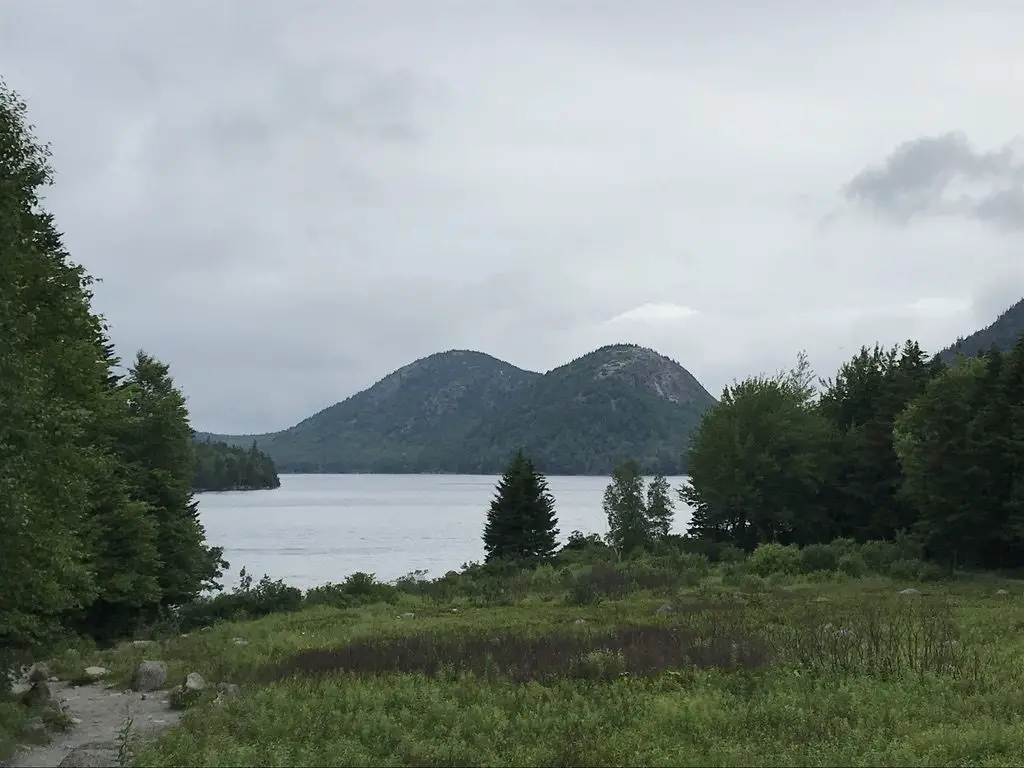
Jordan Pond/”The Bubbles”:  As I mentioned in a previous post, Jordan Pond is again a place where they use the word “pond” when “lake” would make a much better descriptor. 😂  Several carriage roads start from here.  There’s also a restaurant and store in the historic building that was the original farmhouse built on this site.

There is a decent hiking trail that circles the lake.  We only did a portion of it (the easy part that was on a boardwalk).  The other half appeared to be more rugged.  I don’t think it had much elevation gain, just a lot of rocks to clamber over.

We met a lady later in the day, who had actually slipped off some rocks on the harder section and fell in the lake 😮 (she was fine). 

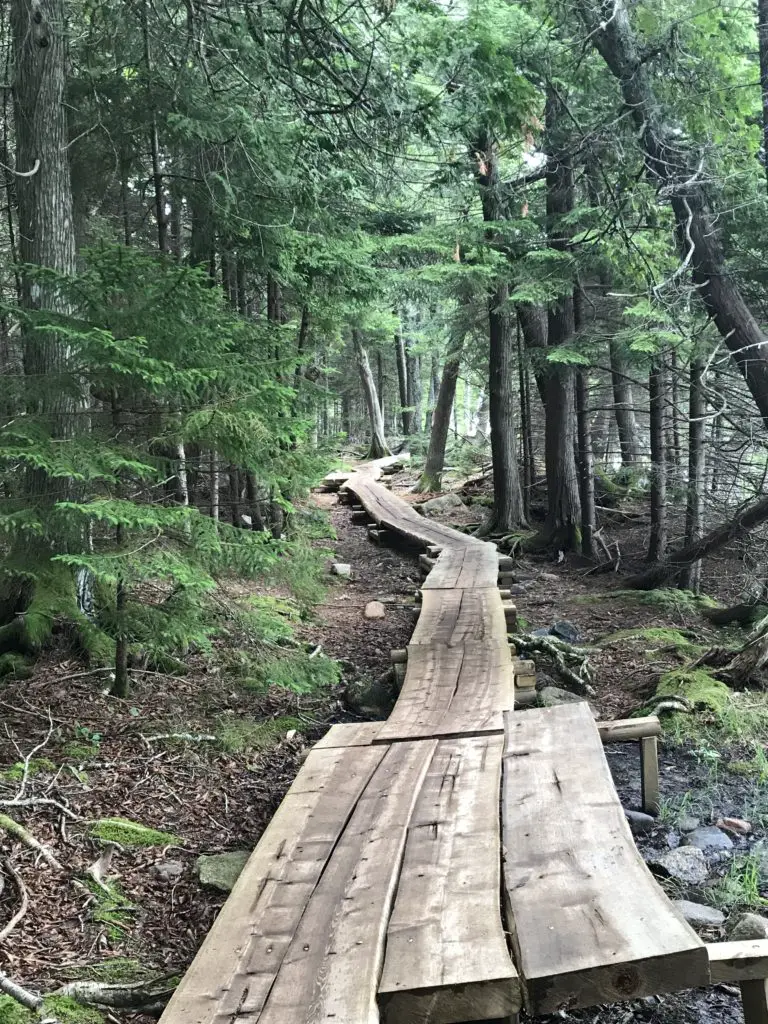
A narrow, wooden boardwalk through the pine trees
The boardwalk on the trail around Jordan Pond

The boardwalk portion is basically completely flat and offers fine views of the lake, the nearby building and “The Bubbles”–I’m not sure who gave this name to these twin mountains.  They looked like something more PG-13 rated to me but…to each their own. 😱

Green grass in the foreground with a large lake in the background, leading to twin mountains covered in green trees
The “Bubbles”. What do these look like to you? I mean, come on! 😝

Cadillac Mountain:  We actually chose NOT to hike Cadillac Mountain on this trip.  This was for several reasons:

–We only had a few days at Acadia and we can hike mountains whenever we want, but we CAN’T visit the beach too often.  So, we chose to spend most of our time there. 

–Also, aspiring hikers should be aware that much of Cadillac Mountain trail has little shade, so it can be quite hot in the summer months. (This was another reason we chose to skip it, as heat and I don’t get along. 😝) 

We did make the easy drive to the summit on multiple occasions.  Sunrise is a busy time here, for obvious reasons, so if you’re choosing to go then I suggest you plan to leave early.  It’s beautiful at any time of day though, so long as the weather is clear. 

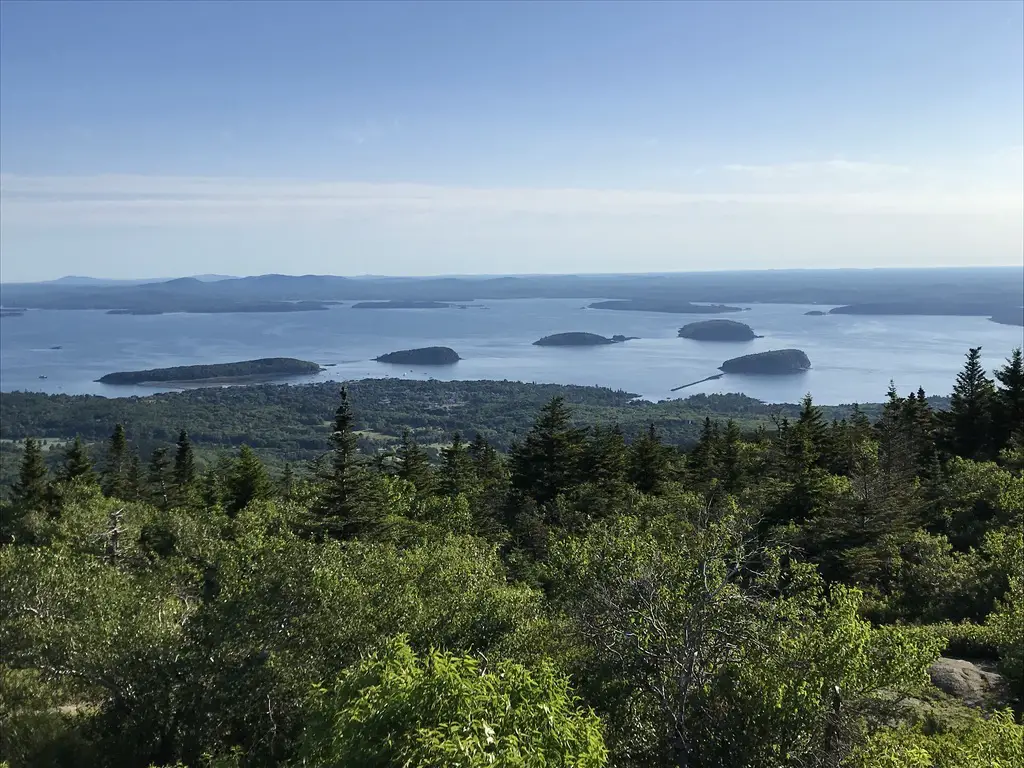
In the far background, several small, green, tree-covered, circular islands sit in a bay of the ocean. Green , tree-covered mountains run to the ocean in the foreground and are in the far background, behind the bay
The islands in the bay as seen from the summit of Cadillac Mountain

The Park Loop Road:  This road basically “loops” around the outer boundaries of the park (hence the name).  It features numerous pull offs where scenic views can be enjoyed, as well as plenty of recreational sites.  There are several picturesque bridges along its length that reminded us of the ones we saw in Virginia on the Blue Ridge Parkway.

Wildlife:  We were told there are bears and moose on the Schoodic Peninsula portion of the park, on the mainland.  Other than that, the majority of exotic wildlife that Acadia offers is sea life.  (This would have been a cool sight as we don’t usually see these types of critters at the landlocked national parks we frequent in the Western US!)

We didn’t see many sea creatures, but this is likely due to the fact that we didn’t venture out on the water.  There are whale watch tours that depart from near the park.  I’ve also heard stories of people who go on sea kayaking tours where seals and dolphins are known to come close and curiously inspect the watercraft. 

As we only had a few days here, we chose not to do these, but if we return for a future visit, they’ll definitely be on our “to-do” list.  If you visit the park, I would encourage you to seek these out as you may see some unique wildlife not always available at other parks.

LOBSTER!!!

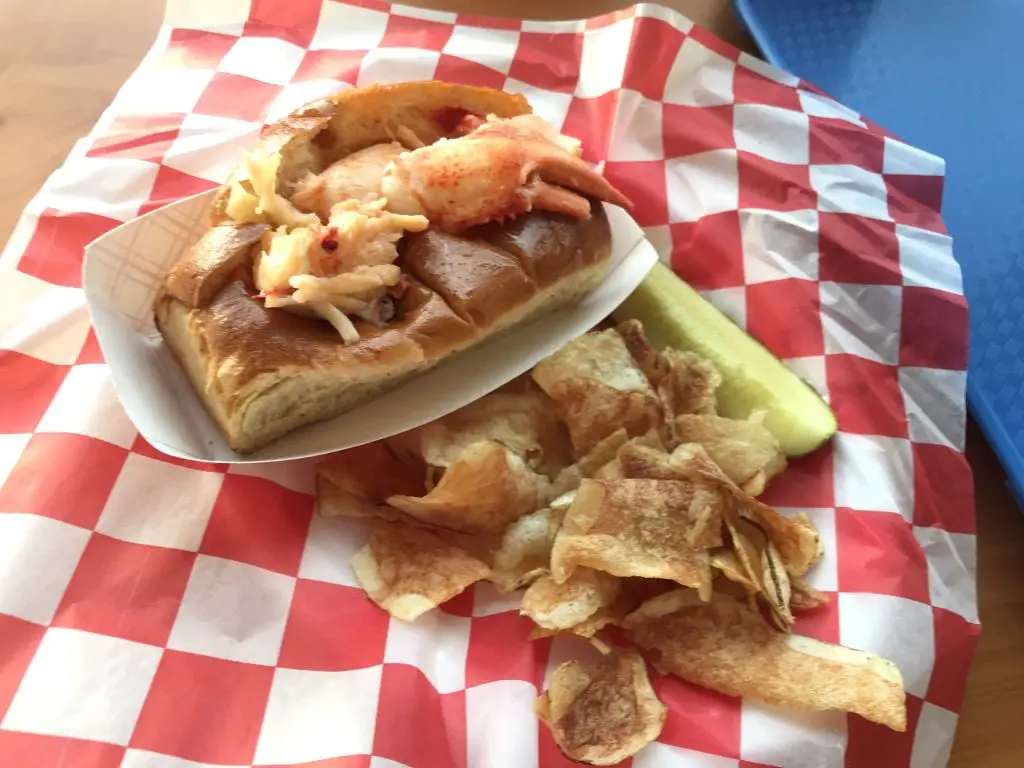
I got to enjoy my first lobster on this trip (and my first New England lobster roll!)  I liked it!

I got a “classic” roll, with the lobster already shelled for you and warmed with butter, on a buttered, toasted roll.  It was easy and delicious!  After watching many of our seat-mates struggling to crack through the shells of their dinner, I was happy to go the easy route.

We enjoyed our meal at Beal’s Lobster Pier in Southwest Harbor.  This place is NOT fancy (and I mean that in a good way).  It was the PERFECT place for us to enjoy our first lobster experience, though.

It’s basically a walk-up counter, and then your number is called and you get your food.  You enjoy it outside, or on a screened-in porch, all on picnic tables.  We absolutely LOVED it! 
If you’re looking for something more up-scale, there’s plenty of options for those as well, but the Trekkers are a casual bunch. 😛

A lobster roll with chips and a pickle on a tray
LOBSTA!

We really enjoyed this trip!  Our goal was to travel as few interstates as possible once we reached “northern New England”, and we felt like we were fairly successful at that.

I’ve mentioned before how much I enjoy taking the slower backroads (and by this, I mean anything from two-lane, US highways to dirt, county and forest roads).  We’re already planning another trip to that area in the next few years, to more fully explore the Adirondacks and Finger Lakes regions of New York, as well as more of Vermont and New Hampshire.  On that trip, we’ll map out “backroads” more before we go, with the goal being to avoid interstates as much as possible once we reach New York! 

I hope you enjoyed my review of Acadia.  It definitely has some unique characteristics as far as national parks are concerned.  We enjoyed visiting it, and would certainly consider another trip.  While we love living in the Black Hills, we both miss easier access to the ocean (especially Mr. Trekker).  Neither of us is really a “beach bum”, but exploring the rugged, rocky shores of Maine is right up our alley!

A few more pics from the trip:

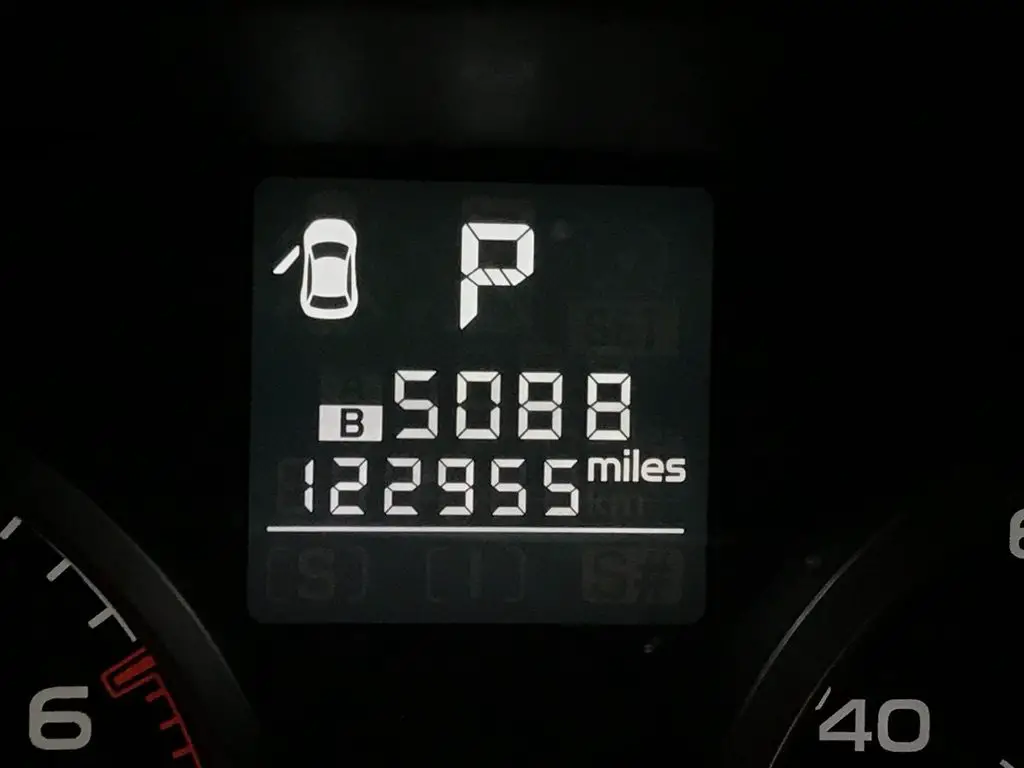
Car consul display reads P (for parked); 5,088 miles
The final mileage tally. And this was about 50 miles short, as we forgot to set it until we got to Wall, SD on the way out of town. 😝
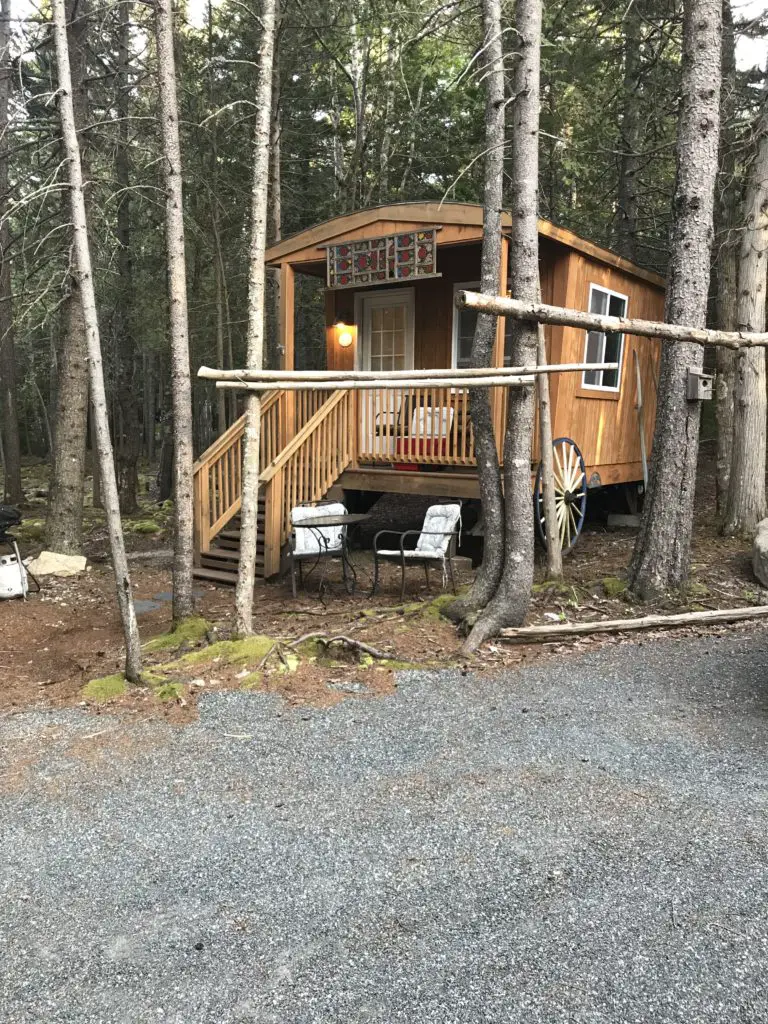
A tiny, wooden, wagon-cabin sits amongst the trees on a gravel road
Our “tiny house” Air B&B for the week
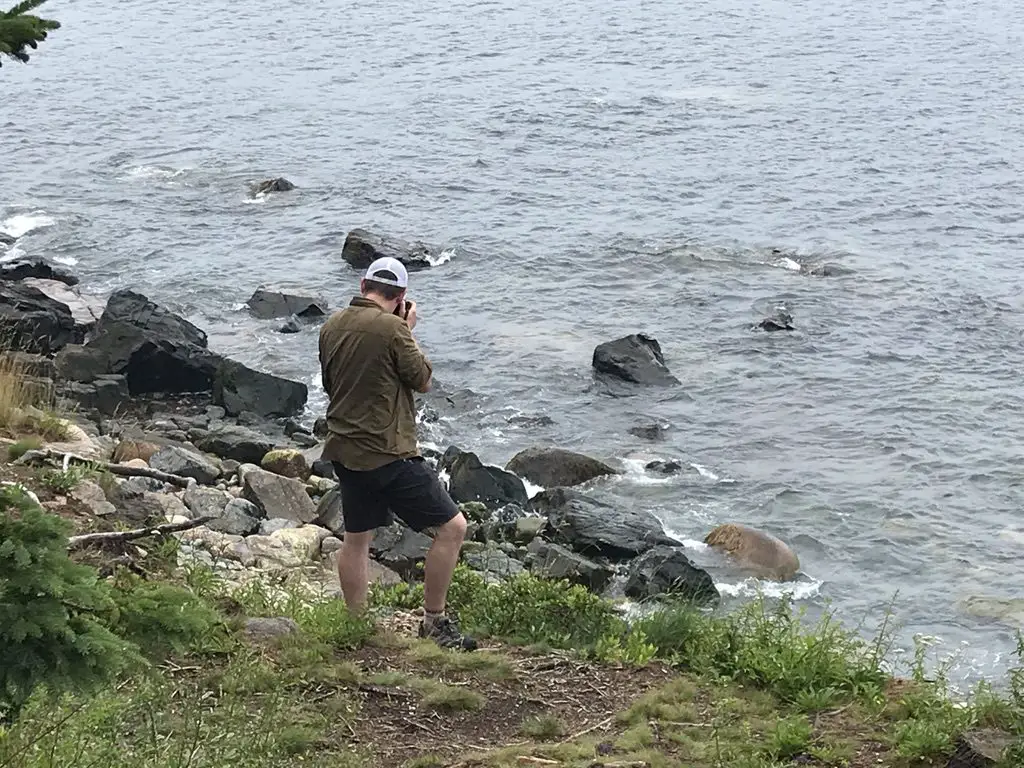
Rear view of a man standing on the rocky shore, taking a picture while looking out into the water
“A wild photographer stalks his prey!” (said in my best “Steve Irwin” voice) 😁
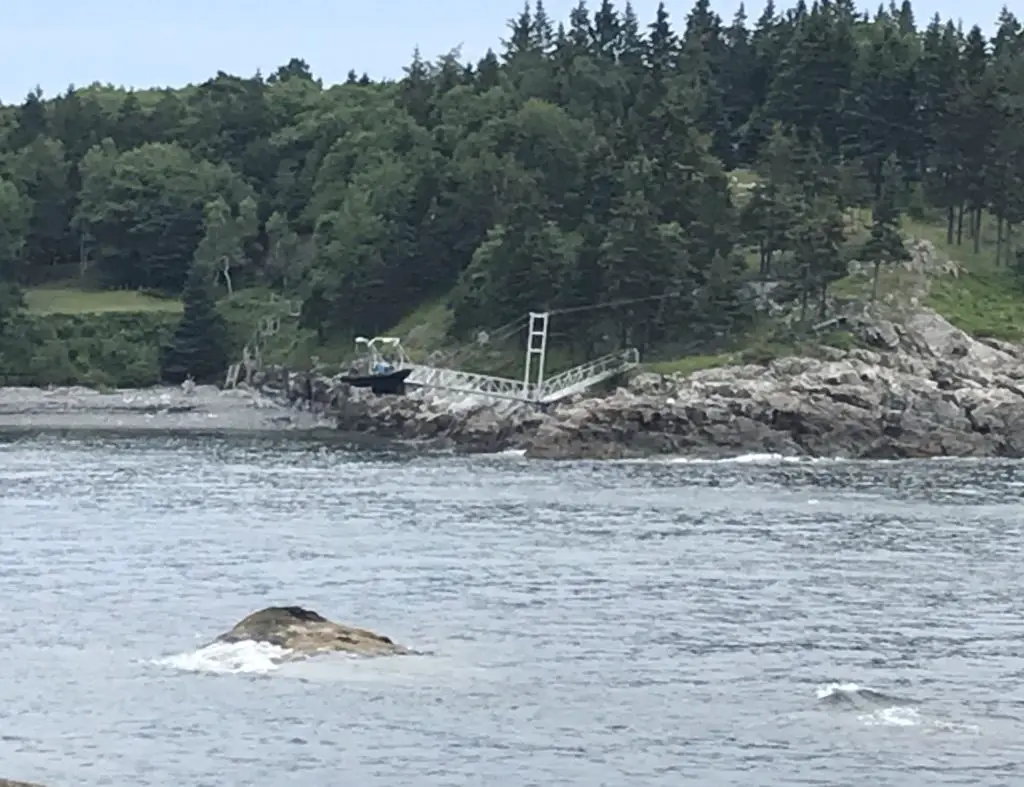
A boat and metal dock rest on bare rocks across a shallow bay. A short, tree-covered, rocky hill is in the background
I call this one, “low tide is weird”. 😝


**SPOILER ALERT!!!**

OK, if you want to know how to find the Bear Island lighthouse, you can spot it, flashing at night, from a public parking lot off of Norwood Road, east of Southwest Harbor.  Good luck on your quest!  I don’t actually know if it’s visible from there in the daylight, we didn’t get over there at that time of day.  If anyone knows of other places to view the lighthouse from public land, let me know in the comments!


Did you enjoy this post?  Pin it!

Four pictures: 1) Several small, green, tree-covered, circular islands sit in a bay of the ocean in the far background. Green , tree-covered mountains run to the ocean in the foreground; 2) View from a rocky cliff looking down into the water far below; 3) A creek runs through a green-grass meadow between tree-covered mountains; 4) View from a rocky cliff looking down to the water far below. Pin reads, "Acadia National Park Sunsets, lighthouses, hiking and more!"


Like what you read here today?  Please feel free to leave a comment, like or share this post!  Add your email at the bottom of the page, or the sidebar to the right, to be notified when a new post is published.  By signing up for the email list, you will also receive a free copy of the Tranquil Trekker’s Top 10 Tips of Trekking Do’s and Don’ts!

You can also follow the blog on social media by clicking the links below!

Facebook

Twitter

Instagram

Pinterest

9 “Don’t Miss” Places for Your Vermont and New Hampshire Road Trip

In this post, I review the New England road trip we took through Vermont and New Hampshire during the summer of 2019.


3 weeks, 13 states, 5,138 miles, and 2 quarts of oil (FYI, Subarus inhale oil) gives you a grand New England Road Trip!  Because, when you live in Western South Dakota, why wouldn’t you drive all the way to the coast of Maine for summer vacation? 😮😛

In 2019 the Trekkers spent three weeks on a whirlwind tour of the Northeast. We spent the first week visiting with Mr. Trekkers’ family in Connecticut, enjoying some of the old haunts from his childhood.  Then we spent a weekend toodling around Vermont and New Hampshire, and then enjoyed several days at Acadia National Park, in Maine.  We finished with a quick visit with my family in Indiana on the way back. Read on for “Don’t Miss” places for your Vermont and New Hampshire road trip! 

Northern New England Countryside

I love northern New England!  After traveling the crazy highways that snake all around its southern section, you hit the Vermont state line and life seems to slow down a little, again.  You find yourself quickly returning to the small-town charm of country towns; earthy, damp smells radiate from the walls of green trees and ferns in the woods that surround you.  It feels different here… most of the trees are deciduous hardwoods, whereas we’re used to the evergreens more commonly found in the Black Hills (and areas of Colorado that we frequent).  It feels almost like a rainforest compared to the more arid land we’re used to.  It reminded us a bit of the Redwood forests in California (except without the Redwood trees 😛).

“Don’t Miss” sites in Vermont and New Hampshire

Below are some highlights from our whirlwind tour…

Route 100, Vermont:

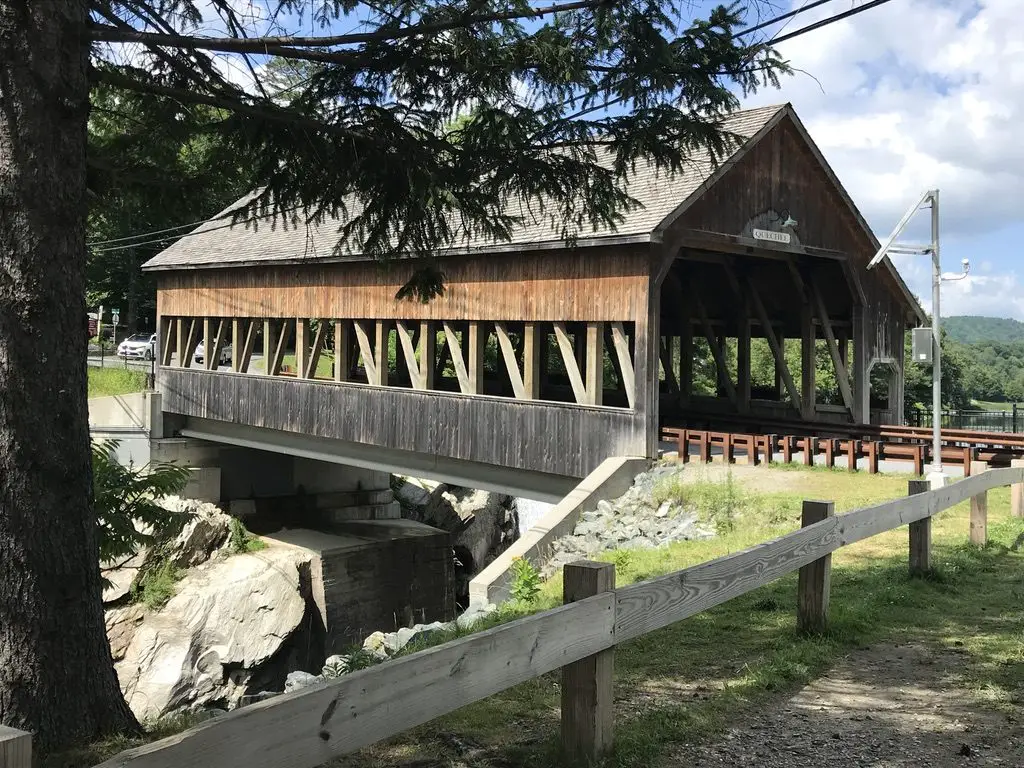
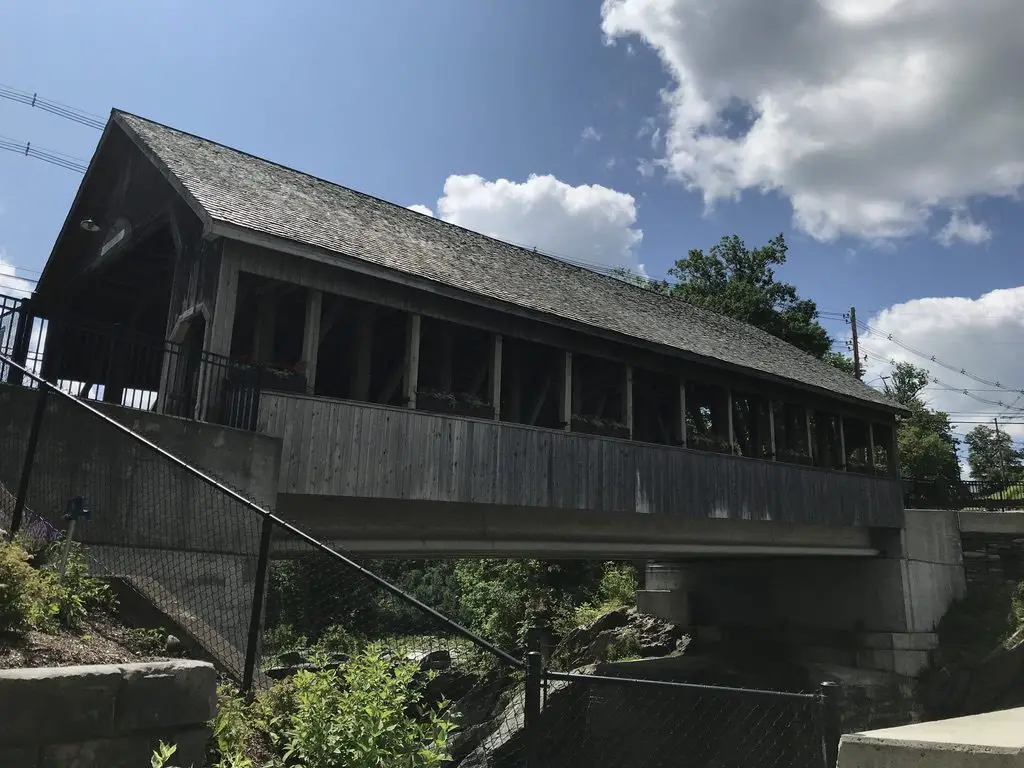
We traversed much of this scenic byway that spans the majority of the state, from north to south.  Several of the locations listed below were found on or near that road.  Throughout these travels, we enjoyed one of Vermont’s prime attractions, covered bridges, as well.  

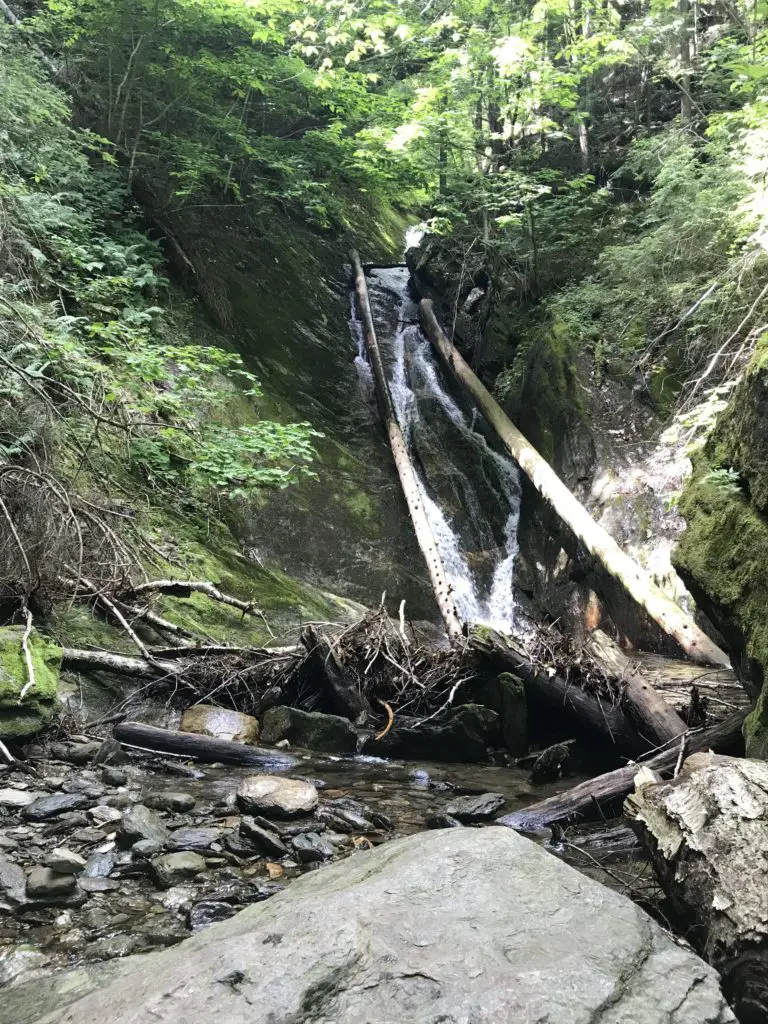
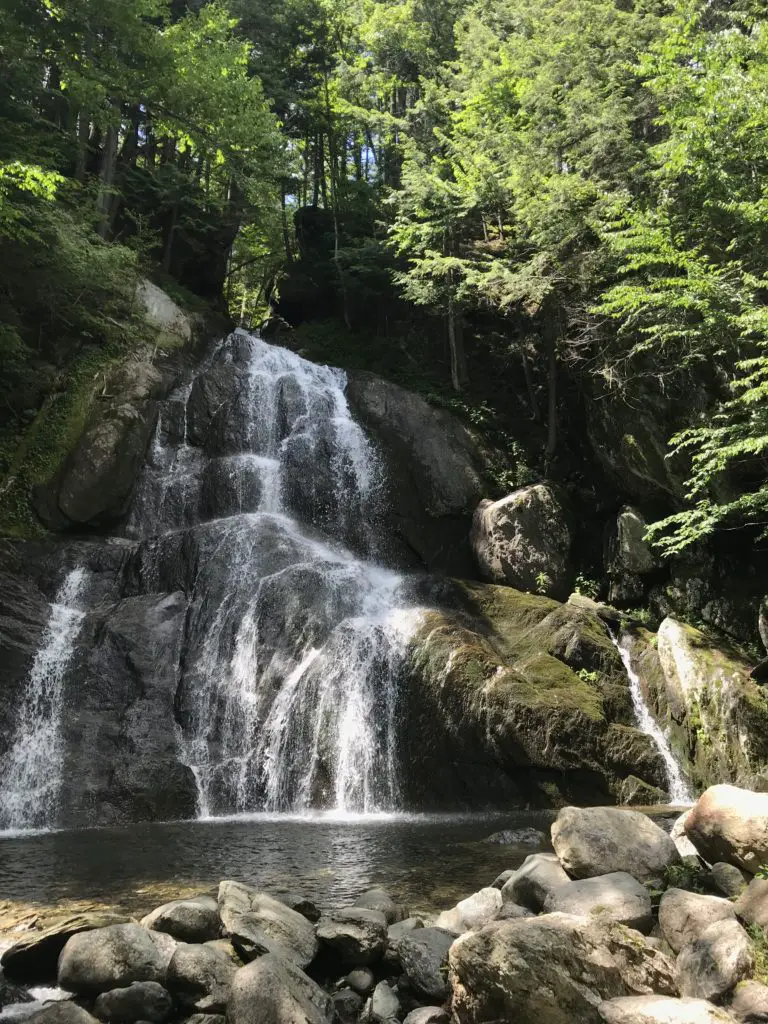
Small waterfall trickles down rocks into a rocky pool of water, surrounded by forest and boulders
Moss Glen Falls

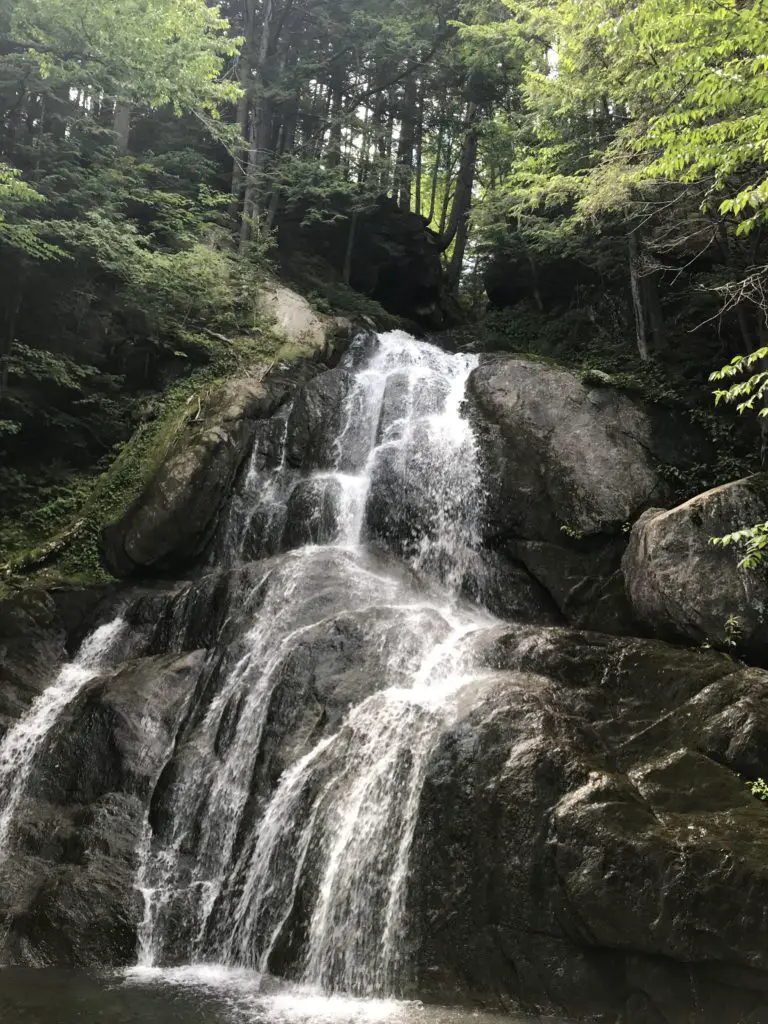
A waterfall over rocks landing in a pool at the bottom in the middle of the woods


For more pictures of some great waterfalls around New England, check out my friend, Kathy’s blog here.


A waterfall over rocks landing in a pool at the bottom in the middle of the woods. Large rocks sit in a pile near the pool of water

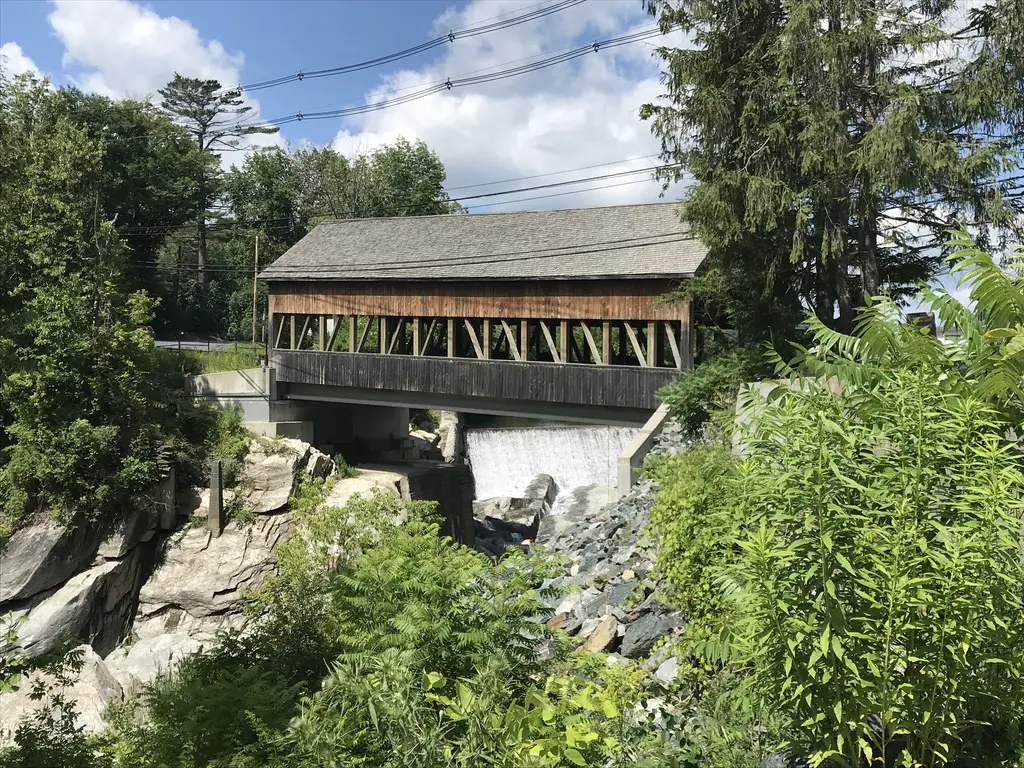
Large, covered bridge spans a river
Covered bridge over the Quechee River

Large, covered bridge spans a river

Ben and Jerry’s Flagship Store, Waterbury Vermont: 

We decided we didn’t have time to actually do the factory tour where you can watch how the ice cream is made (though that would have been REALLY cool).  However, we did get ice cream from the official store, and I’ve got a tie-dyed t-shirt to prove it!  We did take the time to check out a portion of the grounds called the “flavor graveyard”.  It was a little weird 🙃 but it was interesting seeing the various flavor options that have come and gone throughout the years.  Check out the website for the factory here
Cold Hollow Cider Mill, Waterbury, VT: 

Just up the road from Ben and Jerry’s is a cool cider mill.  It specializes in fresh-baked, cider donuts.  I thought they tasted more like spice cake, but either way, they were good! Click here to check out the website for the mill! 

The Vermont Country Store, Weston, VT: 

This place was nice.  It kind of reminded me of Wall Drug, in Wall, SD, but was far less immense.  It was definitely a cute place to pick up some local delicacies and check out some cool, retro toys and games from the ’80s, that brought back memories of our childhoods. 😁

Quechee Gorge, Hartford, VT: 

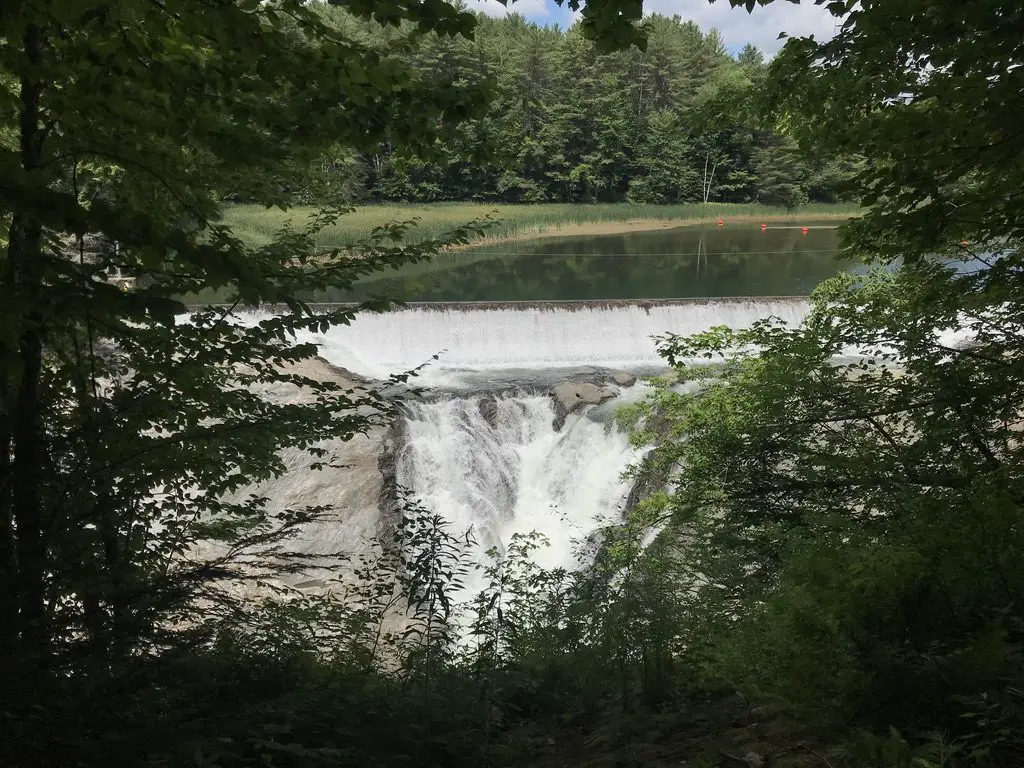
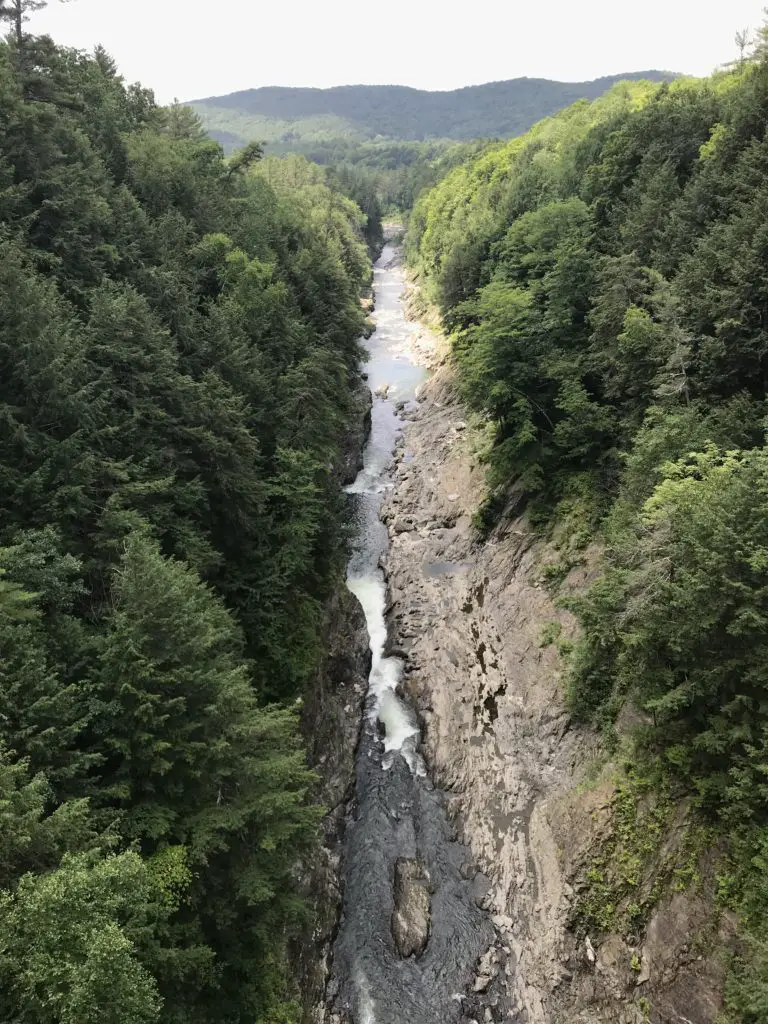
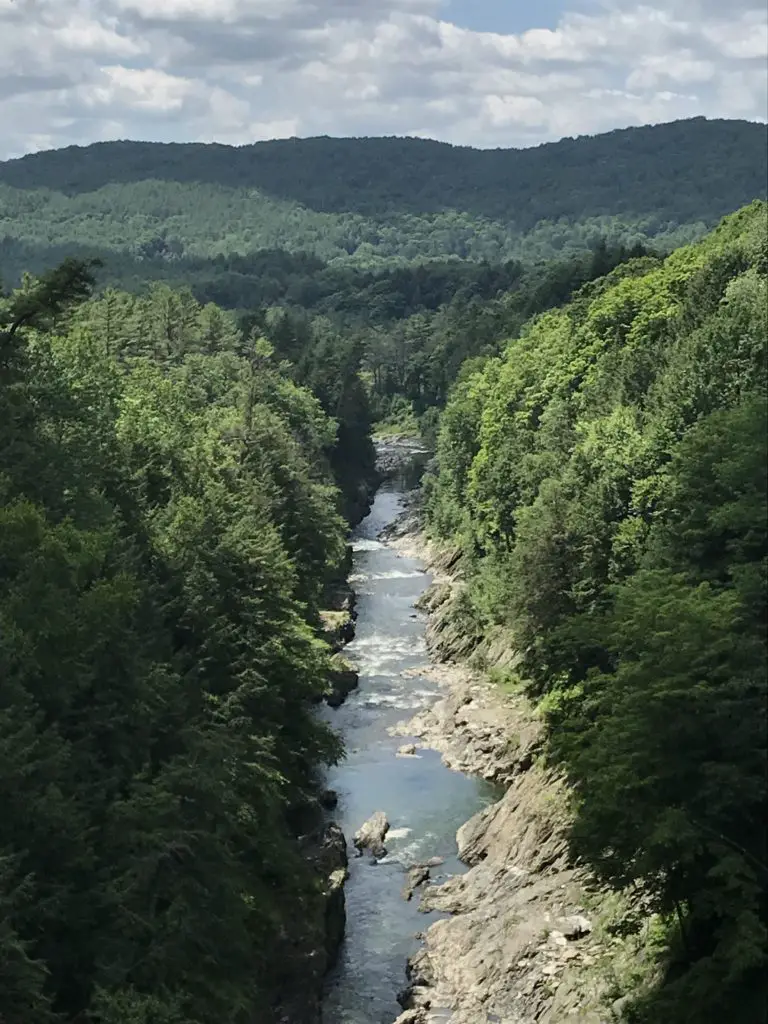
This place was really cool!  The Ottauquechee River cuts through over 100 feet of rock in this area, the result is a GORGEOUS, scenic view.  A hiking trail nearby takes you on an easy hike of less than one mile, to the head of the gorge, where the river is dammed.  This provides a unique view down the length of the canyon. 

The trail also traverses about a mile downhill, the length of the gorge, to where the river emerges from the rock again.  This is a popular swimming area.  Be aware though, as it’s downhill from the main parking lot all the way to the swimming site, you know what that means for the return trip! 😛

Looking through a hole in the trees, a dam in the background narrows into a large waterfall over some rocks
The dam at the head of the Quechee Gorge
Looking down the length of a tree-lined gorge from above. Rocky walls lead to the river far below
This pic gives you an idea of how deep the gorge is
Looking down the length of a tree-lined gorge from above with tree-covered mountains in the background
A view of the gorge from the bridge

Looking down the length of a tree-lined gorge from eye level

Simon Pearce Glass Mill and Store, Quechee, VT: 

Ran using hydroelectric power from the same river that formed the Quechee Gorge, this place was AWESOME!  We were able to watch the artisans blow and shape the glass in the mill, in the basement, while the final product is sold in the store upstairs.  The shop also features a nice restaurant that overlooks the river. 

We decided the creations (even the seconds) were a little too rich for our blood, especially with the risk of breaking them as it was the middle of a lengthy road trip!

A glass blower crafts red-hot, liquid glass in a workshop
A glassblower craftsman at Simon Pearce

Camping at State Parks in Vermont and Maine

Because we enjoy camping, and it helps to keep costs down when on road trips, we spent a few nights at state parks in both Vermont and Maine. The mosquitoes were bad throughout the trip, but that’s to be expected in the middle of the damp woods. 😉

I’m a nature girl, I like critters, even the slithery, skittering, venomous–if we must–kind, as long as we can leave each other alone.  What I can’t abide are mosquitoes.  Seriously, why, just why?  That will be one of the many questions I have for the “Big Guy” someday. 

What purpose do they serve?  Food for other critters?  That’s fine, but why do they have to suck OUR blood, causing welts that itch to high heaven (and are bigger than the critter that left them) that last for days on end, and can even end up infected due to excessive scratching brought on by the extreme itching (I know from experience).  A bug that DOESN’T carry potentially deadly disease couldn’t fill that spot?  I’m just saying. 😛  They say God doesn’t make mistakes but the presence of mosquitoes makes me wonder a bit. 🤔  

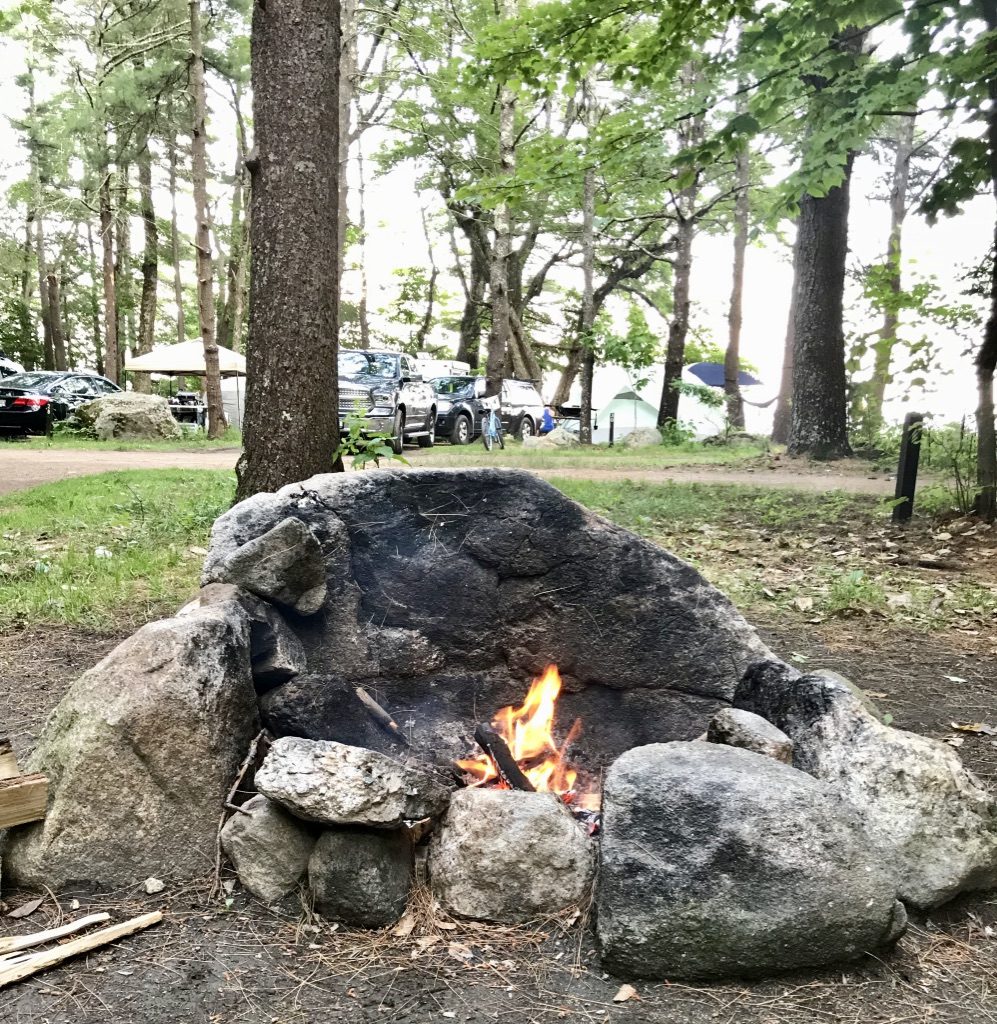
The campsites throughout the campgrounds were largely gravel and flat.  They have large stone hearths to use for fires, we aren’t used to that in the Black Hills.  It made me think of the Flintstones. 😂  Most of the sites were large enough they could fit a small trailer/pop-up camper (we just brought the old, trusty, ground tent for this trip).  There were also flush toilets, electricity, and showers (oh my! 😱)  I can’t remember the last time we had those types of “fancy” amenities when camping! 😉 

This may be because it’s been a while since we stayed at a state park.  We’ve gotten used to national forest sites, with their vault toilets (and that’s it). 😋  Other than their more rustic accommodations though, national forests are still my favorite places to camp.

Below are some of the parks we visited:

Coolidge State Park, Plymouth, VT: 

This is a newer park, and it includes buildings from the historical homestead of the 30th President of the United States, Calvin Coolidge.  This was the first place we camped, and the quietest.  Sites were shaded and well-separated from each other.

A tent sits on a wooded campsite
Our campsite at Coolidge State Park
New Discovery State Park, Marshfield, VT: 

This place was cute.  It rained that night, but not till we were nearing the end of our fire logs, so it was a nice sound to lull us to sleep.  There was a weird bird that kept attacking its reflection in the side mirror of my car, and a garter snake got my heart racing when it crawled out of a hole in our fire hearth! 😱  Other than these visitors, though, it was a decent little campground.

Sebago Lake State Park, Naples, ME: 

Funnily enough, I actually completed a writeup about this park, just a few weeks before we visited, for an online job I had at the time!  This was the busiest park we stayed at, with sites that were placed the closest together.  They were nice, and shaded, and allowed you close contact with all your New Yorker neighbors 😋 (we definitely don’t hear the Brooklyn accent much out in Western South Dakota! 😂)  One unique aspect of this area was all the sycamore trees, with their LARGE, scalloped leaves. 

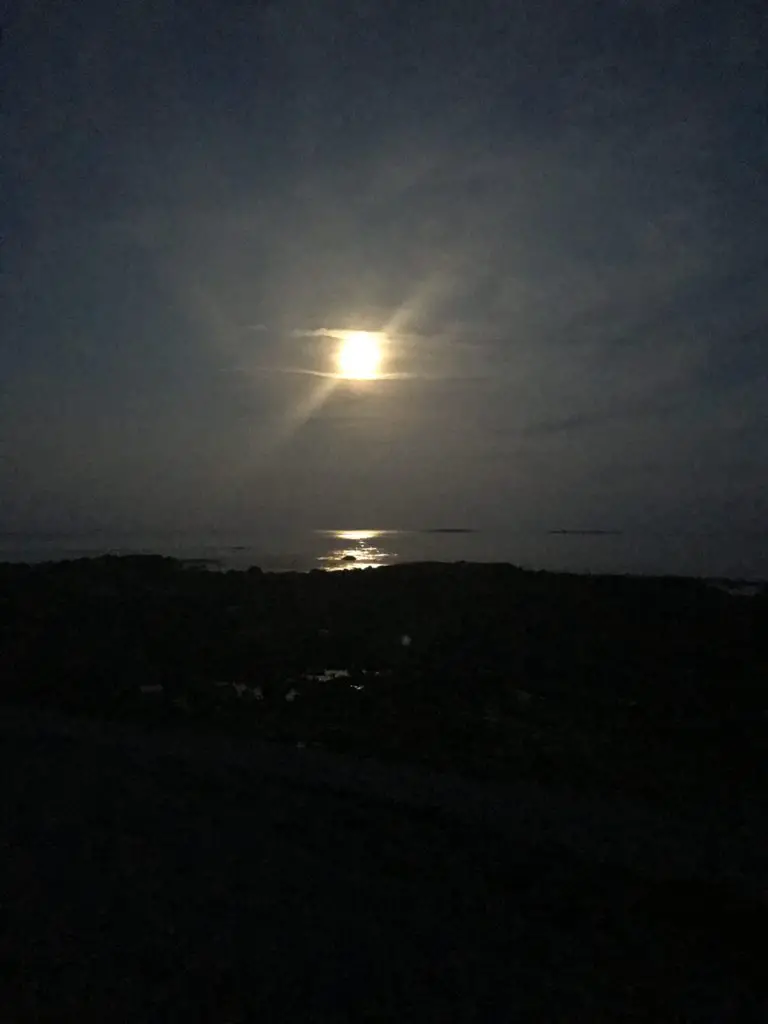
This park sits on the northern shores of the VERY large, Sebago Lake.  It was cold, but refreshing to swim in.  We enjoyed our almost-lakeside campsite.  It was cool watching the full moon rise over the flat, mirrored waters of the lake after dark.

A full moon in the dark, night sky. It is reflected in the dark water of the lake, below
The full moon over Sebago Lake
A small fire in a rocky hearth in a campground
The cool, rock, fire hearth

Camping in Vermont

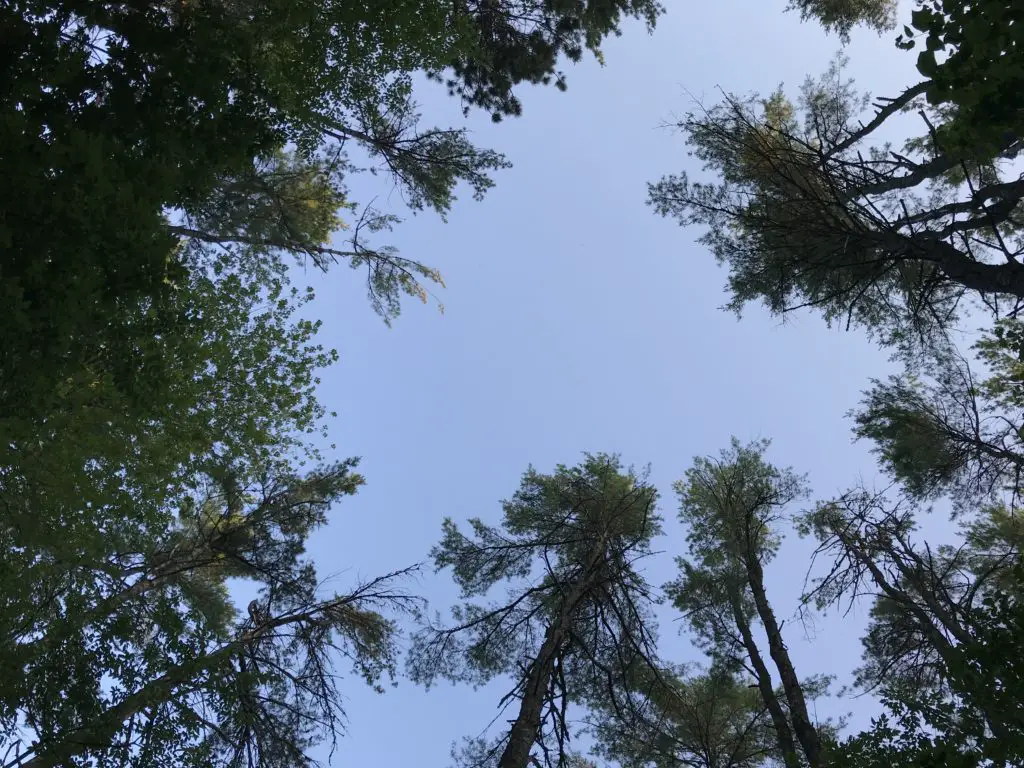
I love camping!  I love the random, natural experiences you have that you don’t notice cooped up in a house…the sun that dapples through the treetops as water droplets dribble and drip from the still-wet leaves after the rainstorm from the night before…you can see blue sky and stars peeking through the crowns of the trees…the sunbeams filter through the crown of tree leaves and slice through the morning mists that rise from the damp ground…you wake up in the morning to the granddaddy-long-leg who waves at you from his perch on the outside of your tent…

Blue sky through a crown of green trees

Vermont state parks are pretty nice.  They have lean-to’s that can be rented out, which we’ve never seen at developed campgrounds before.  They don’t seem like they would provide the most privacy or protection from the weather–or any critters–as it appeared people just set their hammocks/sleeping gear up in the shelter that has a roof, but only three walls.  We did see several people putting up tarps as a fourth wall.

They’re big on their “ponds” in New England, except many of them are bigger than the “lakes”.  Many are as big as some of the largest reservoirs in the Black Hills.  They may need to work on their wording a bit. 😋

Scenic Drives in New Hampshire

As we’ve already driven several of the main scenic routes through the White Mountains in New Hampshire, this time we chose to try out the northern route (US 2 to Route 16).  As it turns out, this isn’t nearly as pretty as the scenic byways that are comprised of Route 112 and US 302, that traverse areas such as Franconia Notch.  Those areas are GORGEOUS!

We then ventured into North Conway for lunch.  This was our second time visiting this little town.  We realized we had been there almost exactly 10 years ago, shortly before we got married! 

We had attempted to hike the infamous Mount Washington on that trip, but we didn’t make it to the summit thanks to several factors (including a certain blogger leaving breakfast on the side of the mountain 🤮).  I want to come back and try it again though, Tuckerman Ravine looks SO beautiful!  Now that we hike more regularly and are FAR more used to higher altitudes, I’m hoping we’ll be able to handle it a bit better.

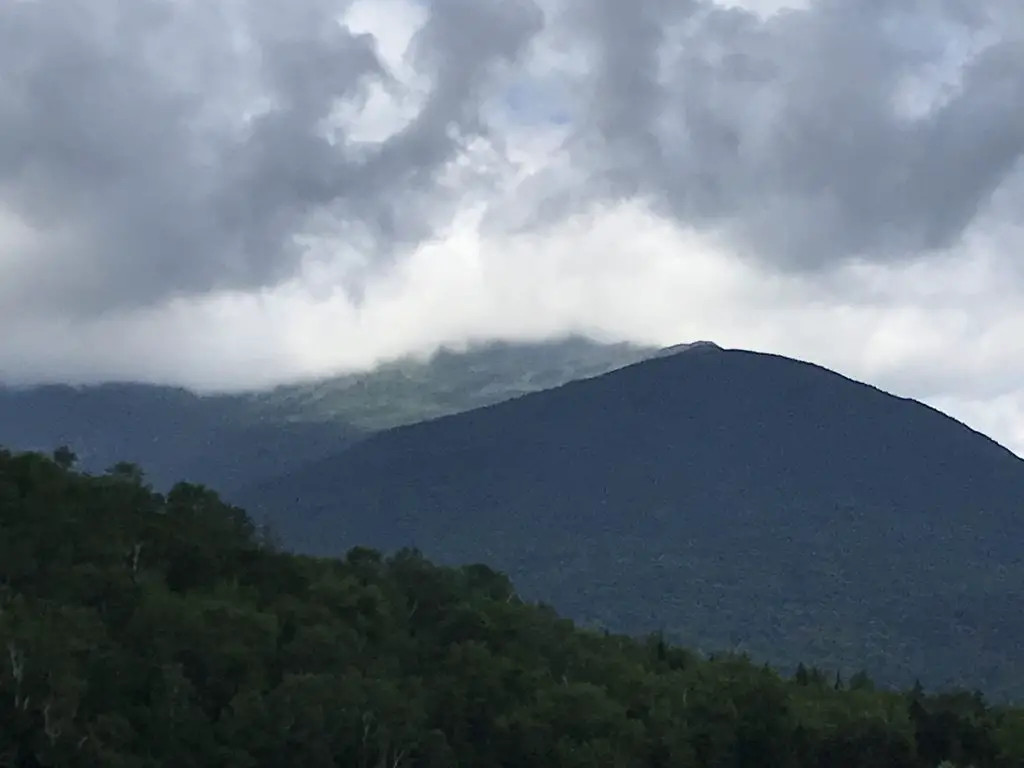
Green, tree-covered mountains cloaked in clouds
Mount Washington, lost in the clouds (it’s the peak you can’t see)

Both of the Trekkers visited New Hampshire several times throughout our childhoods and we always really enjoyed it.   We were surprised to note that, on this trip, we both found the woods of southern Vermont to be more welcoming than the rugged forests of northern Vermont and New Hampshire/Maine. (The northern mountains reminded us of the Black Hills so they didn’t seem as much like a vacation. 😋)  They also reminded us of other northern forests that we’ve been to, such as those in Michigan’s Upper Peninsula, those in Glacier National Park/northwestern Montana, those in the Big Horns, and those in northern Colorado (such as in State Forest State Park).

Looking for more amazing pictures of the New England mountains? Check out the Rusch to the Outdoors blog!

It got us to thinking about how much has happened in 10 years:  we got married; we moved to South Dakota; there were new jobs for both of us; we bought a house…what will the next 10 years bring?  Good things hopefully!

Next up,  Part 2 of our trip, Acadia National Park

Have you ever been to these parts of New Hampshire or Vermont? Tell me about your experiences in the comments! 


Did you enjoy this post?  Pin it!

Three pictures: 1) A waterfall over rocks landing in a pool at the bottom in the middle of the woods; 2) Large, covered bridge spans a river; 3) Looking down the length of a tree-lined gorge from above with tree-covered mountains in the background. Pin reads, "9 'Don't Miss' places for your next Vermont and New Hampshire Road Trip"


Like what you read here today?  Please feel free to leave a comment, like or share this post!  Add your email at the bottom of the page, or the sidebar to the right, to be notified when a new post is published.  By signing up for the email list, you will also receive a free copy of the Tranquil Trekker’s Top 10 Tips of Trekking Do’s and Don’ts!

You can also follow the blog on social media by clicking the links below!

Facebook

Twitter

Instagram

Pinterest

IBS: an Invisible Illness

In this post, I discuss my ongoing struggle with a chronic condition called IBS.
 

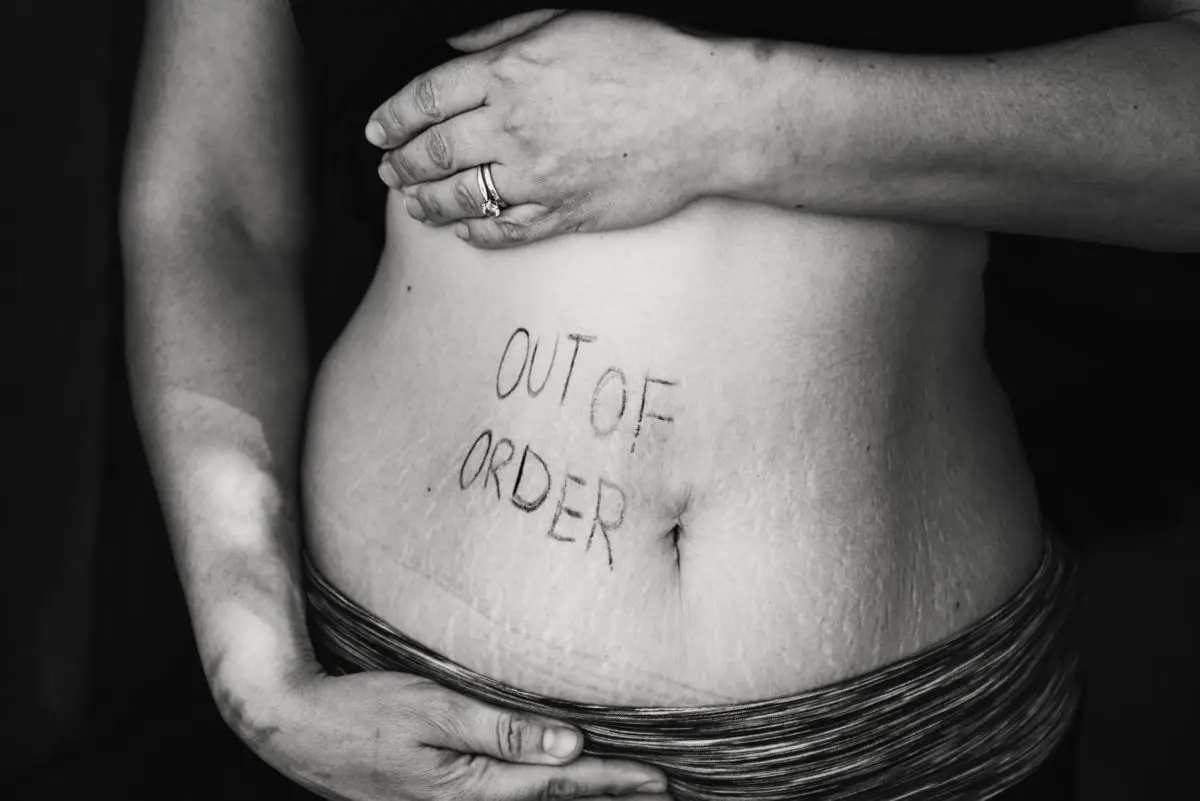
It starts with a characteristic *grumble–grumble* in the tummy, like you might feel when you’re getting hungry…but not quite.  It progresses to sharp pains and paralyzing cramps that can spread from your abdomen to your feet…then there’s the nausea, the cold sweats, the chills, and sometimes what feels like hours doubled over with stomach pains…and then…as quickly as it comes on, the attack is relieved…you may even feel hungry…

You just had an IBS attack!

I’ve mentioned several times that I struggle with this chronic condition, otherwise known as Irritable Bowel Syndrome.  This is a unique problem.  It isn’t considered a disease, per se, but more of a disorder.  Basically, when people suffer with IBS, it means their bowels don’t work correctly, and it isn’t understood why.  Doctors usually give you this diagnosis when they can’t find anything else wrong after other tests are completed.

Some people don’t consider IBS to be a “real” ailment at all.  I’ve heard several claim it’s the “diagnosis of doctors who are too lazy to figure out what’s really wrong with you”.  Symptoms and severity differ for each person (and what each individual suffers can vary over the course of time).  IBS is complicated. 😛

What is Irritable Bowel Syndrome?

IBS comes in three categories:  “Predominantly C”, “Predominantly D”, or an unpredictable, varying mixture of the two.  I won’t get into the dirty details, but since this syndrome focuses on the bowels, I’m sure you can figure out what the C and D stand for. 😝  I also won’t TMI you with which one I deal with, as it isn’t really relevant, and people who suffer with the disorder can switch between the types throughout their life…I did.  

I think part of the reason I struggled so much with the restrictive, low-carb diet I tried several years ago is that my IBS already limits what I can eat, so the diet just exacerbated that even more.  In addition, some “Paleo/Keto-friendly” foods aren’t well tolerated by my testy tummy (like dark chocolate, or certain types of super-fibrous veggies).  To contrast, many “naughty” foods, such as bread, my body loves. 😝 (Fortunately, my stomach will tolerate whole-grain breads, so I can compromise with those). 😀

What IBS is NOT?

As I mentioned before, IBS isn’t considered to be a disease…exactly.  It isn’t as acute as Celiac, Crohn’s or Inflammatory Bowl Disease, though the symptoms can be severe (I consider myself blessed that mine rarely are).  They don’t actually know what, exactly it is.  It isn’t an auto-immune issue, it isn’t gluten intolerance (I’ve mentioned before that my body loves whole-grain carbs, for the most part).  It isn’t caused by an allergic reaction either.  Some people with IBS can be gluten or lactose-intolerant, but those are separate issues–I am not.  For the most part, these foods don’t bother me at all, though there are one or two options in these categories that I’ve learned to stay away from.

IBS Trigger Foods

This disorder makes food choices complicated.  Symptoms, severity and food sensitivity differs from person to person, though some foods are considered “trigger foods” as they, generally, “trigger” negative responses.  These include onions and celery, though I can eat these foods if they’re dried, or well-cooked (the process must change the makeup of the foods so they are easier to digest).  I recently learned that both almond milk and apples are frequently considered to be “trigger foods”.  Nobody tell that to my stomach, as I’ve been eating both for years with no problems! 😛  Did I mention symptoms vary?   

One of my “triggers” is spices.  Not spicy food, per se, but herbs.  Because of this, I tend to eat and cook my food pretty blandly.  A perk of this, I have noticed, is that it enables me to enjoy the actual flavor of the food I’m eating, rather than whatever spice/essence has been added to it.   

Another example of how complicated IBS can be, I can drink milk and eat cheese without stomach problems (though it affects my sinuses).  But if I eat or drink things with a lot of heavy cream in them, my stomach may protest. 😛  I also have to be careful with honey.  I can eat it, but only in small amounts. 

How to treat IBS

I have seen a reduction in my symptoms in recent years.  Some of this is due to learning what my trigger foods are, and avoiding them.  I believe a lot of it is also due to reducing stress.  An example of this stress reduction reducing one of my food sensitivities is that since decreasing my stress level I can now drink orange juice.  One glass used to do me in.  Now, I happily enjoy it every morning!  I have also started a daily regimen of probiotics, which has been shown to help reduce IBS symptoms.   

I find treatments such as stress reduction and healthy bacteria to be so interesting because, clearly, this is not JUST a physiological ailment.  If my symptoms were purely based on an allergic or immune response, I should react to the same foods all the time.  Because my response to them can vary based on the presence of other stimuli, other factors must be at play. 

More and more, effective medications are being found to treat this disorder.  For now, I’ve chosen to not use them.  I’ve stated before that I’ve become disillusioned with modern society’s over-reliance on “magic pills” to fix everything.  I don’t shun modern medicine, but this is one arena where mindfulness and behavior changes can bring positive improvement, sometimes without the use of drugs at all–though the need for medication varies by person as well. (To be clear, I don’t consider a probiotic to be a “magic pill”.  Namely, because it is righting the actual issue that experts believe is playing a part in causing Irritable Bowel Syndrome, to begin with, that of inaccurate bacteria growth within the gut.)  

Gut health and IBS

The gut is known to be a common place we all hold stress.  When I’m under pressure, I regularly notice stomach cramps as I unconsciously hold tension in my abdominal muscles.  This can trigger an IBS attack.  If my body is reacting to a food I’ve eaten, there isn’t much I can do.  However, if my symptoms are due to tension (and I have learned to feel the difference) I have literally stopped an IBS episode using nothing but relaxation and deep-breathing techniques.  How empowering is it when we can see real, positive changes in our health just by changing factors that we have control over?    

A connection between IBS and anxiety?

There is a known correlation between IBS and anxiety, though it isn’t fully understood. (I hear my Research Methods prof in the back of my head right now saying, “correlation is not causation!”)  While an exact link between IBS and anxiety has not been successfully proven, it is not unusual for people who suffer from IBS to also struggle with an anxiety disorder or vice versa. 

Anyone who reads this blog regularly knows that I wrestle with both.  Researchers don’t know why this occurs, but they have some ideas: 

      • It may be that the body is lacking nutrients as IBS can cause the gut to not absorb them from food well.  More and more, problems in the gut (and subsequent nutritional deficiencies) are being linked to numerous physical and mental health issues, even if they once appeared seemingly unrelated.
      • It could also be that the stress brought about by anxiety causes changes in the gut flora, mini-muscle contractions, or a more acidic gut environment, all of which can then lead to the IBS symptoms.

Invisible Illnesses are Real

IBS is different for every person who suffers from it.  It’s complicated and it’s hard to explain.  The bottom line, this condition is a very real part of the lives of millions of people around the world, and it can hinder life greatly.  I hope, one day, they find a cure for this life-altering and chronic condition, but until they do, I hope to continue employing the methods mentioned above to decrease the severity and frequency of my symptoms.

Do you struggle with an invisible illness like IBS?  Tell me about it in the comments!


Did you enjoy this post?  Pin it!

Black and white picture of a person framing their bare stomach with their hands. Words are written on the stomach that say "out of order". Pin reads, "IBS: an Invisible Illness


Like what you read here today?  Please feel free to leave a comment, like or share this post!  Add your email at the bottom of the page, or the sidebar to the right, to be notified when a new post is published.  By signing up for the email list, you will also receive a free copy of the Tranquil Trekker’s Top 10 Tips of Trekking Do’s and Don’ts!

You can also follow the blog on social media by clicking the links below!

Facebook

Twitter

Instagram

Pinterest


Going to the Sun Road at Glacier National Park

In this post, I review Going to the Sun Road at Glacier National Park.


Author’s Note: Since we visited Glacier in 2016, the Park Service has implemented a complex, ticket system for visiting the park in the summer. To be honest, I can’t make much sense of it as it involves multiple tickets being required to enjoy various activities around the park. For more information on this system, visit the park website and/or contact the park office. 

While on our visit to Glacier National Park, we drove the famed Going to the Sun Road.  We also learned some tips to keep in mind when traversing rural Montana.

Montana

If you’ve never been there, Montana is a HUGE state.  It takes 8+ hours to cross it when traveling 80 mph (the posted speed limit) and that’s on the Interstate!  It’s absolutely beautiful though!  I never realized how many mountains crisscross their way through the rolling prairies of that state. 
Montana DOT could do with some better signage.  Several times we had to turn around and retrace our steps to find the correct turn–either due to a complete lack of, or unclear, signage.  Frequently there would be large signs pointing the way when coming from one direction; and little to no signage when coming from the other.

It was also, often difficult to decipher which “turn ahead” was the right one–one time it would be the turn DIRECTLY after the sign, while others it would be three turns later after passing numerous side streets. 😛 

Information on local services was also lacking.  We limped the car into Missoula the first night, as we failed to realize how far the distance would be on the interstate between reliable gas opportunities–fortunately, gravity was on our side as a steep grade downhill ushers you into town and the CRV gets good gas mileage!

At least South Dakota provides some warning in these situations with billboards containing messages such as “gas now or gas can later”. 

Montana also has a habit of closing rest stops with little or no warning which is especially problematic when each rest stop can be more than 50 miles apart!

Glacier National Park

Glacier National Park is absolutely BEAU-tiful, as is the surrounding area!  It wasn’t nearly as crowded with visitors as Yellowstone–though as we learned later, being there at the end of June put us at just the beginning of the very short, summer season.  Several hiking trails in the higher elevations were still closed due to snow hazards (and this is normal!) 

Part of the reason it isn’t nearly as crowded as other national parks is that it is, quite literally, in the middle of nowhere.  West Glacier (the western terminus) is almost 140 miles from I-90.  It took us over three hours to drive that distance on winding, mountain roads, sometimes traveling 15 mph lower than the posted speed limit while following large RVs.  Likewise, the other side of the park, St. Mary (the eastern terminus) is almost 90 miles from I-15. 

We didn’t camp on this trip.  However, if you’re looking for some great info on camping at Glacier National Park, click here!

The scenery found on all of these drives is incredible though.  I actually recommend arriving at the park from the east side (driving up through the prairie) as you’ll have a commanding view of the Rockies for a much larger portion of the drive.  If you come into the park from the west, the overall drive is prettier–complete with mountain lakes and twisting curves–but the mountain views are largely obscured by trees and other, smaller hills. 

Large tree-covered mountainsides with bits of snow on their rocky tops, all under a clear blue sky. A river runs through the valley below.
Isn’t this gorgeous?!

Limited Services in Northwest Montana

We were also surprised at the limited access to everyday services of this high-tourist area.  Both West Glacier and St. Mary’s appeared to be reasonably sized towns based on the map (and their proximity to the park)–and they are decently-sized as towns in Northwest Montana are concerned–but they lack many basic services.

I personally required some OTC medication thanks to the side effects of antibiotics, and we had to travel an hour out of our way to finally locate a pharmacy to acquire it (a feat that would have been accomplished in about five minutes in most other rural parts of the country).  So something that should have been nothing more than a temporary annoyance ended up causing a real hindrance to the enjoyment of the trip. 

Having never been to the area before, my early online research made St. Mary appear to be far more commercialized than West Glacier; the map indicated this as well…it wasn’t.  St. Mary consisted mainly of one gas station/small supermarket/restaurant/gift shop and a smattering of campgrounds and roadside cafes.

We returned to this area several years later. Below are the posts relating to that trip!:

Ghost Towns in Southwestern Montana
6 Don’t Miss Places for your Western Montana Road Trip


West Glacier at least had two separate gas stations and several restaurants/shops within walking–or a short driving–distance.  I don’t say these things to complain, you are in the wilderness after all, but more as a caution for preparedness.

Going to the Sun Road

Glacier National Park consists largely of the east and west termini, and a road connecting the two, through the mountain passes (Going to the Sun Road) that’s only open about four months of the year.  The rest of the year it’s buried under up to 30 feet of snow (near Logan Pass) and is frequently plagued by avalanches.

While the two towns are only 50 miles apart it can easily take three hours or more to cross the divide (due to other drivers, the slow speed limit forced by sharp turns and steep inclines, and frequent stops at the many lookouts along the way.) 

It’s an absolutely awe-inspiring view though, and I highly recommend taking your time to fully enjoy your surroundings…and possibly stop for a picnic lunch!

Stop at the turnouts and enjoy the roar of the water filtering up through the canyon, as well as the smell of the sweet, clear mountain breezes.  Notice the contrasts in color of the deep grey or brown/red rock and the blindingly white snowfields of the higher elevations, that all stand out against the vibrant green foliage of the lower altitudes.  To top it off the dome of the sapphire blue sky crowns it all (this area is called the Crown of the Continent!)
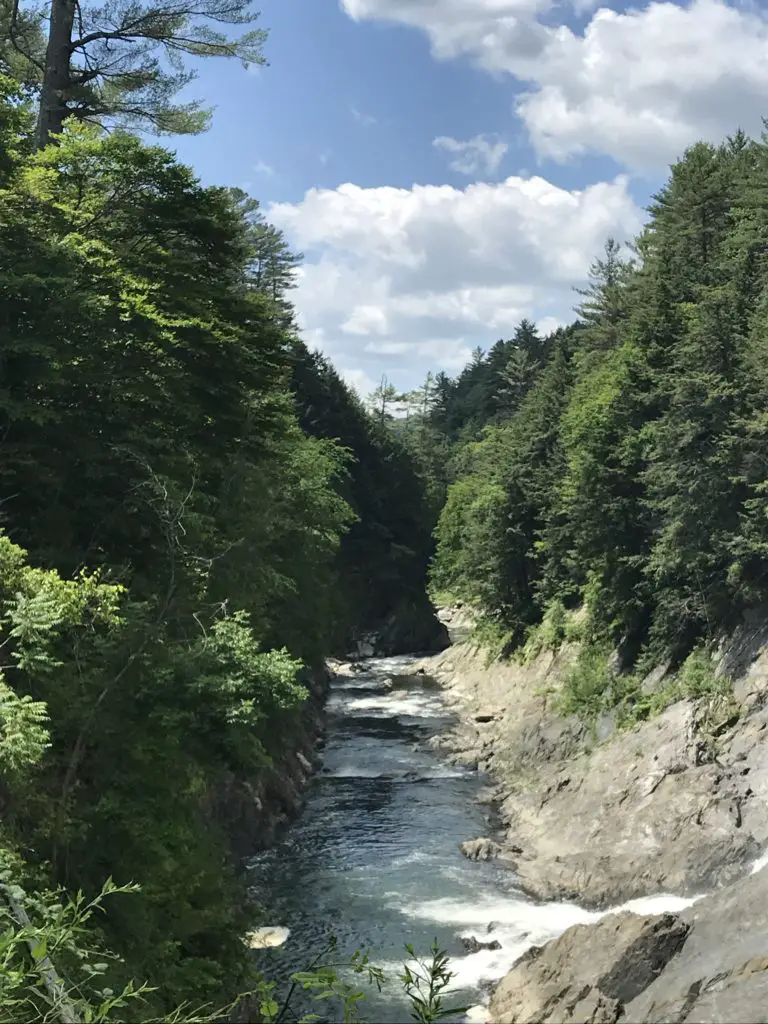
A green meadow with a snow field in the foreground. Large, rocky mountains in the background.
The view from Logan Pass

Large, rocky mountain looming over shorter, grass and tree-covered mountains, all under a blue sky dotted with white, puffy clouds.While not as crowded as other parks we’ve been to, there were still plenty of visitors milling about.  Be sure to be watchful for people (and wildlife) that may appear before you around a sharp turn with little or no warning.  There are also many road bikers who must be carefully passed in addition to negotiating the sharp curves.

For someone who is afraid of heights, the trip can be quite anxiety-provoking, especially if traveling west to east (on the outside lane) and if you’re the passenger.  Frequently along the route, the only thing separating you from precipitous drops of 1000 feet or more is a low stone wall! (This also reminded us of Route 550 in Colorado, the Million Dollar Highway!)

I also recommend traveling the road several times, at different times of day, as the light changes the views greatly.  The second time we drove the road was in the evening with the sun at a lower angle, and not only were the colors more vibrant, but subtler details (such as smaller waterfalls) stood out in greater contrast.  I mentioned earlier that we unintentionally arrived early in the busy season.  While this assisted us in beating the crowds, it also had the unintended effect of potentially providing more beautiful views.  We were told by locals that it had been unusually rainy as of late and this, along with late-season snow/glacier melt, contributed to some incredible waterfalls cascading down the steep mountain walls into the canyon.  As the season wanes these falls tend to dry up and become merely trickles.

Related posts:  5 Things you Don’t Want to Miss at Glacier National ParkSwiftcurrent Trail at Glacier National Park and 5 Other “Don’t Miss” Sites!; Gunsight Pass Trail, Glacier National ParkGlacier National Park: Hiking the Apgar Lookout Trail

Are the glaciers melting in Glacier National Park?

Many scientists believe the park will be completely glacier-free within the next 50 years due to warming temperatures.  I hope they are wrong about this as it will have profound effects on the various ecosystems that comprise the park.

You’ll notice as you traverse the road that these systems vary from arid, high plains on the eastern side…to alpine tundra at Logan Pass…to the temperate rainforest at the lower elevations on the western side of the park.  Many of the lakes are fed by glacial springs and/or snowmelt from the long winters.  If these glaciers dry up and/or less snow accumulates in the winter months to feed the lakes, it’s possible they may dry up (or their water levels will significantly lessen) as well.  This will hinder the survivability of the vast array of flora and fauna that make up these ecosystems.

There is already evidence that the warmer temperatures are causing an increase in foliage and subsequent treeline which impedes on the tundra.  Many alpine plants grow only in tundra regions and could become endangered/extinct if these consequences are borne out to their fullest extent.  This could have far-reaching effects that can’t even be fully calculated at this time.

Below is a picture from the Going to the Sun Road.  This was taken near Logan Pass, the highest point on the road, at around 9,000 feet.  Notice the narrow brick wall at the bottom separating the car from the dropoff!

 View from a rocky wall overlooking a vista of a mountain valley with tall tree and snow-covered mountains on both sides, all under a clear, blue sky.

Save

This is one of the most beautiful drives I have ever enjoyed.  Everyone should have Glacier National Park on their Bucket List!

Have you ridden on the Going to the Sun Road?  How was your experience?  Tell me about it in the comments!


Did you enjoy this post?  Pin it!

Large, rocky mountain looming over shorter, grass and tree-covered mountains, all under a blue sky dotted with white, puffy clouds. Pin reads, "Going to the Sun Road: Glacier National Park."


Like what you read here today?  Please feel free to leave a comment, like or share this post!  Add your email at the bottom of the page, or the sidebar to the right, to be notified when a new post is published.  By signing up for the email list, you will also receive a free copy of the Tranquil Trekker’s Top 10 Tips of Trekking Do’s and Don’ts!

You can also follow the blog on social media by clicking the links below!

Facebook

Twitter

Instagram

Pinterest

5 Things you Don’t Want to Miss at Glacier National Park

In this post I describe some of the highlights of our trip to Glacier National Park, in 2016!


Author’s Note: Since we visited Glacier in 2016, the Park Service has implemented a complex, ticket system for visiting the park in the summer. To be honest, I can’t make much sense of it as it involves multiple tickets being required to enjoy various activities around the park. For more information on this system, visit the park website and/or contact the park office. 

Also, just a word of warning, as this is a National Park, no dogs are allowed on any trails within the park (exceptions for Service Animals). They are only permitted in the campgrounds and parking lots.**

Glacier National Park is one of the most beautiful places I have ever visited. The views there are comparable to the ones I saw in the Andes Mountains of Peru when I visited there in 2001.  The Trekkers had an incredible time visiting Glacier (and hope to return someday).  Most people are aware of the park’s acclaimed, Going to the Sun Road, but there are other fun things to do, as well!  In this post, I have outlined 5 not-to-miss sights to see on your trip to the park.

Not-to-Miss Things to See at Glacier National Park

Polebridge, Montana

Author’s note: Technically dogs are allowed in this portion of the Park, however it is recommended that you keep them in your car/camper. There are LARGE bear dogs that roam freely throughout town–to help keep the grizzlies out of town!–that are known to be aggressive with other dogs.

The tiny town of Polebridge sits about 25 miles north of the park, and only around 15 miles south of the Canadian border.  It is located on North Fork Road.

When I say “tiny”, that is not an exaggeration!   Its main draw is the Mercantile (a historic, general store that is known for its DELICIOUS homemade pastries, the Trekkers especially recommend the huckleberry bear claws!).  The tiny community also consists of a saloon where we had lunch (I highly recommend the homemade potato wedges and ranch dressing) and a few cabins available for rent…and that’s it! 😮 

This little village is the starting point for several hiking trails in the area and there are numerous lakes nearby.

An old storefront with "Polebridge Mercantile" on the front and cars sitting out front
Polebridge Mercantile

Bowman Lake

We visited Bowman Lake and hiked a portion of the Bowman Lake Trail there.

The trail was a simple walk through the woods, on a smooth trail, with little to no elevation gain.  It wasn’t crowded, though we did see several other hikers.  Be watchful for bears in this area–as well as throughout the entire park.  We did not see any but did see evidence that they had been nearby in the past.

The Bowman Lake Trail could be made into a full-day excursion to the end of the lake and back (the lake is six miles long) or enjoyed as a multi-day backpacking trip if one wished to take advantage of all the trails that connect to it.

With the gorgeous views afforded here of the mountains and their reflections on the aquamarine water, this is one of the most picturesque places I have ever seen.

Mountain vista across a flat lake with tree-covered, rocky and snow-speckled mountains towering on both sides.
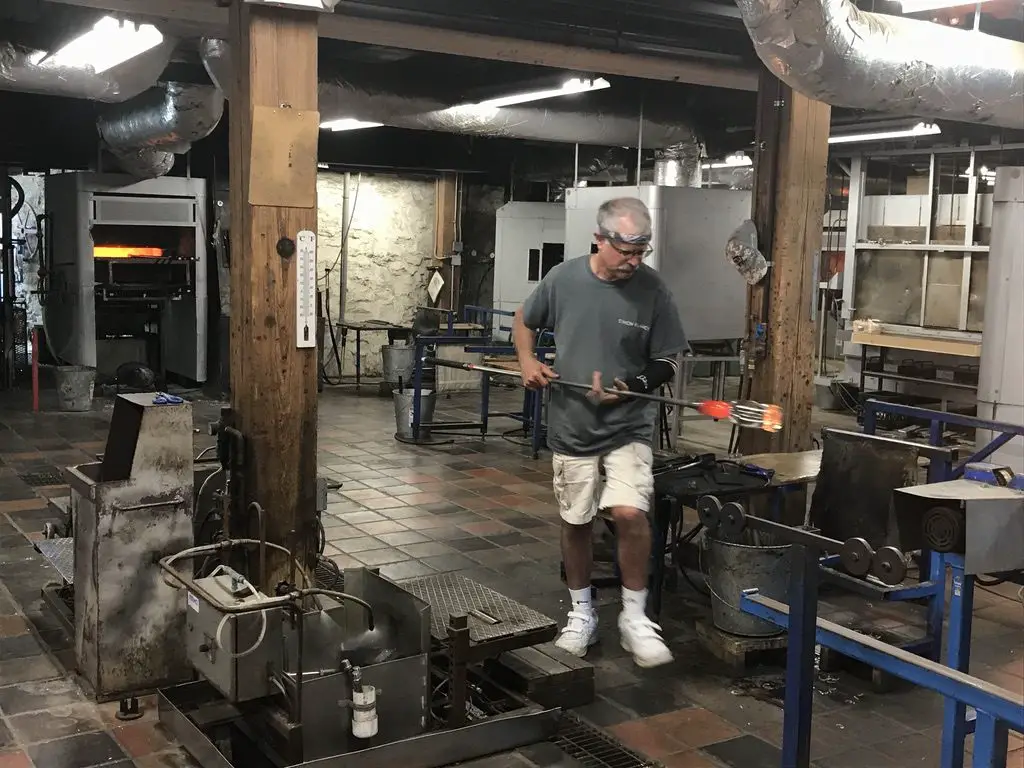
Bowman Lake, the picture does not do the color of the water justice

The Canadian Border

Being that we were so close to the Canadian border we decided we HAD to drive up and say “hello” to our friendly neighbors to the north.  We knew there used to be a border crossing in this area but that it had been closed for many years.  We were expecting some sort of obvious signage indicating the divide between the two countries, a fence preventing entry, something…we were in for a bit of a surprise…
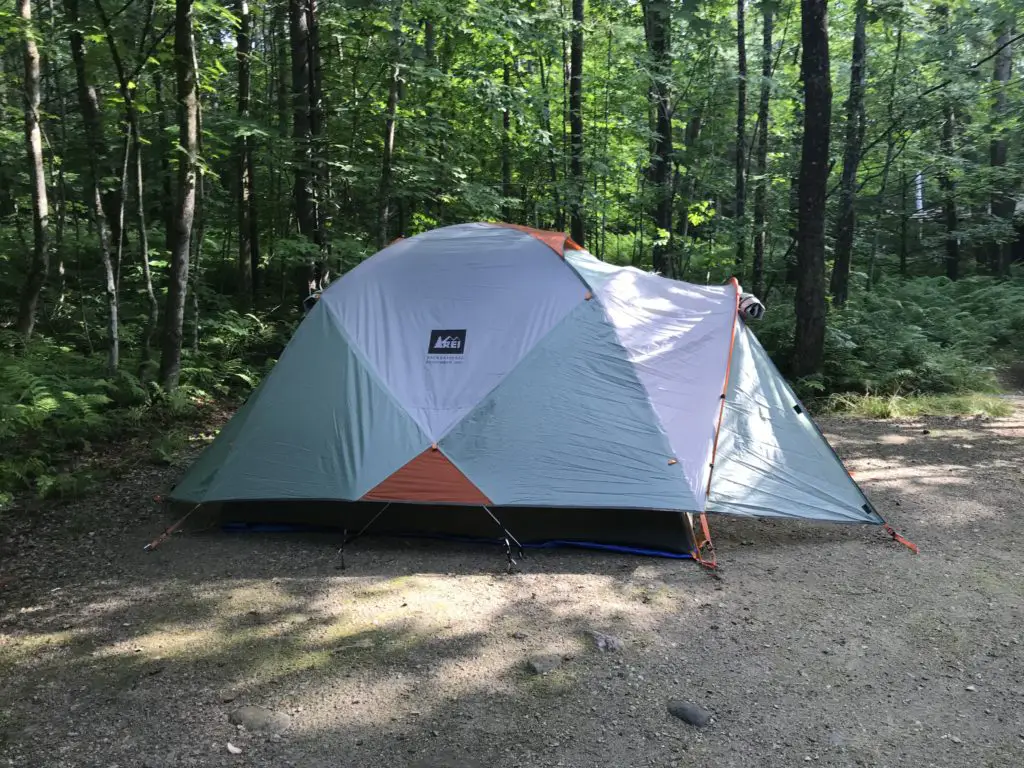
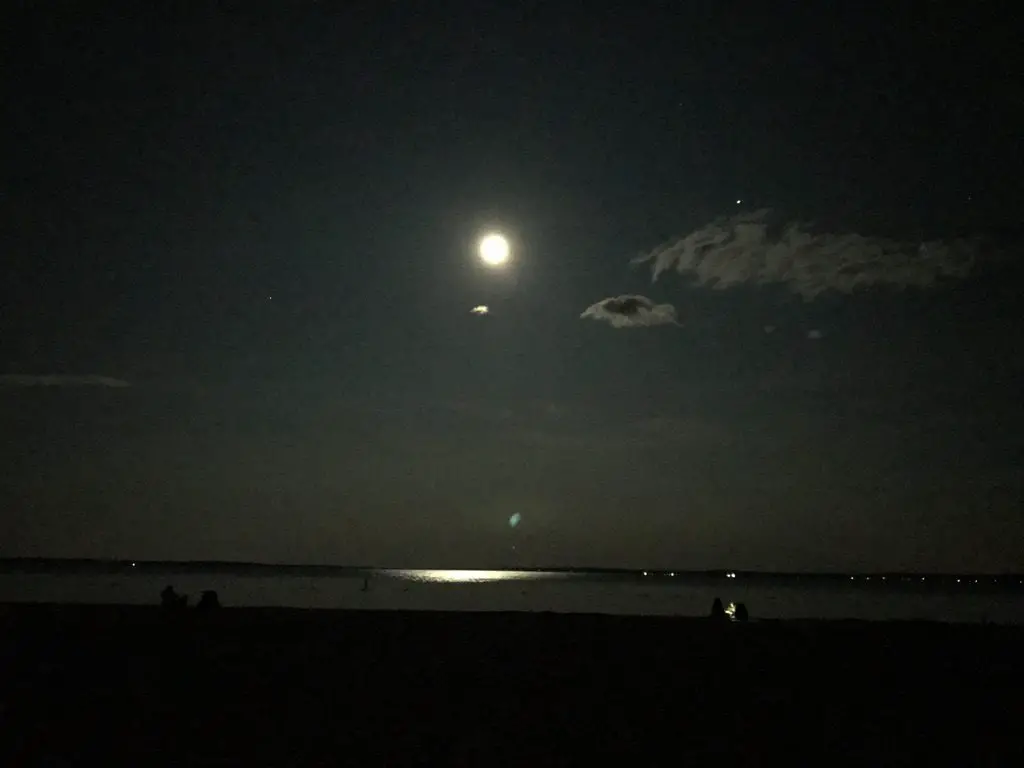
You reach the border by traveling north from Polebridge on a narrow dirt road.  Drive carefully and be watchful as there are sharp turns.  Wildlife–and the few human inhabitants of that desolate region–may be seen on the road, as well.

We encountered a very friendly couple biking with their three dogs.  They encouraged us to check out the border though we thought they were “pulling the tourists’ leg” when they described what we’d find…they weren’t. 

You will know you’ve reached the border when…the road ends…at a gate that looks like something that will close a city park for the winter! 😮  There is also a SMALL sign that reads “no admittance to Canada” and a trench about two feet wide and a foot deep–that you can walk across–that spans the border as far as the eye can see in both directions.  You see a clear line cut through the forest that stretches for miles and continues up the mountains to the east and to the west.

There is also an obelisk that marks both countries and commemorates one of the longest international borders that has been held peacefully, for one of the longest time spans in history.  There is no fence (don’t tell Trump! 😮), though there are security cameras.  We also saw border agents patrolling the area, so I would strongly encourage you to be respectful of the laws of both countries.  Pictures are allowed, but even if you have a passport, this is not an open border crossing.

*I had a bit of a philosophical epiphany while observing the border.  Humans are not allowed to cross freely, but as there is no fence, the animals cross back and forth completely unhindered.  The same forests and mountains reside on both sides of the border and were it not artificially maintained by human hands, one would not know when it had been crossed.  It gives you pause regarding man’s futile attempts to divide humanity based on imaginary lines.  If the animals and trees don’t care which side of a line drawn on a map that they (and their fellow forest inhabitants) reside…should we?

A simple, metal gate over a dirt lane in front of an old barn and trees
The Canadian Border…seriously, that was it.
A wide path through the woods runs to tall mountains on the horizon
The Canadian Border

The pillar shown below marks both countries:

Metal pillar with "United States" written on it Metal pillar with "United States" written on it

Goat Lick Overlook

This is a very neat area located directly off of US 2, on the southern edge of the park, about halfway between West Glacier and East Glacier (this is one of those areas of lousy signage I mentioned in a previous post).  There is a large sign announcing the overlook from the west, and nothing from the east, so be watchful if coming from that direction. 

The Overlook is exactly as the name suggests–it is a canyon where the wild, mountain goats come to lick minerals that seep from the rocks.  We saw a herd of close to 20 goats, complete with adults and babies, scampering with carefree vigor–you could hear them calling to each other from quite a distance. 

Most of the goats stayed on the other side of the canyon, but one mother and baby were camped out very near our location.  These animals are usually fairly harmless, but please, always remember they are wild.  They should be treated with respect and given space.  If they act in any way uncomfortable by your presence, you are too close!  MOVE BACK!  It should always be assumed that any animal (especially a parent protecting a baby) may attack with force, at any time, if they feel threatened.

Related posts: Swiftcurrent Trail at Glacier National Park and 5 Other “Don’t Miss” Sites!; Gunsight Pass Trail, Glacier National ParkGlacier National Park: Hiking the Apgar Lookout Trail

Sunset on Lake McDonald

Our hotel was only a five-minute drive outside the border of the park and only about 10 minutes from the largest lake at Glacier National Park, Lake McDonald.  Every night we enjoyed the sunset on the shores of the lake, in the tiny community of Apgar.

The view faces northeast so you won’t see the actual sun drop below the western mountains.  However, you will see the play of shadows and alpenglow on the mountains to the east and can see their reflection in the lake water (if it’s calm.)  One night we were lucky enough to be able to watch lightning from far-off storms, in the clouds towering over the mountains, in addition to the beautiful sunset.  In addition to the picturesque sunsets, I highly recommend stopping for ice cream at one of Apgar’s several shops before heading to the lake!

Another important note, none of the lodges or motels inside the park or near its entrances have TVs.  This is done intentionally to help preserve the surroundings in a rustic manner.  It was a bit like taking a step back in time and we found it incredibly enjoyable!  People left their rooms at night and gathered in parks and along the lakeside; eating ice cream, skipping rocks, and conversing with each other.  There isn’t much cell service in this area either, so you’re forced to disconnect a bit and commune with nature (or *gasp!*, actually talk to the person next to you! 😮😉)  It catered to a relaxed, communal atmosphere.

Every night a family of ducks would swim by.  They were unique in that they would dive under the water, and remain submerged for tens of seconds, before popping back to the surface quite a distance from where they went under.  The ducklings were especially entertaining to watch.  They would build up speed by quickly skimming the water with their wings–almost to the point of taking flight–before diving below the surface. 

Sunset photo of a flat-water lake with the dark silhouettes of the surrounding mountains and sunset colors in the clouds reflecting in the water
Sunset on Lake McDonald

Aqua-colored Water

The waters in the park (the rivers and lakes) are crystal clear (and COLD!) and tinged with an aqua hue.  This comes from the glaciers that feed them.  I’ve seen pictures of this phenomenon before but had never seen it in person.  It’s one of the most beautiful, difficult-to-describe colors I have ever seen!  One wonders if the glaciers melt, how it will affect this unique quality of the park?

Panoramic view of a flat-water lake reflecting the tree-covered and rocky mountains surrounding it, all under a clear, blue sky.

Save

Save

Glacier National Park truly offers some of the most incredible scenery I have ever seen.  I strongly encourage you to put it on your bucket list.

If you have been to Glacier, what were your favorite parts?  Let me know in the comments!

Did you enjoy this post?  Pin it!

4 pictures: 1) Mountain vista of towering tree-covered, rocky and snow-speckled mountains; 2) An old storefront with "Polebridge Mercantile" on the front and cars sitting out front; 3) Sunset picture of a low river with a sand bar; 4) A wide path through the woods runs to tall mountains on the horizon. Pin reads, "Glacier National Park, 5 Things Not To Miss"


Like what you read here today?  Please feel free to leave a comment, like or share this post!  Add your email at the bottom of the page, or the sidebar to the right, to be notified when a new post is published.  By signing up for the email list, you will also receive a free copy of the Tranquil Trekker’s Top 10 Tips of Trekking Do’s and Don’ts!

You can also follow the blog on social media by clicking the links below!

Facebook

Twitter

Instagram

Pinterest

Rest Areas: a Road Trip Necessity

I’ve been on a lot of road trips, in several countries. So, I’ve stopped at A LOT of rest stops. They’re a necessary evil when traveling long distances by car. In this post, I review some of the most memorable ones I’ve visited.


Many people (myself included) enjoy long road trips.  Those inevitably involve stopping at rest stops in all corners of the country.  Since the Trekkers enjoy these types of adventures so much, we’ve experienced our fair share of rest areas, as well.  I thought it’d be fun to look back on some of the more interesting experiences I’ve had at these little detours, in various parts of the US, and the world.  

I’ve experienced rest stops in almost every state in the country (as well as a few in Canada and South America) so I’ve seen a wide range of them.  Below are some of the more notable ones:

Not-so-nice Rest Areas

Most of the rest stops in many states (such as Wyoming, Montana, many in the Northeast and those along the Eastern Seaboard) kinda suck, unless you’re lucky enough to stumble on a newer Welcome Center.  Most are pretty old-school, they look like they date back to the 1980s.  Many have a few toilets and a sketchy-looking drinking fountain, and that’s about it.  Sometimes you’ll be lucky enough to find one with a 1980’s-era vending machine as well!

Which reminds me…does anyone else remember when you could get a 20 oz soda out of a vending machine for $1?!  Or is that just me? Am I dating myself? 😛  Anyway, I digress…

Mule-Creek Junction near Lusk, Wyoming

One of the most unique rest area experiences I’ve had was near a tiny little town called Lusk, Wyoming.  About 50 miles north of town there is a place called “Mule Creek Junction”.  Here…there isn’t much.  US 18 and US 85 meet at a T-intersection…and that’s about it.  That and the rest stop are the only things of note for miles around (the local cattle notwithstanding). 😛

To set the scene, this facility sits in the middle of the least populated county, in the least populated state, in the continental United States.  It’s a BEAUTIFUL area, but there ain’t much there folks! (Though it is a prime place for storm chasing. 😇) 

Needless to say, this is one of the few toilets in the vicinity, so by the time you get there, it is sometimes urgently needed. 😋  You can imagine my dismay when I had a compelling need for the services this locale offers on a trip to Colorado, and upon entering the building I noticed a sign that clearly stated, “water is for drinking and bathing”…I thought, “uh oh!”  Welcome to the world of “composting toilets” kids! 😝😳🙄 

Sign that reads, "Conserve water. Water for drinking and washing hands only. Please do not waste."

To be fair, they really aren’t that bad.  The building at the rest stop looks just like any of the others in the state (many of these do have real toilets).  The toilets themselves even look fairly normal, except you don’t flush, the contents of the bowl just go into a pit-like hole–it is FAR more pleasant than a pit toilet, though.  The smell is usually fine too, except on really hot days when you may catch a whiff of “something” in the air. 

This part of Wyoming is pretty arid, so I applaud the creators of this site for “going green” and using resources wisely…but yeah, now that we know what we’re getting into, we try to hold out for the “real” toilets, at the rest stop in Lusk, that’s about 50 miles down the road. 😛

Closed Rest Stops

Then there was the time we were driving up I-85 in Virginia, heading north from the southern state line.  We used to live in Raleigh, North Carolina, so when we’d trek northward to visit Mr. Trekker’s family in the Northeast, this was always a good time to stop for a break. 

One year, there were some budgetary issues occurring with that fair state, and due to this, almost EVERY SINGLE rest stop on that route was CLOSED…and they didn’t bother to post any sort of warning about this, I might add.  Yeah, there were some very “un-tranquil” words coming out of my mouth that day! 😛 (I am not responsible for what I say when I’m stuck in a car with a full bladder. 😋)

Nice Rest Stops

Turnpike Rest Areas

In contrast, some of the nicest stops I’ve seen are on the Indiana and Ohio Turnpikes (otherwise known as the 80/90 Toll Road. )  To be clear, you have to go to the new ones, on the eastern side of Indiana and throughout Ohio.  The old ones, on the western side of Indiana, belong in the category above. 😛 

The new ones are lovely though!  Bright, large, and clean they offer a variety of shops and services, including super easy access to gas. (Of course, this requires you to pay both the tolls to use the road, as well as the higher gas prices that are inevitably found at the toll plazas.  So “pick your poison” I suppose. 😛)

Skyway Rest Area

In Illinois, there are some cool, “Skyway” rest areas.  Whoever invented these was brilliant.  These are nice places that offer a variety of shops and food services that span the highway like a bridge.  This allows people traveling both directions to use the same facilities, and they use space efficiently–absolutely genius! Just be aware, you can get a little dizzy watching the traffic speed along on the highway below you…🤢

Salt-Kettle Rest Area

This rest stop is also in Illinois. It is a Welcome Center and is found on I-74 westbound as you first come into Illinois from Indiana.  It is probably one of the nicest rest areas we’ve ever been to!  There isn’t anything overly exciting about the building per se, but the outside attractions are WONDERFUL!

The green space is large, shaded, and includes picnic tables, a playground, a pond (complete with a fountain) and even a short hiking trail to a historical cemetery! There were even people fishing as we walked around the pond (can’t say I’ve ever seen this at a rest stop before!)

Squatters!

By far, the most unique rest stop I have ever experienced was a “squatter” in South America.  This should go under the “not-so-nice” heading, but it was such a memorable experience, it deserves its own category! 😋

Shortly after graduating from high school, in 2001, I and other members of my church’s youth group went on a mission trip to Peru.  We were traveling from the bustling, capital city of Lima, to a tiny town in the INCREDIBLY beautiful Andes Mountains (this was the first time I ever experienced “big” mountains folks, and I caught the bug!) 

We were quickly ascending to very high elevations, and altitude sickness was a real concern (especially for a group of American flatlanders from Indiana!)  So, our guides had us guzzling a special herbal tea in attempts to prevent the condition.

I have since learned this was likely Coca Tea, used from the same leaf they use to make cocaine…note, the leaves are prepared differently and none of us “got high”, but oh, if only our leaders–or parents–had known! 😂🙃

The good news, the tea worked for most of us.  The bad news…drinking large amounts of liquids leads to other “needs”.  So, we stopped at a nearby “rest area”.  I walked into the little shanty and couldn’t help thinking, “Toto, we aren’t in Kansas anymore!” 😮

A “squatter” is exactly what it sounds like.  It’s a tiny hut or shed, that hangs over the edge of a hill, or cliff.  There’s a hole cut in the floor that your “product” falls through onto the dirt and rocks below.  If you’re a woman or are otherwise unable to pee standing up, you “squat”, and balance over the hole. 

Other than my lack of coordination that hinders my every step 😋, that part wasn’t so bad.  The pièce de résistance of the whole shebang was that–in order to balance yourself–you have to brace against the shed walls. 

I don’t know what was on them, it was too dark to see…moss or algae perhaps?  Sure, let’s go with that! 

All I know was, whatever I was touching was SLIMY! 🤢  Needless to say, the next time we stopped, we were all happy to use the outdoor toilet that basically involved us just openly peeing off the side of a cliff. 😆

I experienced my first mountain, shelf road on that trip, as well.  Have you ever seen any of these “dangerous roads” documentaries?  It was something like that.  We were riding in a bus with LARGE windows which allowed us to fully enjoy all the beautiful scenery…including the 1000+ foot drop–and no guardrail!–that began mere inches from the tires on the bus we were riding.  Why do I ALWAYS end up in the window seat in these situations?! 😛

Roadside Tables

One rest stop activity the Trekker’s have come to enjoy is picnic lunches.  We’ve found it’s quite relaxing to pull out some lunchmeat at the many facilities rest areas often provide.  One site you regularly see in the Great Plains is “roadside tables”.  They’re exactly what they sound like, they’re picnic tables that sit along the road. 😁

I wouldn’t stop at all of them.  Some sit on unshaded blacktop and look like they would be a prime spot to melt. 😅  Others aren’t always well maintained so I’d be worried you may have some unwanted guests joining you for lunch.  I don’t need a mouse, or a SNAKE!, slithering out of the knee-high grass and onto my feet while I’m trying to eat, thank you! 😛 

But most of them are quite nice.  The facilities are often shaded and many offer scenic views of the surrounding countryside (or at least the nearby cows). 😉  This is a good way to get a break from the car, get some fresh air, and let the kids (both two and four-legged) run around a little bit. (For more tips are traveling with your furry friends, click here!) 

We’ve found this method is way more enjoyable and less chaotic than trying to find lunch somewhere, and it’s likely cheaper, quicker, and often healthier, as well.  It doesn’t hurt that we often travel in very rural areas where the nearest lunch opportunity could be an hour or more away.  These aren’t nearly as convenient in January, however…😱

Some rest areas are pretty unique! 

There is a rest stop on I-10, in Mississippi, which doubles as the Mississippi Welcome Center.  It is also at the same location as the INFINITY Space Center.  This site felt like a unique combination of the “Old South” (imagine large houses with Grecian-style columns on the front porch and moss growing on nearby trees) and the future–there’s a park, next door, with a model of the Lunar Module. 

This site will always hold a special place in my heart.  It could be because we were suffering from sleep deprivation at the time, 😴 but I think it’s more that it was very charming.  It also represented a huge milestone for the Trekkers.  This was the place where we could officially confirm we had both been to all of the “Lower 48” US states! 😀 

A "Welcome to Mississippi" road sign is lit up in the dark


There’s also a cool rest area on I-90 in Chamberlain, South Dakota.  We pull off here a lot.  A large sculpture called “Dignity” was erected here a few years ago and is quite lovely.  It is a statue of an American Indian woman and is meant to honor the culture of the people who first came to this land.  This site also offers a Lewis and Clark interpretive exhibit that is open during the summer months.  There are also walking trails, one of which allows you fantastic views of the nearby Missouri River. 

This area is so unique.  If you’re coming from the east, you meander through the farm fields of eastern South Dakota.  Then, suddenly, the yawning chasm of the Missouri River opens up before you as the bluffs that characterize western South Dakota beckon you onward (that’s the Trekkers’ home baby!)

Picture of a large river with grass-covered bluffs in the background. Green trees and grass are in the foreground.
One of my favorite views of the Missouri as you head into “West River” (western South Dakota)
Large statue of an American Indian woman
Dignity


One rest stop we both enjoy in Wyoming is on the outskirts of Greybull.  It also features a small, airplane museum.  The tiny museum never seems to be open 😛 but you can view most of the planes through the fence that surrounds it.  

Love them or hate them, rest stops are a necessary evil on long road trips.  They can often be a blessed appearance if only to escape the chaos you’re currently experiencing in the car for a few minutes!  So go enjoy the open road, you never know, that side excursion may offer some interesting stories to bring home all on its own!

What unique rest stops have you visited?  Let me know in the comments!

Did you enjoy this post?  Pin it!

Large tree covered in moss next to vending machines. Pin reads, "Rest Areas: A Road Trip Necessity"


Like what you read here today?  Please feel free to leave a comment, like or share this post!  Add your email at the bottom of the page, or the sidebar to the right, to be notified when a new post is published.  By signing up for the email list, you will also receive a free copy of the Tranquil Trekker’s Top 10 Tips of Trekking Do’s and Don’ts!

You can also follow the blog on social media by clicking the links below!

Facebook

Twitter

Instagram

Pinterest